
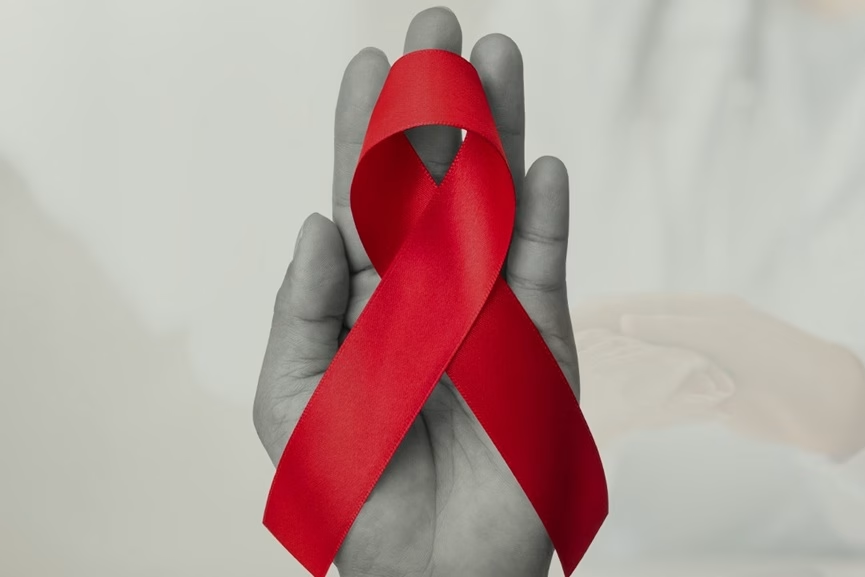
World AIDS Day, observed every year on December 1, serves as a powerful reminder of the ongoing battle against HIV and AIDS. First marked in 1988 by the World Health Organization, the day honours those who have died from HIV-related illnesses, supports people living with HIV, and unites communities, governments, and global partners in the fight to end the epidemic.
The theme for World AIDS Day 2025- Overcoming disruption, transforming the AIDS response-underscores the need to address the lasting impact of pandemics, conflicts, and widening inequalities that continue to limit access to testing, treatment, and prevention services. It also calls for a stronger, more resilient, and community-led HIV response that not only protects past gains but accelerates progress toward ending AIDS as a public health threat.
Prevention empowers and protects.
Access to #HIV prevention tools, education, & services safeguards health and upholds rights. Equal access is the key to ending new infections.
Together, we can #EndAIDS
Learn more: https://t.co/12d3DR0IRR#WorldAIDSDay pic.twitter.com/edkRdN13cZ
— World Health Organization (WHO) (@WHO) December 1, 2025
WHO Framework for 2026–2030
Marking this year’s commemoration, WHO has issued the Integrated Drug Resistance Action Framework for HIV, hepatitis B, hepatitis C, and STIs. The roadmap outlines a global plan to curb the rising incidence of drug resistance and preserve the effectiveness of life-saving medicines.
With drug resistance increasingly threatening treatment success, the WHO warns that without coordinated action, the world could see higher infection rates, more treatment failures, and increased preventable deaths.
The framework highlights five strategic pillars: prevention and response, surveillance, research and innovation, enhanced laboratory capacity, and strong governance. It stresses antimicrobial stewardship, improved data systems, and equitable access to high-quality services for all populations.
There is no vaccine to prevent #HIV infection.
However, with access to effective HIV prevention, diagnosis, treatment and care, HIV has become a manageable health condition, enabling people living with HIV to enjoy long, healthy and productive lives.
Learn more:… pic.twitter.com/lQGGbrxUAy
— World Health Organization (WHO) (@WHO) December 1, 2025
Global Fight Against HIV
As of the end of 2024, 40.8 million people were living with HIV. Gains have been significant: 87 percent of people with HIV knew their status, 89 percent of those diagnosed received antiretroviral therapy, and 94 percent of those on treatment had suppressed viral loads. New HIV infections have dropped 40 percent since 2010, and AIDS-related deaths have fallen by 54 percent.
Despite this progress, the world remains off track to meet the 2030 targets. In 2024, 1.3 million people acquired HIV, and 630,000 died from AIDS-related causes. Children under 15 continue to face disproportionate risk, accounting for 75,000 deaths.
Key populations- including lesbian-gay, people who inject drugs, trans and gender-diverse communities, and sex workers- still encounter barriers driven by stigma, criminalization, and discriminatory policies.
#WorldAIDSDay: Building on India’s global AIDS control success
🔹World AIDS Day is a global observance held on December 1 every year to raise awareness about the HIV/AIDS epidemic, remember those who have died from HIV-related illnesses, and support people living with HIV/AIDS… pic.twitter.com/rTMdi1vocl
— PIB India (@PIB_India) November 30, 2025
Prevention Tools Are Effective but Underused
PrEP remains one of the most effective methods of HIV prevention, yet uptake among key populations remains below 5 percent in many countries, despite widespread adoption of WHO recommendations. Condom use has also declined, often falling below 50 percent among high-risk groups. These gaps heighten vulnerability not only to HIV but also to STIs and hepatitis infections.
WHO’s latest data shows growing concern over drug resistance that threatens prevention and treatment efforts. Resistance can develop when PrEP is taken during an undiagnosed HIV infection, and rare cases of lenacapavir resistance are emerging.
Dolutegravir-based treatment, the backbone of global HIV therapy, remains highly effective, but early signals of resistance in specific settings require urgent monitoring. A modelling study from South Africa warns that dolutegravir resistance could rise from 18 percent in 2023 to 42 percent by 2035 if health systems do not intervene.
WHO urges countries to invest in strong surveillance, routine viral load monitoring, timely regimen switches after treatment failure, and robust community-led services. Many low- and middle-income countries continue to struggle with incomplete data, weak laboratory systems, and gaps in service delivery, all of which delay urgent response measures.
This World AIDS Day carries a renewed message: the world has the tools to end AIDS, but must transform how it uses them. Tackling drug resistance, expanding equitable access, scaling up prevention, and empowering community-led responses are essential to achieving the 2030 goals.