

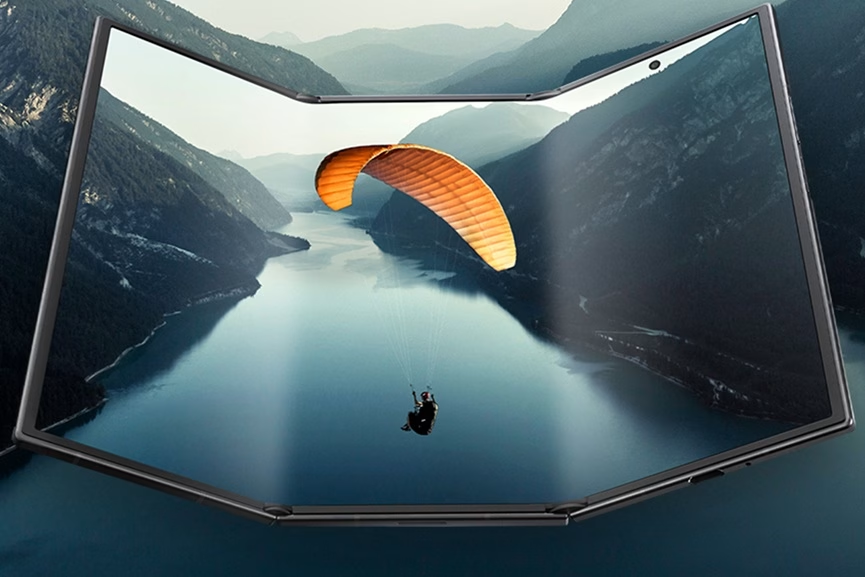
Seoul: Samsung Electronics has launched its first multi-folding smartphone, the Galaxy Z TriFold, as the company works to hold its lead in a market where Chinese brands are quickly expanding.
The new device, priced at about 3.59 million won ($2,440), opens into a 10-inch display made from three connected panels. The screen is nearly 25 percent larger than the one on the Galaxy Z Fold 7, making it Samsung’s biggest foldable model so far.
Alex Lim, Executive Vice President at Samsung Electronics, said the company expects demand for foldable phones to keep rising and believes the TriFold could help drive future growth in the category. He added that the device is aimed at users who specifically want a larger folding experience rather than the wider consumer market.
The phone, produced in South Korea, goes on sale domestically on December 12. Samsung plans to release it this year in China, Singapore, Taiwan and the United Arab Emirates, with a US launch expected in early 2026.
The TriFold carries Samsung’s largest flagship battery and supports fast charging that reaches 50 percent in about 30 minutes. Lim noted that costs for memory chips and other components have increased sharply, making the final price difficult to set.
Introducing #GalaxyZTriFold: The shape of what’s next in mobile innovation. #GalaxyAIhttps://t.co/Lpkvt7Y2r6
— Samsung Mobile (@SamsungMobile) December 2, 2025
Samsung’s move comes as rivals accelerate their own foldable plans. Huawei released the industry’s first three-way folding phone in September, while Apple is expected to introduce its first foldable model next year.
Even with rising interest, foldable phones remain a small part of the global market. Counterpoint Research estimates they will account for under 2 percent of smartphone shipments this year and stay below 3 percent by 2027. However, the firm expects strong growth in 2026 and 2027 as more brands, including Apple, enter the segment.
Counterpoint also reported that Samsung’s foldable shipment share rose to 64 percent in the third quarter, up from 9 percent in the previous quarter, showing how launches can significantly shift market positions.