
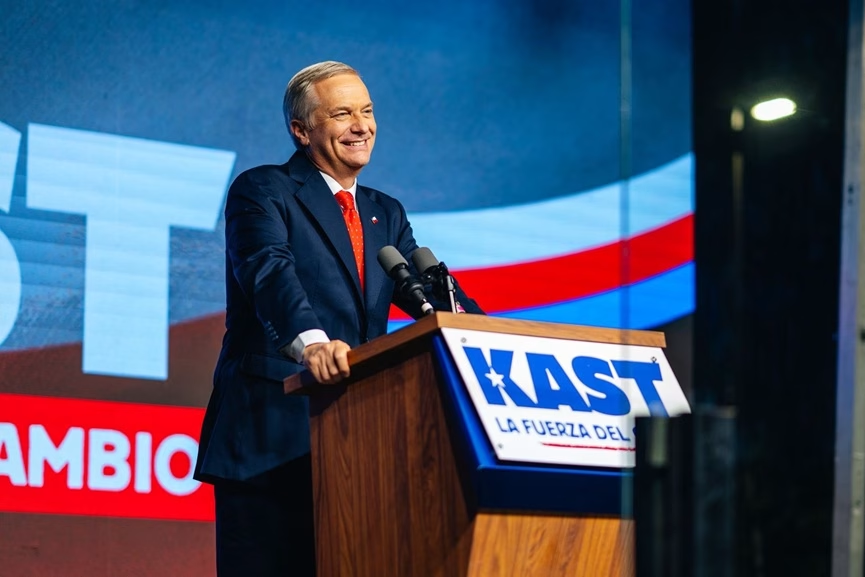
Santiago: Jose Antonio Kast won Chile’s presidential election, completing the country’s sharpest shift to the right since the end of military rule in 1990. Kast secured a decisive victory in the runoff, winning 58 percent of the vote against government-backed leftist candidate Jeannette Jara, who took 42 percent and conceded shortly after the results were announced.
A long-time hardline conservative, Kast built his campaign around restoring security and tightening immigration controls. His proposals include building border barriers, deploying the military to high-crime areas, and deporting migrants living in the country illegally.
Speaking to supporters at his Republican Party headquarters in Santiago’s upscale Las Condes district, Kast promised sweeping change, arguing that public safety is the foundation of democracy and freedom. He also acknowledged that fixing Chile’s security challenges would take time and persistence, warning against expectations of quick solutions.
Kast’s victory adds to a growing wave of right-wing leadership across Latin America. His win follows recent electoral successes by Daniel Noboa in Ecuador, Nayib Bukele in El Salvador, and Javier Milei in Argentina. In Bolivia, the election of centrist Rodrigo Paz in October ended nearly two decades of socialist rule.
The result marked Kast’s third attempt at the presidency and his second appearance in a runoff. He previously lost to leftist President Gabriel Boric in 2021. Once viewed by many voters as too extreme, Kast gained broader support as concerns about crime and immigration intensified across the country. His strong performance, including wins in regions that traditionally support leftist candidates, was also driven by resistance to Jara’s candidacy. As a member of the Communist Party, she was seen by many voters as representing an equally hardline alternative.
Gracias Chile.
A trabajar! 🇨🇱 pic.twitter.com/WsushQjR1D— José Antonio Kast Rist 🖐️🇨🇱 (@joseantoniokast) December 15, 2025
Chile remains among the safest countries in Latin America, but violent crime has risen in recent years as organised criminal groups expanded operations. Authorities have linked the trend to porous northern borders, growing drug trafficking routes, and a surge in migration, particularly from Venezuela.
Kast has proposed creating a specialised police force inspired by U.S. immigration enforcement agencies to speed up detention and deportation of undocumented migrants. He has also called for deep cuts to public spending.
Financial markets reacted positively to his win. Chile’s stock market, currency, and benchmark index rose on expectations of reduced regulation and more market-friendly policies. Chile is the world’s largest copper producer and a major supplier of lithium; both are key to global energy transitions.
Despite the strong mandate, Kast is expected to face political resistance. Chile’s Senate is evenly split between left and right, while control of the lower house hinges on the populist People’s Party, setting the stage for difficult negotiations as his presidency begins.