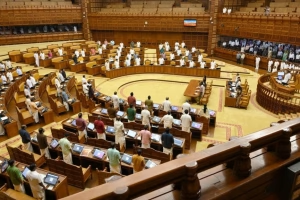

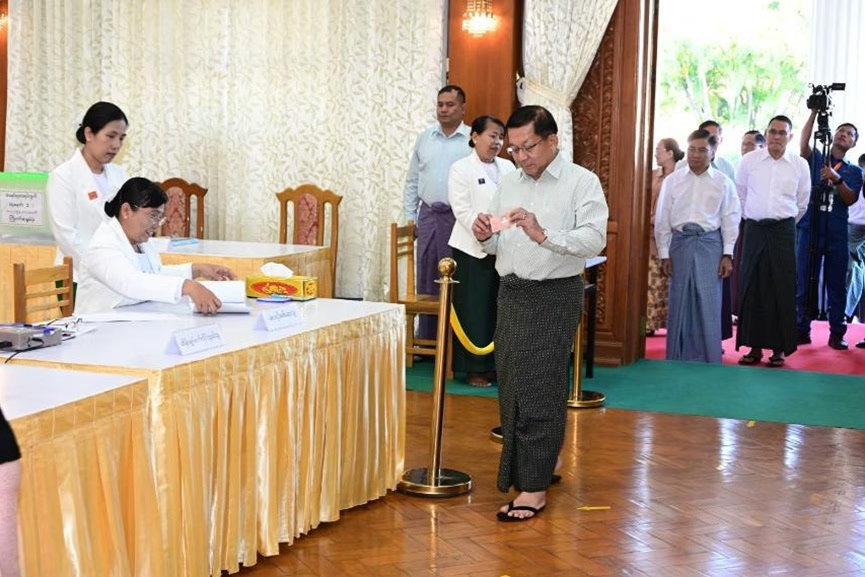
Yangon: Voters across parts of Myanmar went to the polls on Sunday in the first phase of the country’s general election, the first in five years and the first since the military seized power in 2021. The vote is being conducted under the supervision of the junta while a brutal civil war continues across large swathes of the country.
The election has drawn sharp criticism from opposition groups, rights organisations, and Western governments, who argue it is aimed at giving a veneer of legitimacy to military rule. The army overthrew the elected government of Aung San Suu Kyi in February 2021, despite her party winning a landslide victory in the 2020 polls.
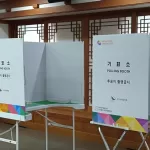
Polling took place in Yangon, Naypyitaw, and other selected areas, with voters casting ballots at schools, government offices, and religious buildings. Security was tight, particularly in Yangon, where armed guards stood outside polling stations and military vehicles patrolled major roads. Electronic voting machines were introduced for the first time.
Many critics say the vote cannot be considered free or fair. Major political parties have been excluded, freedom of expression remains heavily restricted, and an atmosphere of fear prevails.
The National League for Democracy, led by Suu Kyi, was dissolved in 2023 after refusing to register under the new military rules. Other parties also declined to take part, while opposition groups called for a boycott.
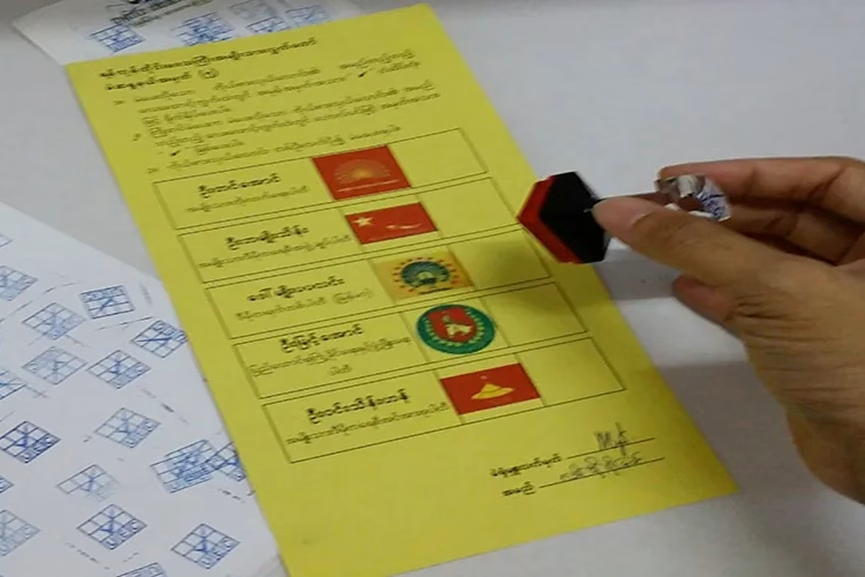
Suu Kyi, now 80, is serving a 27-year prison sentence on charges widely seen as politically driven. With her party absent, analysts say voters have little real choice. In the last election, nearly three-quarters of voters supported parties that no longer exist.
Despite this, the military-backed Union Solidarity and Development Party is expected to perform strongly, raising doubts about any genuine transition to civilian rule. Still, holding the election may allow neighbouring countries such as China, India and Thailand to maintain engagement with the junta, arguing that the process supports stability. Western nations have continued sanctions, citing the military’s actions and ongoing violence.
Myanmar’s conflict has deepened since the army crushed peaceful protests in 2021. Armed resistance groups emerged, and fighting has since displaced more than 3.6 million people. Rights groups say more than 22,000 people remain jailed for political reasons, and thousands of civilians have been killed by security forces.
Voting is being held in three stages, with Sunday’s poll covering 102 of Myanmar’s 330 townships. The remaining phases are scheduled for January 11 and January 25, with final results expected later in the month. While thousands of candidates from dozens of parties are contesting seats, only a handful are running nationwide.