
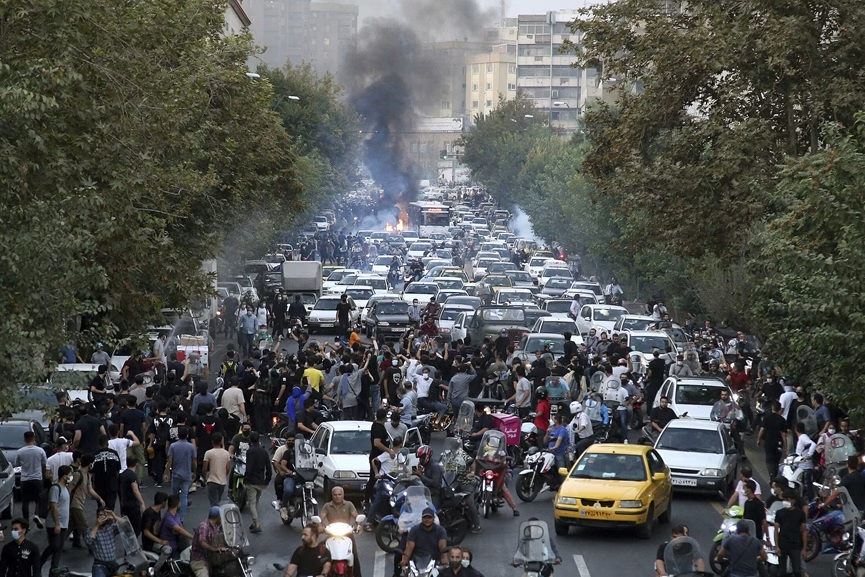
Iran: Protests and strikes driven by soaring inflation and the sharp fall of Iran’s currency have spread beyond Tehran to several cities, entering a third day of unrest.
The demonstrations began on Sunday after shopkeepers at Tehran’s Grand Bazaar went on strike when the Iranian rial plunged to a record low against the US dollar on the open market. The unrest has since widened, with verified videos showing protests in cities including Karaj, Hamedan, Qeshm, Malard, Isfahan, Kermanshah, Shiraz, and Yazd.
Footage also showed police using tear gas to disperse demonstrators in some areas as crowds gathered in markets and public spaces. The government acknowledged the protests, saying it would listen patiently even in the face of harsh criticism. President Masoud Pezeshkian said he had instructed the interior minister to hold talks with representatives of the protesters to address their grievances and seek solutions.
معیشت مردم، دغدغه هر روز من است. اقدامات اساسی برای اصلاح نظام پولی و بانکی و حفظ قدرت خرید مردم در دستور کار داریم. به وزیر کشور مأموریت دادم از مسیر گفتوگو با نمایندگان معترضان، مطالبات برحق آنها را بشنود تا دولت با تمام توان برای رفع مشکلات و پاسخگویی مسئولانه عمل کند.
— Masoud Pezeshkian (@drpezeshkian) December 29, 2025
In a significant move, Pezeshkian accepted the resignation of central bank governor Mohammadreza Farzin and appointed former economy and Finance Minister Abdolnasser Hemmati as his replacement, signalling concern over the worsening economic situation.
University students have joined the demonstrations, chanting anti-government slogans that directly criticised Iran’s leadership. Some protesters were also heard voicing support for the former monarchy, calling for the return of the Shah’s family, which ruled Iran until the 1979 Islamic Revolution.
Reza Pahlavi, the son of the late Shah Mohammad Reza Pahlavi and now living in exile in the United States, expressed solidarity with the protesters, saying Iran’s economic crisis would persist as long as the current system remained in power.
The protests have drawn international attention. The US State Department’s Persian-language account voiced support for demonstrators, praising their courage and calling for dignity and a better future after years of economic mismanagement.
پاسخ جمهوری اسلامی ایران به هر تجاوز ستمکارانهای، سخت و پشیمان کننده خواهد بود.
— Masoud Pezeshkian (@drpezeshkian) December 30, 2025
Iran was also a key topic during talks between US President Donald Trump and Israeli Prime Minister Benjamin Netanyahu in Florida. Trump pointed to Iran’s economic troubles and public dissatisfaction but stopped short of openly backing regime change. He warned that further military action could follow if Iran rebuilt its missile or nuclear programmes.
Iran insists its nuclear activities are peaceful. During a brief but intense conflict with Israel in June, the United States carried out air strikes on Iranian uranium enrichment sites.
President Pezeshkian warned on Tuesday that Iran would respond forcefully to any external aggression. Meanwhile, Supreme Leader Ayatollah Ali Khamenei has accused Israel of hoping that wartime pressure would trigger mass protests capable of destabilising the country, a claim he said failed to materialise.