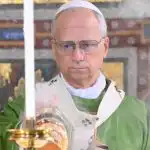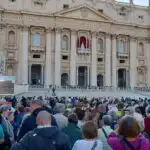

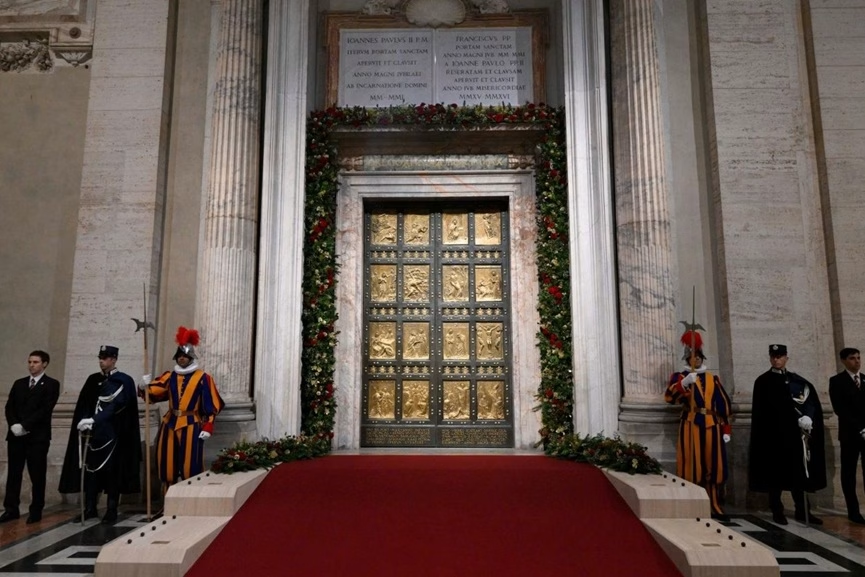
Rome: Pope Leo has formally closed the Catholic Church’s Holy Year by sealing the Holy Door at St. Peter’s Basilica, marking the end of a landmark period that drew tens of millions of pilgrims to Rome.
Speaking during a ceremony at the Vatican, the pontiff urged Christians around the world to carry forward the spirit of the jubilee by helping those in need and showing kindness to foreigners. He warned against viewing people as commodities in an economy that seeks to profit from every aspect of life, and challenged believers to recognise a neighbour in every stranger they encounter.
The Holy Year attracted a record 33.5 million pilgrims, many of whom passed through the sacred doors of Rome’s four major basilicas, a central ritual symbolising forgiveness, renewal, and peace. Holy Years, also known as jubilees, are traditionally held every 25 years and include special papal audiences and religious events throughout the year.
At 9.41 am local time, Pope Leo, wearing gold-trimmed vestments, pulled shut the heavy bronze Holy Door of St. Peter’s Basilica, officially bringing the jubilee to a close. The next regular Holy Year is not expected until 2033, when the Church may mark 2,000 years since the death of Jesus.
A blessed Solemnity of the Epiphany of the Lord!
Prayer for the Solemnity:
O God, who on this day revealed your Only Begotten Son to the nations by the guidance of a star, grant in your mercy that we, who know you already by faith, may be brought to behold the beauty of your… pic.twitter.com/1gUeKNVn6J— Vatican News (@VaticanNews) January 6, 2026
Vatican and Italian authorities said pilgrims for the 2025 jubilee came from 185 countries, with the largest numbers arriving from Italy, the United States, Spain, Brazil, and Poland.
The jubilee was also notable for a rare moment in Church history. It was opened by Pope Francis and closed by his successor, Leo, something that has not occurred in more than three centuries. Francis died in April after leading the world’s 1.4 billion Catholics for 12 years. The previous instance of a Holy Year overseen by two popes dates back to 1700.
Since taking office, Pope Leo has signalled continuity with many of Francis’ priorities, including a welcoming approach to marginalised groups and a willingness to engage in difficult debates within the Church. On Tuesday, he echoed his predecessor’s criticism of global economic systems, lamenting that modern markets often turn the human desire for meaning, travel, and renewal into little more than business.