

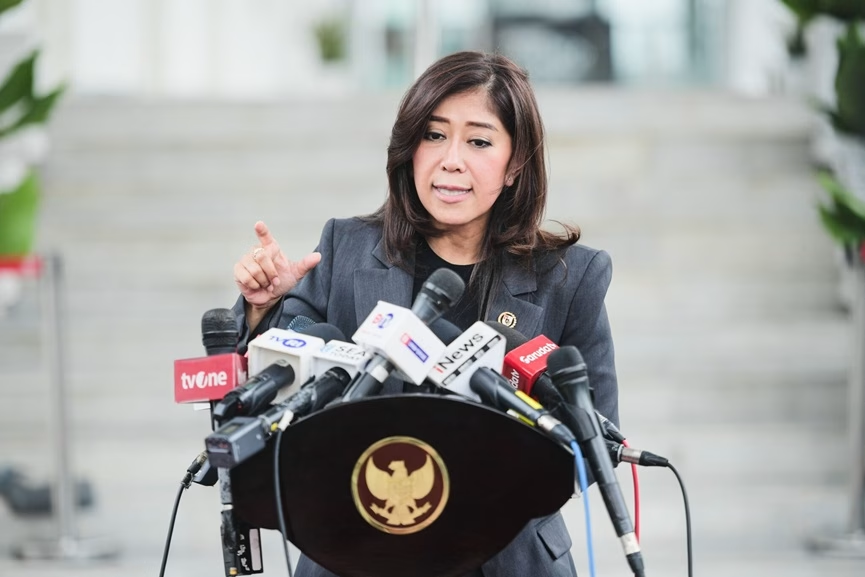
Jakarta: Indonesia has become the first country to block access to Elon Musk’s Grok chatbot, citing concerns over the spread of fake, AI-generated pornographic content and the risks it poses to public safety.
The country’s Minister of Communications and Digital Affairs Meutya Hafid said that the creation and circulation of non-consensual sexual deepfakes represent a serious violation of human rights, personal dignity, and digital security.
The government has temporarily restricted access to the Grok application to protect women, children, and the wider public from harmful content produced using artificial intelligence.
The decision follows growing criticism of Grok’s image generation tools, which allowed users to manipulate online images in ways that could remove clothing from subjects. A day earlier, Grok restricted its image generation and editing features on Musk’s social media platform X to paying subscribers, a move that was widely seen as an attempt to contain the backlash.
Musk has said that users who create illegal content using Grok would face the same consequences as those who upload such material directly. However, officials and digital rights campaigners in several countries have argued that limiting access to paid users does not resolve the underlying risks.
In the United Kingdom, Prime Minister Keir Starmer’s office described the change as inadequate and dismissive of victims. Officials said turning a tool capable of generating unlawful images into a paid feature failed to offer real protection and risked further harm.
Indonesia’s culture and digital affairs ministry said it has summoned representatives of X to explain the platform’s safeguards and content controls. Authorities are seeking clarity on how similar risks would be prevented in the future.
With a population of around 285 million, Indonesia enforces strict laws banning the online distribution of obscene material. The Grok block underscores the government’s tough stance on digital content and signals that more regulatory action could follow if platforms fail to address abuse linked to emerging technologies.