
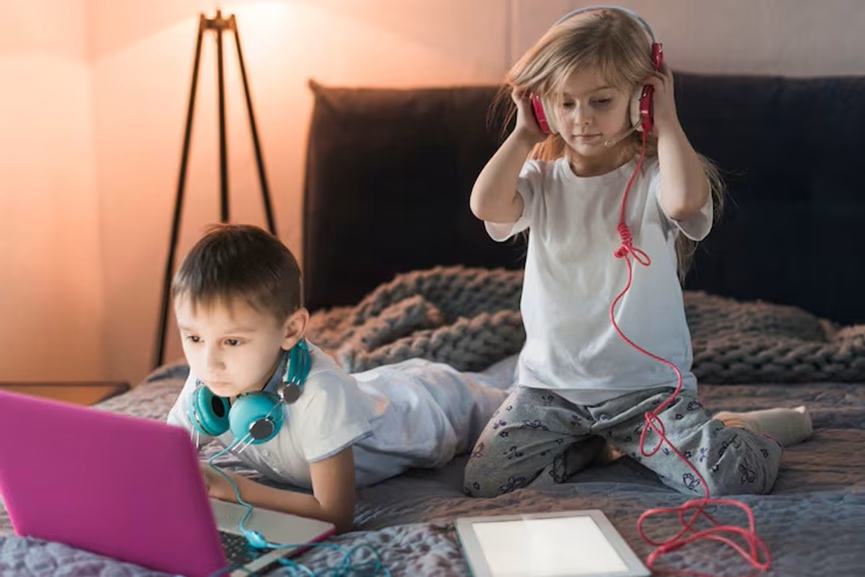
London: Excessive screen use is harming young children’s ability to speak, the UK government has warned, as it prepares to issue its first-ever guidance for parents on managing screen time for under-fives.
New research shows that two-year-olds with the highest levels of screen use, averaging around five hours a day, could say far fewer words than children who spent less than an hour a day in front of screens. Those with lower screen exposure were found to have noticeably stronger vocabulary skills.
Screen use has become almost universal in early childhood. The study found that 98 percent of two-year-olds watch screens daily, highlighting how deeply digital devices are now embedded in family life.
Education Secretary Bridget Phillipson said parents and teachers were increasingly concerned that too much passive screen time was displacing vital activities such as talking, reading, and play. She said these interactions are essential for language development in the early years, adding that the challenge for families is no longer whether to use screens, but how to use them in a healthy way.
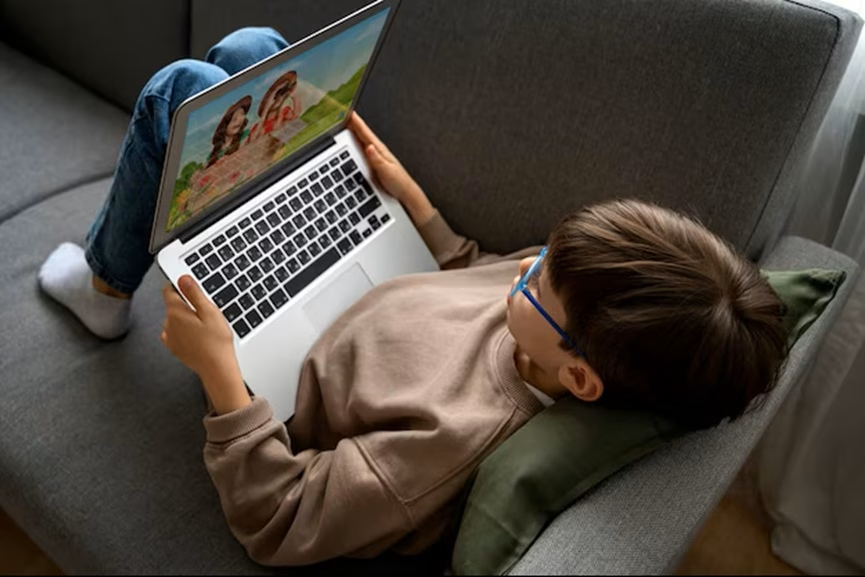
The government is expected to publish guidance in April, offering practical advice on how screen use can be balanced with activities that support learning and communication. The guidance will focus on integrating screens into shared experiences rather than replacing human interaction.
A new expert panel will help shape the advice. It will be led by England’s children’s commissioner, Rachel de Souza, and Professor Russell Viner, a former chief scientific adviser to the Department for Education. The panel will review the latest evidence and gather input from parents.
The findings come amid broader concerns about children’s well-being and digital exposure. One of the UK’s largest teaching unions has renewed calls for a ban on social media for under-16s, citing worries about mental health and attention. The government has said the issue remains under consideration.
The research, commissioned by the government, tracked 4,758 children from infancy to age two. At nine months old, children spent an average of 29 minutes a day watching screens. By the age of two, this had risen sharply to an average of 127 minutes a day, with total screen and video game use reaching about 140 minutes.
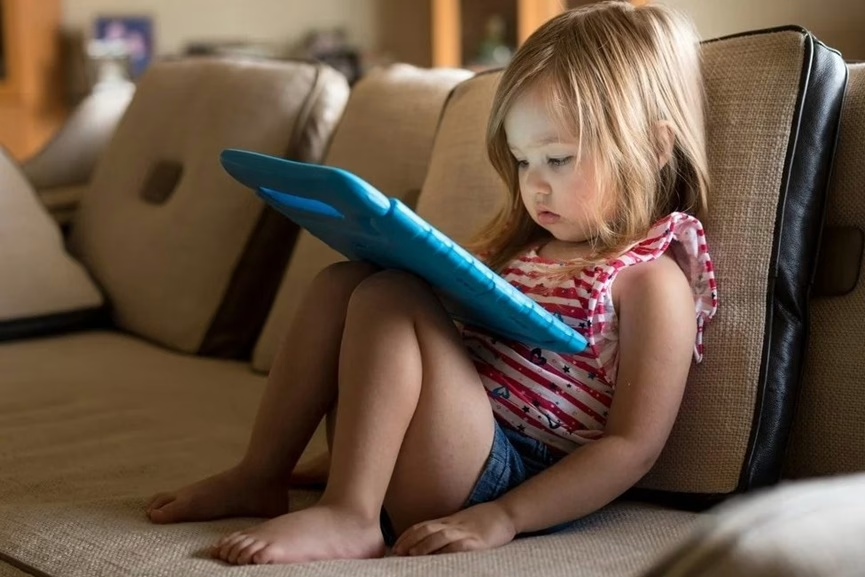
The study found that children with the highest screen use could say only just over half of a set of test words, compared with nearly two-thirds among children with the lowest screen exposure. Higher screen time was also linked to poorer vocabulary development, regardless of other factors.
Despite this, the overall number of words spoken by two-year-olds has not significantly changed compared with children of the same age between 2017 and 2020. On average, children could say 21 out of 34 words tested.
The research also raised concerns beyond language. Around a quarter of the children surveyed showed signs of possible behavioural or emotional difficulties. The World Health Organization recommends that children aged two to four have no more than one hour of screen time a day.