
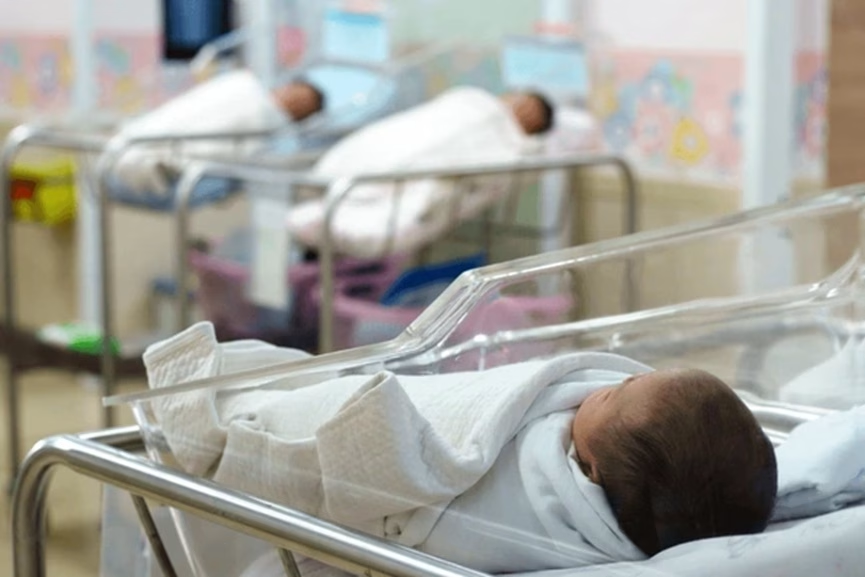
Beijing: China’s population continued to shrink in 2025, falling for the fourth year in a row as births dropped to their lowest level on record, deepening concerns over an ageing society and long-term economic pressures.
Figures released by the National Bureau of Statistics show that registered births fell to 7.92 million in 2025, a sharp 17 percent drop from 9.54 million in 2024. This represents just 5.63 births per 1,000 people; the lowest level recorded since the founding of the People’s Republic in 1949.
The overall population declined by 3.39 million to 1.405 billion, marking a faster contraction than the previous year. Deaths climbed to 11.31 million, up from 10.93 million in 2024, pushing the death rate to its highest level since 1968.
Demographers say the figures highlight the scale of the challenge facing the world’s second-largest economy. Annual births are now at levels last seen centuries ago, when China’s population was only a fraction of its current size.
Rising Costs Deter Young Families
The decline comes despite years of policy changes aimed at reversing falling birthrates. In 2025, Beijing allocated 90 billion yuan for its first nationwide childcare subsidy programme for children under the age of three. Authorities are also preparing to expand national health insurance to cover all childbirth-related costs, including fertility treatments.
Even so, many young adults say starting a family has become financially daunting. High housing costs, uncertain employment prospects, and slower economic growth have made parenthood a risky choice. Research by a Chinese population thinktank estimates that raising a child to the age of 18 costs an average of 538,000 yuan, more than six times China’s GDP per capita. The burden is significantly heavier in urban areas.

Long Shadow of Past Policies
China’s demographic imbalance is also shaped by decades of the one-child policy, which was in force from 1980 to 2015. The policy reshaped family norms, leaving many people comfortable with single-child households. At the same time, the number of people of childbearing age is shrinking as the population rapidly ages.
A recent decision to apply a 13 percent tax to condoms after removing them from the VAT-exempt list sparked debate online. While free contraceptives remain available through state programmes, many social media users questioned whether the move would have any meaningful impact on birth trends.
People aged over 60 now make up about 23 percent of China’s population. By 2035, that number is expected to rise to around 400 million, a shift that will place heavy strain on pension systems and public finances while reducing the size of the labour force. To ease these pressures, China has already raised retirement ages, with men now expected to work until 63 and women until 58.
Marriage rates, often a key indicator of future birth trends, fell sharply in 2024, with registrations dropping by 20 percent to just over 6.1 million couples. However, a policy change in 2025 allowing couples to marry anywhere in the country led to a rebound later in the year. Marriages rose more than 22 percent year on year in the third quarter, offering hope of a temporary stabilisation.
China’s fertility rate remains among the lowest in the world, at about one birth per woman, well below the replacement level of 2.1.