
Davos: More than a century ago, Austrian poet Rainer Maria Rilke urged a young writer to live the questions, to accept uncertainty as the soil from which understanding eventually grows. That idea quietly echoed through Davos this week, as world leaders, executives, and thinkers confronted a global reality marked more by reckoning than by answers.
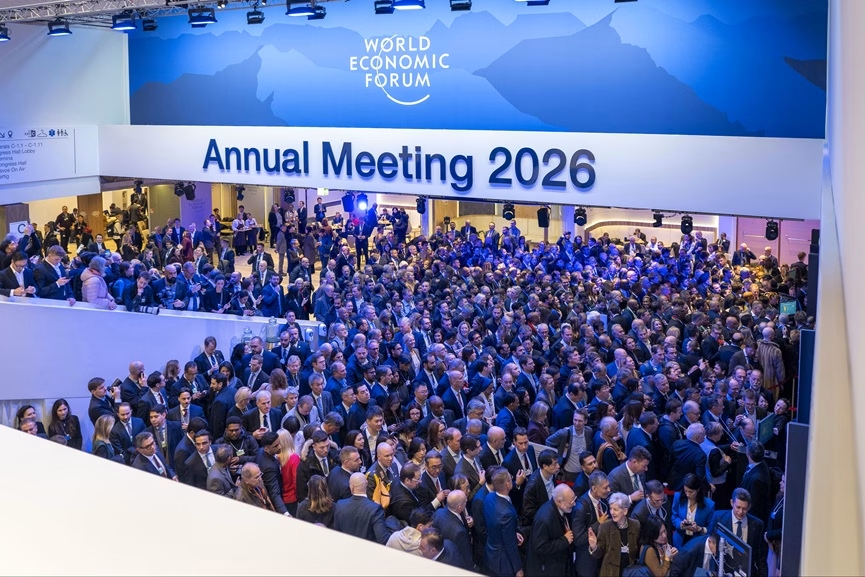
The World Economic Forum Annual Meeting 2026 unfolded against a backdrop of fractured alliances, accelerating technological change, and deepening social strain. Under the theme A Spirit of Dialogue, more than 60 heads of state, hundreds of political leaders, and over 800 CEOs gathered not to declare solutions, but to confront the hard truths shaping the global order.
As Canadian Prime Minister Mark Carney noted during the week, leadership today demands engaging with the world as it is, not waiting for the one we wish existed. That sentiment defined Davos 2026.
A Global Order Under Strain
Few issues dominated discussions as intensely as the growing rupture between the United States and Europe. US President Donald Trump’s delayed but closely watched arrival only heightened the sense of uncertainty.
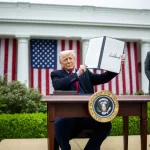
In his special address, Trump struck a conciliatory tone toward Europe, stressing the importance of shared civilizational bonds and economic strength. Most notably, he softened his stance on Greenland, ruling out the use of force and acknowledging global concern over his earlier remarks.
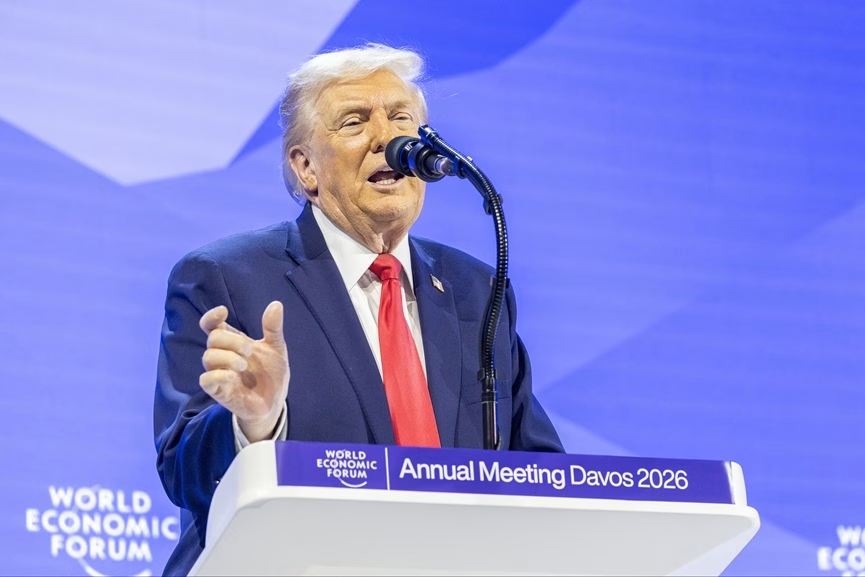
Yet beneath the rhetoric, many leaders warned that the damage to trust may already be done. Economists and policymakers spoke candidly of a once-in-a-century breakdown in the global system, driven by fractured alliances and competing security and economic priorities. Europe’s response was clear: strategic autonomy is no longer optional.
European Commission President Ursula von der Leyen underscored that nostalgia for the old order would not restore it, calling instead for a permanently transformed and more independent Europe.
Middle powers, meanwhile, stepped forward with renewed confidence. Carney emerged as a leading voice, arguing that while the old order will not return, something stronger and fairer can be built from its fractures. His message resonated across the halls of Davos, where countries outside the traditional power blocs emphasized coalition-building over confrontation.
Despite tensions, new agreements took shape. The European Union and India moved closer to a historic free trade agreement, potentially creating one of the world’s largest integrated markets. The United Kingdom announced billions of dollars in new private investment, while partnerships spanning water access, clean energy, and development finance signaled that cooperation remains possible even in divided times.
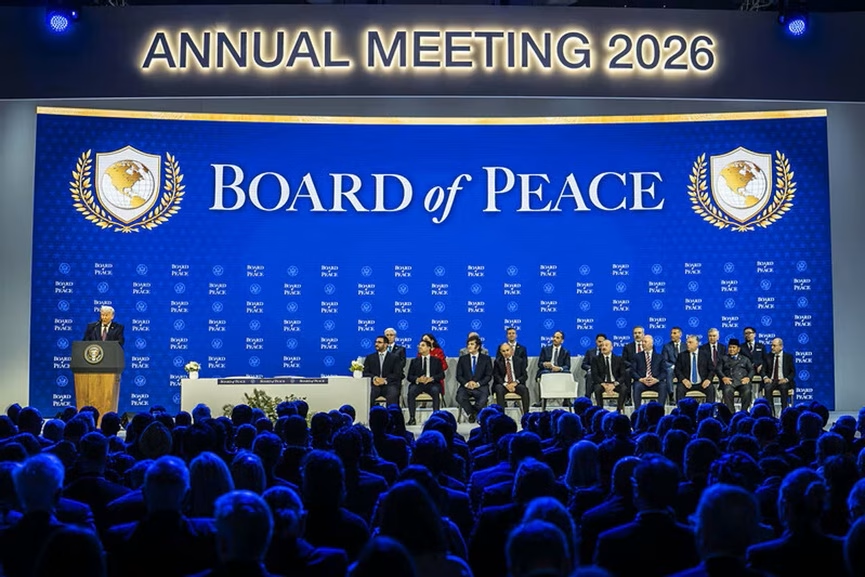
Reckoning for Humanity
If geopolitics framed the week, humanity’s future gave it moral weight. The Global Risks Report 2026 revealed a shift in priorities, with geoeconomic fragmentation and societal polarization overtaking climate risks in perceived urgency. This was not because environmental threats have eased, but because political and social fault lines are widening faster than institutions can manage them.
Economic leaders warned of increasing debt burdens, especially in developing nations forced to choose between servicing loans and investing in health or education. Humanitarian aid, already shrinking, faces unprecedented pressure. At the same time, inequality continues to deepen, threatening social cohesion even in advanced economies.
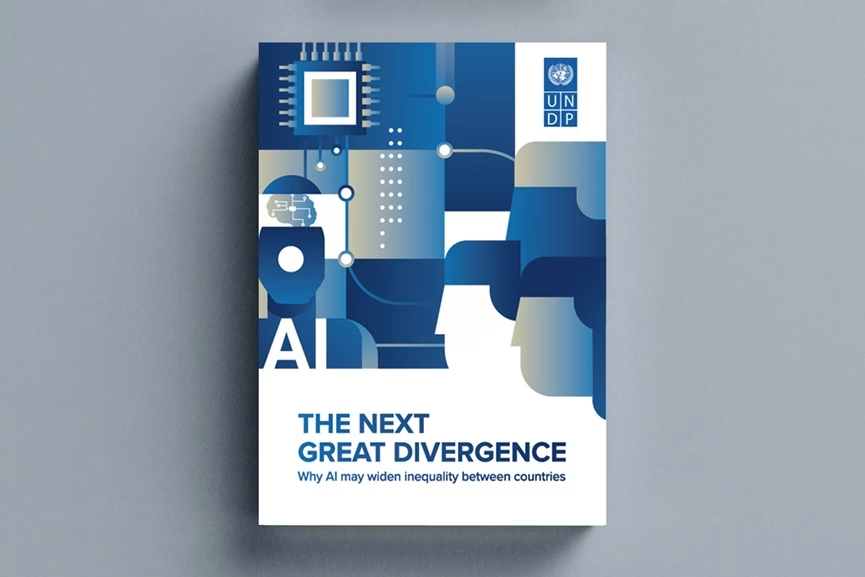
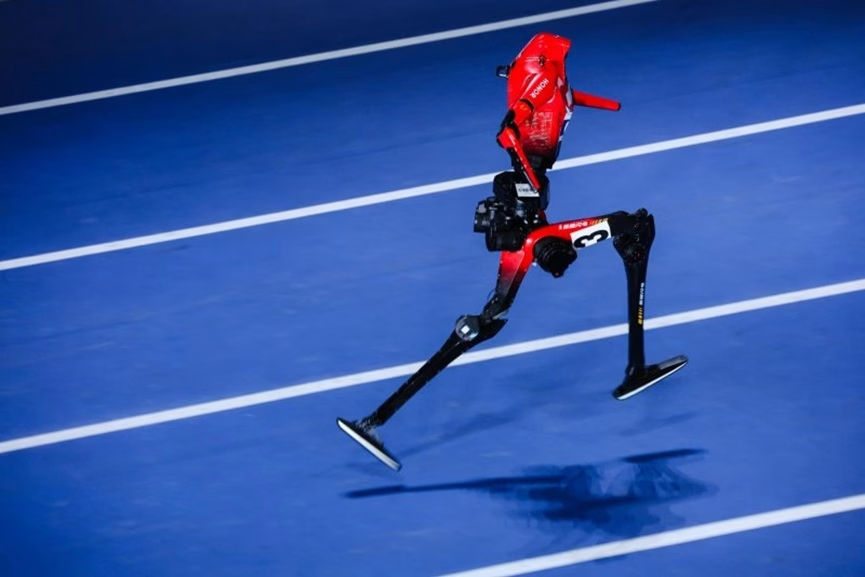
Technology, especially artificial intelligence, emerged as both promise and peril. Leaders acknowledged that AI will transform or eliminate millions of jobs in the coming years, with advanced economies facing the sharpest disruption. The debate was not about whether change will happen, but whether societies can manage it without eroding dignity, creativity, and opportunity.
Educators and psychologists warned that an overreliance on automation risks weakening critical cognitive skills, especially among children. Business leaders echoed the concern, emphasizing that innovation must amplify human potential rather than replace it. The challenge, repeated throughout the week, is keeping humanity at the center of progress.
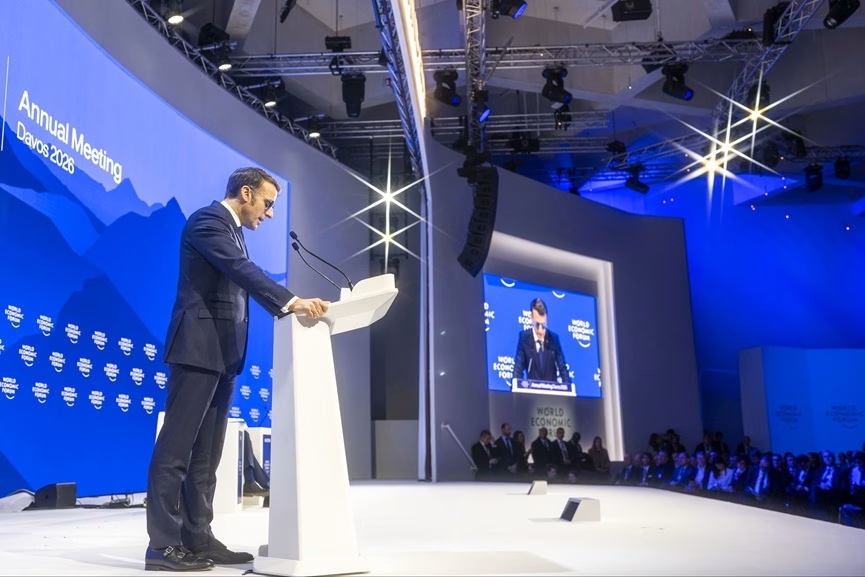
Why Dialogue Still Matters?
Amid uncertainty, Davos reaffirmed one essential truth: dialogue remains indispensable. Nearly 3,000 leaders from more than 130 countries traveled to the Swiss Alps, not because consensus was guaranteed, but because isolation is no longer viable.
Private meetings and quiet diplomacy proved as significant as public speeches. Talks on Arctic security helped ease tensions over Greenland. Discussions on Ukraine advanced toward new security guarantees and upcoming negotiations. These moments underscored that even in a fractured world, conversation can still shift outcomes.
Forum leaders emphasized that disagreement need not mean deadlock. Listening, patience, and openness, they argued, are prerequisites for navigating a multipolar world where no single nation can dictate terms.
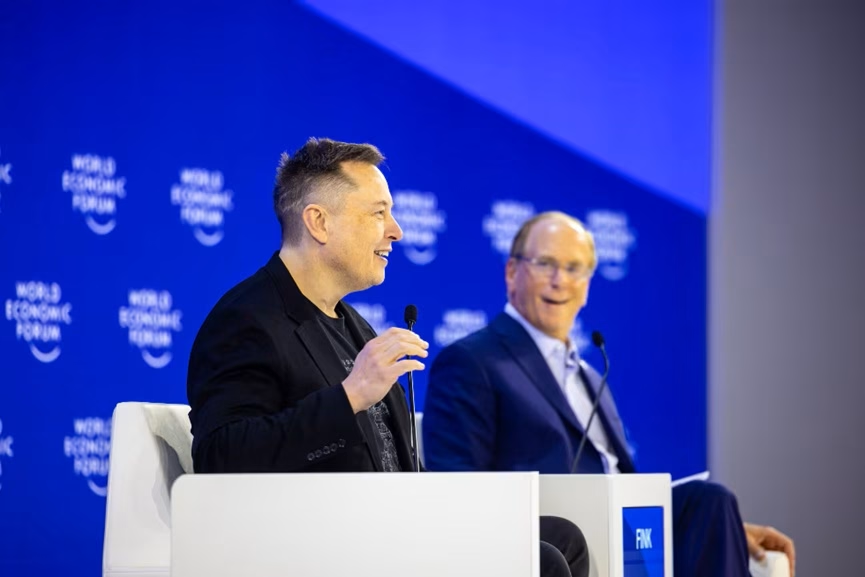
Living the Questions
Unlike previous gatherings, Davos 2026 was structured around questions rather than declarations. How can nations cooperate in a contested world? How can growth be unlocked without deepening inequality? How can innovation scale responsibly? How can prosperity exist within planetary limits?
No definitive answers emerged, but clarity did. The world is changing faster than institutions, and standing still is no longer an option. People everywhere want peace, stability, and a fair chance at well-being. Delivering that will require leaders to accept uncertainty, rethink old assumptions, and remain open to course correction.
As the meeting closed, one message lingered. Progress today does not begin with certainty, but with the courage to confront difficult questions and the willingness to stay human while doing so. Davos 2026 did not resolve the world’s crises, but it made clear what is at stake. The work now lies beyond the mountains, in how those questions are lived.