
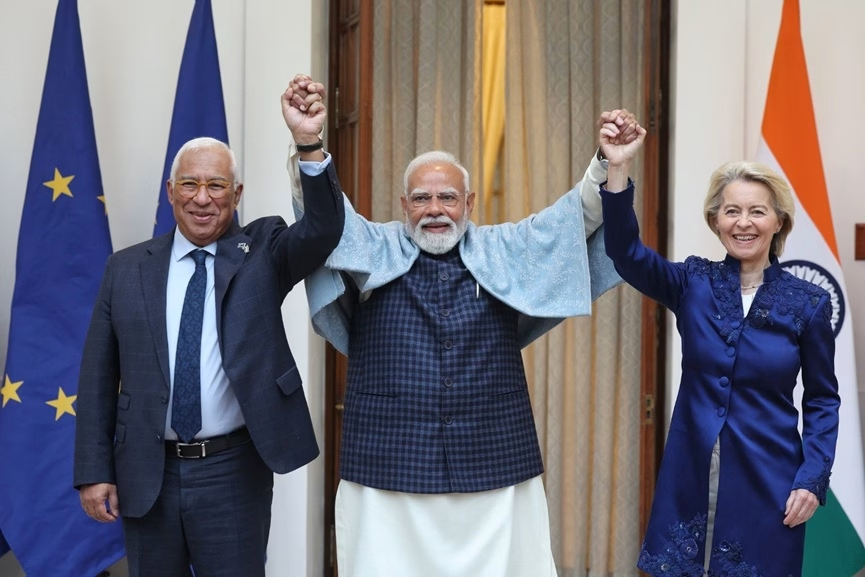
New Delhi: India and the European Union have struck a long-delayed trade agreement aimed at sharply reducing tariffs, expanding two-way commerce, and easing dependence on the United States at a time of rising global trade tensions.
The deal, concluded after nearly two decades of negotiations, will eliminate or reduce tariffs on 96.6 percent of traded goods by value. European officials estimate the agreement could double EU exports to India by 2032 and save European companies around 4 billion euros in duties.
Under the pact, the EU will cut tariffs on 99.5 percent of goods imported from India over seven years. India, in turn, will reduce or scrap duties on a wide range of European products, including machinery, electrical equipment, chemicals, and iron and steel.
Tariffs will be cut to zero on Indian exports such as marine goods, leather and textile products, rubber, base metals, chemicals, and gems and jewellery. Sensitive agricultural products, including soya, beef, sugar, rice, and dairy, have been excluded from the agreement, reflecting political sensitivities on both sides.
This agreement will drive trade, investment and innovation while strengthening our strategic relationship.
It reflects our shared resolve to shape a stable, prosperous and future-ready economic relationship. #IndiaEUTradeDeal @EU_Commission @vonderleyen https://t.co/f65vYIamAl
— Narendra Modi (@narendramodi) January 27, 2026
The deal is expected to open up India’s tightly protected market, particularly in the automotive and beverage sectors. India will slash car tariffs to 10 percent over five years from levels as high as 110 percent. Initially, reduced tariffs of 30 to 35 percent will apply to up to 250,000 vehicles a year valued above 15,000 euros, benefiting European brands such as Volkswagen, Renault, Mercedes-Benz, and BMW.
Duties on wines will fall immediately to 75 percent from 150 percent and be reduced gradually to 20 percent, while tariffs on spirits will be lowered to 40 percent.
Trade between India and the EU stood at 136.5 billion dollars in the fiscal year ending March 2025, surpassing India’s trade with both the United States and China during the same period.
The agreement gained momentum as Washington imposed steep tariffs on some Indian goods and as US allies pushed back against trade pressure from President Donald Trump. In recent months, both India and the EU have stepped up efforts to diversify trade partnerships, signing or advancing deals with countries across Asia, Latin America, and Europe.
India and Europe have taken a major step forward today. The India-EU Free Trade Agreement opens new pathways for growth, investment and strategic cooperation. #IndiaEUTradeDeal @eucopresident https://t.co/eUnDkmL1wO
— Narendra Modi (@narendramodi) January 27, 2026
Formal signing of the India-EU pact will take place after legal vetting, expected to last five to six months. Officials say implementation could follow within a year, though the process may face scrutiny in Europe, where similar agreements have encountered legal challenges.
The deal does not provide immediate relief for Indian exporters affected by the EU’s carbon border tax, which applies to products such as steel, cement, fertilisers, and electricity. However, India says it has secured assurances of flexibility if exemptions are granted to other countries. The EU has also committed 500 million euros over the next two years to support India’s efforts to cut greenhouse gas emissions.
Together, both sides describe the agreement as a turning point in one of the world’s most significant trade relationships.