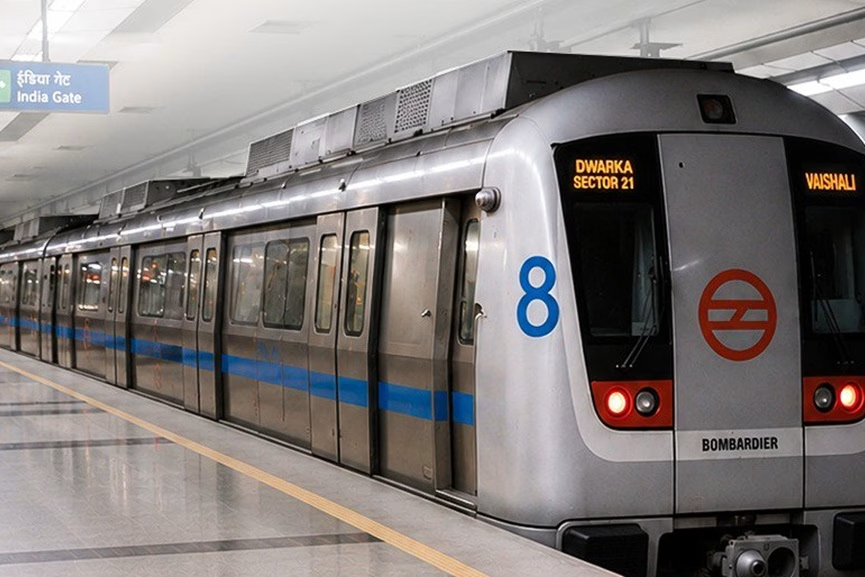


Dhaka: Bangladesh has received 5,000 tons of diesel from India through the Parbatipur border pipeline, marking an important step in ensuring the country’s fuel supply remains stable.
The shipment is part of an annual agreement under which India supplies Bangladesh with 180,000 tons of diesel each year. Muhammad Rezanur Rahman, chairman of Bangladesh Petroleum Corporation (BPC), confirmed the arrival of the consignment to ANI.
“The 5,000 tons arriving today are part of our existing agreement with India. According to the terms, at least 90,000 tons must be imported within the first six months. We are confident that within the next two months, the total diesel for this period will be brought in,” Rahman said.
This shipment comes amid a growing need to monitor fuel supplies closely in Bangladesh. Earlier this week, the Bangladesh Energy Ministry highlighted concerns about some traders attempting to manipulate the market by hoarding fuel, selling beyond the government-approved limits, or engaging in smuggling. These actions, the ministry warned, create artificial shortages and put pressure on consumers.
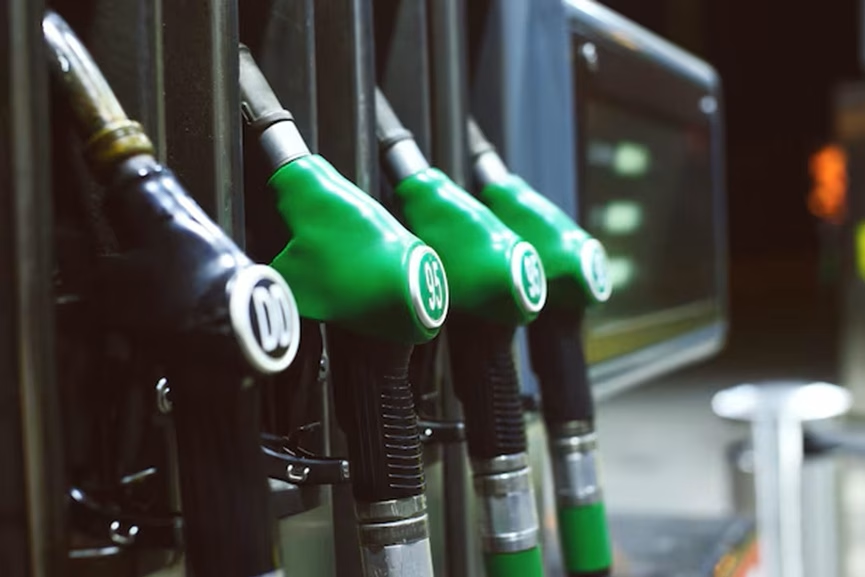
In response, the government has conducted mobile court drives to enforce fuel regulations. Executive Magistrates carried out inspections at several petrol stations in Dhaka, including City Filling Station in Tejgaon (MPL), which has been dry since yesterday, and Clean Fuel in Tejgaon (POPLC), which is operating in full compliance with all regulations. Authorities have assured that operations at stations affected by supply shortages will resume as soon as new fuel consignments arrive.
The government has also implemented vehicle-specific fuel limits to prevent stockpiling and hoarding. Officials emphasize that these measures, combined with regular monitoring and mobile court operations, aim to maintain transparency in the market and protect consumers from artificial price hikes.
With steady imports from India and strengthened monitoring measures, Bangladesh is working to ensure its fuel supply remains uninterrupted, even amid challenges posed by market manipulation and rising demand.