
Dhaka: The United Nations has raised alarms over the growing risks to global trade and development as tensions in West Asia threaten the Strait of Hormuz, a key maritime passage for energy and commodities.
In its latest report, the UN Conference on Trade and Development (UNCTAD) highlighted that ongoing US and Israeli strikes on Iran and Tehran’s retaliatory actions have disrupted shipping flows through the Strait, which handles roughly a quarter of the world’s seaborne oil trade along with significant volumes of liquefied natural gas and fertilizers.
“These disruptions extend far beyond the region,” the report said, warning that higher energy, transport, and fertilizer costs could drive up food prices and intensify cost-of-living pressures globally, especially for vulnerable populations.
The Strait of Hormuz supplies vital energy, especially to Asia.
In 2024, 80%+ of crude oil and LNG passing through were bound for Asian markets.
For wider impacts on global trade and development, read @UNCTAD analysis: https://t.co/Ns6qKLodDp pic.twitter.com/lbsARLIPC2
— UN Trade and Development (@UNCTAD) March 11, 2026
Stephane Dujarric, spokesman for UN Secretary-General Antonio Guterres, stressed that the report underscores significant risks to global trade and development if the Strait’s operations remain compromised.
UNCTAD’s analysis pointed to the vulnerability of critical maritime chokepoints to geopolitical conflicts and the ripple effects these can have on global supply chains and commodity markets.
The agency urged de-escalation; protection of maritime routes, ports, and civilian infrastructure; and adherence to international law to maintain secure trade corridors. The report noted that the economic consequences depend on the duration, intensity, and geographic spread of the tensions.
Developing countries, already grappling with high debt, limited fiscal space, and constrained access to finance, could face sharper economic and social pressures if energy, transport, and food prices rise sharply.
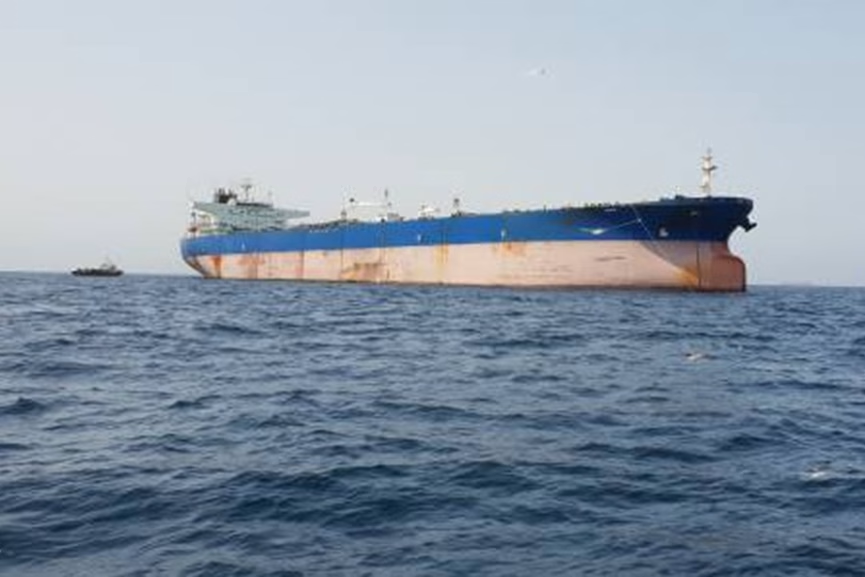
The military escalation in the Middle East is disrupting shipping through the Strait of Hormuz.
The impacts extend far beyond the region, affecting energy markets, maritime transport and global supply chains.@UNCTAD‘s rapid impact analysis: https://t.co/Q9r8Ha3ctG pic.twitter.com/nvnpvYplkl
— United Nations (@UN) March 10, 2026
According to UNCTAD, about 20 million barrels of oil per day, roughly 25 percent of global seaborne oil, passed through the Strait in 2024, with the majority headed for Asia.
Ship traffic through the Strait has dropped by 97 percent since the first strikes on Iran on February 28, raising concerns about energy security for the region and beyond.
The UN agency warned that rising oil and gas prices could trigger higher fertilizer and food costs, compounding the challenges for developing nations and threatening progress toward sustainable development.
POPULAR | India Secures Defence Deal with Indonesia for BrahMos Supersonic Missiles