
New Delhi: India and New Zealand have signed a sweeping free trade agreement (FTA), marking a significant step forward in their economic partnership.
The deal, expected to come into force by the end of the year, promises duty-free access for Indian exports, fresh investment flows, and expanded opportunities for skilled professionals.
Strategic Boost for Trade and Investment
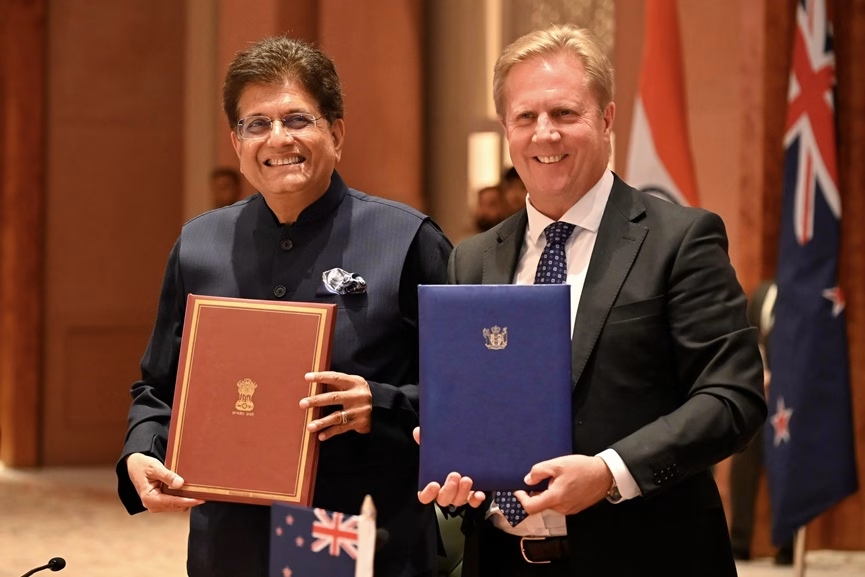
Announcing the agreement alongside New Zealand Trade Minister Todd McClay, Commerce and Industry Minister Piyush Goyal described it as a ‘landmark step’ that will unlock new avenues for growth.
The pact includes a projected $20 billion foreign direct investment commitment over the next 15 years, aimed at strengthening key sectors of the Indian economy.
This is India’s seventh FTA in five years, adding to its growing network of trade partnerships. While some agreements are already operational, others, including those with New Zealand, are set to be rolled out soon.
Zero-duty access to New Zealand markets will benefit India’s major sectors! 🇮🇳🇳🇿#IndiaNZFTA pic.twitter.com/XxMi9r5q7z
— Piyush Goyal (@PiyushGoyal) April 27, 2026
Duty-Free Access and Sectoral Gains
A major highlight of the agreement is the elimination of duties on 100 per cent of tariff lines for Indian exports from day one. Industries such as textiles, garments, leather, carpets, ceramics, engineering goods, and auto components are expected to benefit the most.
India, on its part, will open around 70 per cent of its tariff lines to New Zealand, covering nearly 95 per cent of its exports. However, sensitive sectors like dairy, sugar, and edible oils remain protected.
Certain agricultural imports, including apples, kiwifruit, and mānuka honey, will be regulated through quotas and price thresholds. For instance, New Zealand apples will see reduced duties only during a defined seasonal window and under specific pricing conditions.
The agreement introduces a tiered tariff system for New Zealand wines. Lower-priced bottles will continue to attract high duties, while premium categories will see gradual reductions over the next decade. This approach balances consumer choice with protection for domestic producers.
Today marks a landmark moment in the India-New Zealand partnership!
I am delighted that the India-New Zealand FTA signed today will add unprecedented momentum to our developmental partnership. It reflects the deep trust, shared values and ambition that bind our two nations.… https://t.co/WBHn4gb1yB
— Narendra Modi (@narendramodi) April 27, 2026
Services and Mobility: The Real Game-Changer
Beyond goods, services are expected to drive the biggest gains for India. New Zealand has opened up 118 sectors, offering wide-ranging access and most-favored nation treatment across several industries.
The agreement also eases mobility for Indian professionals and students. It introduces provisions such as part-time work rights for students, post-study visa pathways, 5,000 annual skilled worker slots, and 1,000 work-and-holiday visas.
India’s services exports have been growing rapidly, crossing $400 billion in FY26, yet trade with New Zealand remains modest. Officials believe the new framework could significantly expand this segment.
McClay confirmed that the agreement will now move through parliamentary procedures in New Zealand, including public consultations, before returning for final approval. Both sides remain confident of implementing the deal within the year.
More than just a trade pact, the India–New Zealand FTA reflects a shared commitment to deeper economic integration. At a time when global trade faces uncertainties, the agreement signals a renewed focus on cooperation, stability, and long-term growth between the two nations.