
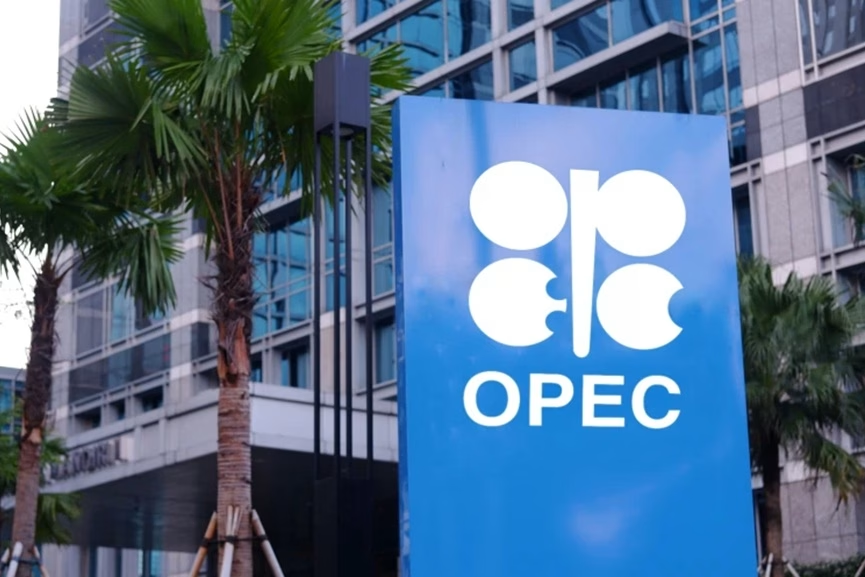
Frankfurt: A major shift is unfolding in the global energy landscape after the Organization of the Petroleum Exporting Countries (OPEC) faces one of its most significant changes in decades.
The United Arab Emirates has confirmed it will exit the group, ending a long-standing membership that helped shape oil markets for over 60 years.
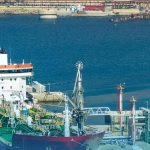
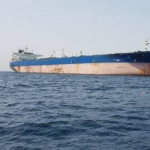
The move comes at a moment of heightened tension, with the Strait of Hormuz effectively blocked, disrupting the flow of crude from the Gulf and pushing prices upward.
Strategic Break from Collective Control
The UAE’s departure reflects a growing desire for autonomy over its oil policy. While OPEC has historically worked to stabilize prices by coordinating output among members, such arrangements also limit how much individual countries can produce.
Abu Dhabi has made clear it wants flexibility. Its strategy centers on gradually increasing output in line with market demand- a shift that signals a more independent approach rather than adherence to cartel quotas.
This isn’t a sudden break. Tensions have simmered for years, particularly with Saudi Arabia, which has traditionally steered OPEC’s direction.
For the UAE, expanding production now is also a hedge against the future, as global demand for fossil fuels is expected to peak amid the transition to cleaner energy.
قرار دولة الإمارات الخروج من منظمة أوبك يتماشى مع التطور المستند إلى سياسات القطاع والمتوافق مع أساسيات السوق طويلة الأمد. ونعرب عن تقديرنا لأوبك والدول الأعضاء على عقود من التعاون البنّاء. ونؤكد استمرار التزامنا بأمن الطاقة من خلال توفير إمدادات موثوقة ومسؤولة ومنخفضة… pic.twitter.com/QcUpH5YhEI
— وزارة الطاقة والبنية التحتية (@MOEIUAE) April 28, 2026
What It Means for Oil Prices?
In the short term, the UAE’s exit changes little. The bigger factor driving markets today is the disruption in the Gulf. With tanker traffic restricted through Hormuz, supply is tightening regardless of production policies.
However, the long-term implications are more significant. The UAE is one of the few producers capable of ramping up output quickly. Its absence reduces OPEC’s ability to fine-tune supply.
A weaker, less coordinated OPEC could lead to sharper fluctuations in oil prices. Without sufficient spare capacity concentrated within the group, responding to sudden shifts in demand or supply may become more difficult.
أعلنت دولة الإمارات العربية المتحدة اليوم قرارها بالخروج من منظمة الدول المصدرة للنفط “أوبك” و “أوبك +” على أن يسري القرار اعتباراً من الأول من مايو 2026.
ويتماشى هذا القرار مع الرؤية الإستراتيجية والاقتصادية طويلة الأمد لدولة الإمارات وتطور قطاع الطاقة لديها بما في ذلك تسريع… pic.twitter.com/Nmdg7VxeMi
— وزارة الطاقة والبنية التحتية (@MOEIUAE) April 28, 2026
OPEC’s Changing Influence
Founded in 1960, OPEC marked a turning point in global energy politics, shifting control from Western oil companies to resource-rich nations.
Over the years, its decisions have triggered major economic ripple effects, from the 1973 oil embargo to the formation of the broader OPEC+ alliance with countries like Russia.
Now, the UAE’s exit raises fresh questions about the cartel’s cohesion and future relevance.
Beyond geopolitics, a deeper shift is underway. As renewable energy gains momentum and climate concerns reshape policy, oil producers are rethinking long-term strategies.
For the UAE, maximizing output today may be more valuable than preserving reserves for an uncertain tomorrow.
For now, though, traders remain focused on one issue above all: whether oil can flow freely through the Gulf again. Until those changes, supply constraints, not policy shifts, will continue to dominate price movements.