
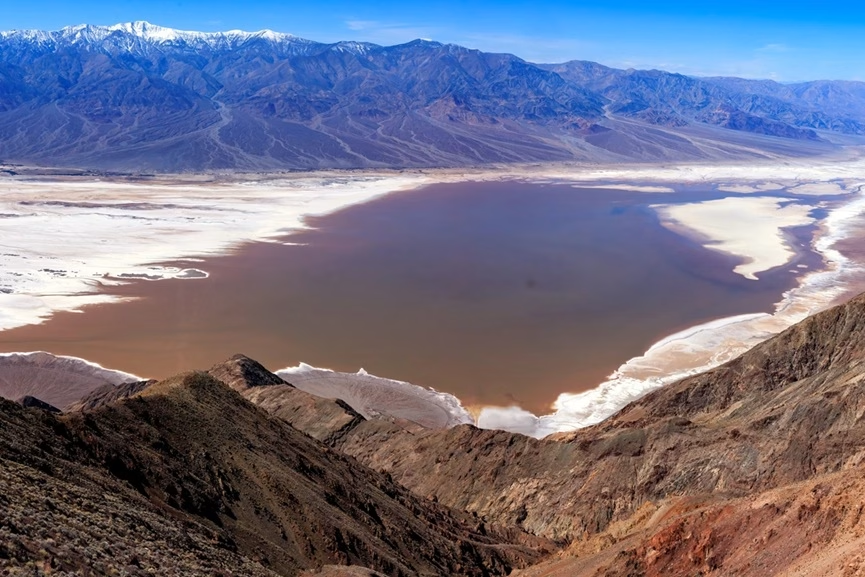
California: An ancient lake long vanished from Death Valley National Park has returned after months of unusually heavy rainfall, briefly transforming one of the driest places on Earth.
The temporary body of water, informally known as Lake Manly, has formed again at the bottom of Badwater Basin in California. The basin sits 282 feet below sea level and is the lowest point in North America, according to the National Park Service.
A series of storms from September through November sent runoff flowing across the normally dry salt flats, creating a shallow layer of water. While this year’s lake is smaller and shallower than the one seen two years ago, it marks another rare appearance of a feature that usually exists only after extreme weather.
In just two months, Death Valley received more rain than it typically sees in an entire year. The National Weather Service recorded 2.41 inches of rainfall between September and November. November alone brought 1.76 inches, breaking a record that had stood since 1923.
The lake is a modern echo of a much larger body of water that once filled the valley. Between roughly 128,000 and 186,000 years ago, melting glaciers in the Sierra Nevada fed rivers that drained into a vast lake stretching nearly 100 miles across the region.
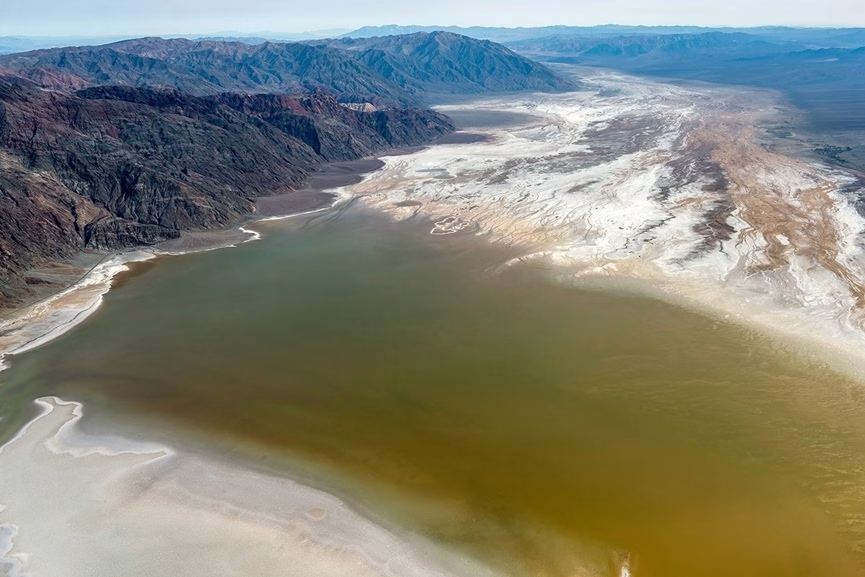
Today, Badwater Basin is normally a cracked expanse of salt and sand, shaped by intense heat and relentless wind. The recent flooding has temporarily altered that landscape, offering visitors a rare glimpse of how the desert may have appeared thousands of years ago.
The return of water comes amid growing concern about environmental changes in Death Valley. Recent years have seen record-breaking heat, with temperatures nearing 130 degrees Fahrenheit. The extreme conditions have drawn so-called heat tourists while raising alarms about the impact on native plants, birds, and wildlife.
In August 2023, more than two inches of rain fell in a single day, washing out roads and trails and forcing the park to close for weeks. The following month, temperatures again surged to near-record levels. Death Valley remains the site of the highest temperature ever reliably recorded on Earth, when the mercury reached 134°F in July 1913.
Heavy rainfall has previously triggered dramatic changes in the park. In 2016, a wet winter led to a rare superbloom that covered the desert floor with millions of wildflowers. Park officials say it is still too early to know whether the latest rains could produce a similar display in the months ahead.