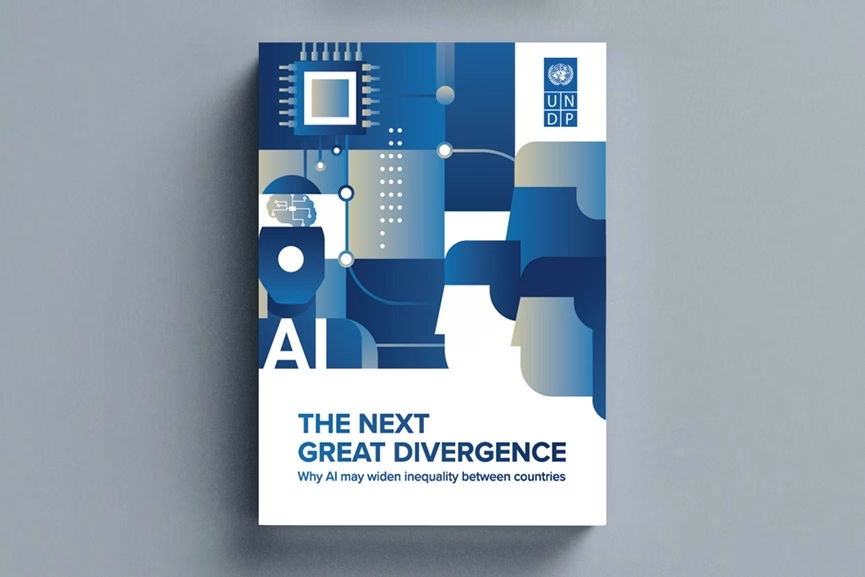
Geneva: The United Nations has warned that artificial intelligence could leave poorer nations behind, threatening to undo decades of improvements in global equality. Released by the UN Development Programme’s Asia and Pacific bureau, a report titled The Next Great Divergence urges governments to act quickly and collectively to manage the growing influence of AI.
It warns that the technology may become a major dividing line in the world economy, echoing the disruptive impact of the Industrial Revolution.
Philip Schellekens, the bureau’s chief economist, said recent trends point to a future in which advanced economies accelerate ahead while poorer nations fall further behind. He cautioned that rising inequality will carry wide-ranging consequences, from security risks to increased irregular migration, if developing countries are unable to keep pace.
.@UNDPasiapac’s flagship report on AI and human development, explains how AI is reshaping economies and societies, and why it may widen inequalities between countries that could trigger a #NextGreatDivergence unless urgent action is taken. #AI4HD
Download report:… pic.twitter.com/40Vd9R2lK5— UNDP in Asia and the Pacific (@UNDPasiapac) December 2, 2025
Asia Pacific at the Core of the Shift
The study focuses on the Asia Pacific region, home to more than half the world’s population and now a central hub for AI adoption. The region accounts for over 50 percent of global AI users and is already seeing clear benefits.
AI tools are helping teachers reach remote classrooms, improving early detection of diseases, supporting small businesses with easier access to credit, and strengthening emergency response efforts.
The report estimates that the technology could lift annual GDP growth in the region by around two percentage points, with ASEAN states alone potentially gaining nearly one trillion dollars in the coming decade. But progress remains uneven. Wealthier economies such as Singapore, Japan, and China are moving ahead quickly, while countries with poor connectivity, unstable electricity networks, and limited technical expertise are unable to take advantage of the same opportunities.
The report also highlights rising risks in the labour market. Millions of jobs across Asia, especially those dominated by women and young workers, are highly vulnerable to automation unless governments introduce strong protections, training programmes, and digital infrastructure.
The Next Great Divergence report is ready now! AFG risks missing early AI benefits. Limited power, internet, and digital skills make it harder for young people to access new opportunities.
Learn more: https://t.co/bIValUeHsF#AI4HD #AI4HumanDevelopment #NextGreatDivergence pic.twitter.com/8d2cigRpkJ
— UNDP Afghanistan (@UNDPaf) December 2, 2025
Call for Responsible Deployment
The authors stress that the future impact of AI cannot be predicted with certainty. What is clear, they say, is that countries must shape the direction of the technology rather than allow it to deepen existing divides.
The report concludes that people, not machines, should decide how AI is developed and used, and that global cooperation will be essential to prevent inequality from widening further in the years ahead.