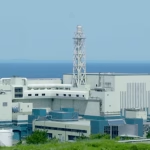

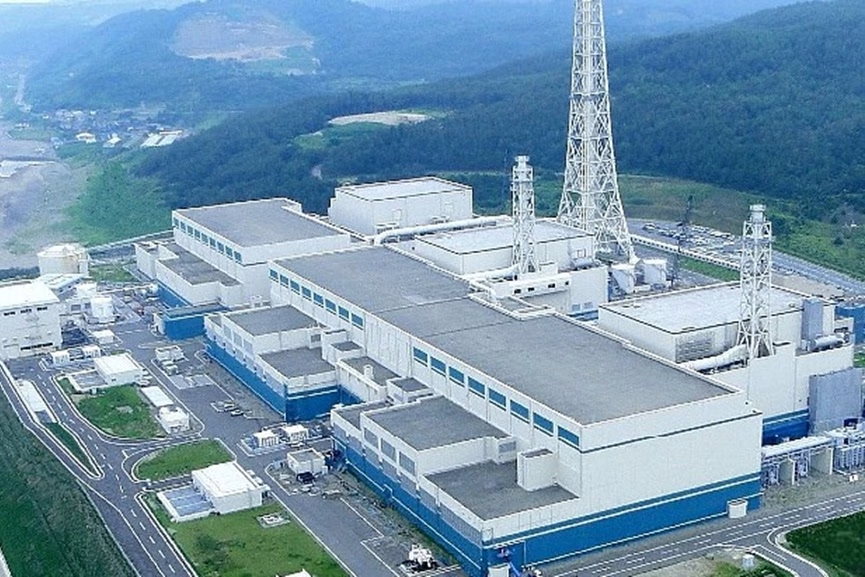
Tokyo: Japan has restarted operations at the Kashiwazaki-Kariwa nuclear power plant, the world’s largest by capacity, nearly 15 years after the country shut down its reactors in the aftermath of the Fukushima disaster.
Reactor No. 6 at the plant, located on the coast of Niigata prefecture northwest of Tokyo, was brought back online after a minor alarm malfunction delayed the restart by a day. The unit is expected to begin commercial operations next month.
The move marks a significant step in Japan’s effort to revive nuclear power as part of its long-term energy strategy. Before the 2011 Fukushima catastrophe, nuclear energy supplied almost 30 percent of Japan’s electricity, and the government had aimed to raise that share to 50 percent by 2030. By 2023, however, nuclear power accounted for just 8.5 percent of the country’s electricity output.
Japan now wants nuclear energy to cover about 20 percent of its power needs by 2040, as it seeks to cut carbon emissions and reduce reliance on imported fuel. The country, which depends heavily on overseas energy supplies, shut down all 54 of its reactors after the earthquake and tsunami in 2011 triggered a meltdown at the Fukushima Daiichi plant, causing one of the worst nuclear disasters in history.
At Kashiwazaki-Kariwa, only one reactor has been restarted so far. Reactor No. 7 is not expected to return to service until around 2030, while the remaining five units could be decommissioned. That would leave the plant operating well below its full capacity of 8.2 gigawatts, which it achieved when all seven reactors were running.
TEPCO’s Kashiwazaki-Kariwa Nuclear Power Station is one of the world’s largest nuclear power plants located by the sea of Niigata Prefecture. This facility has seven reactor units and can generate a total of 8.212 million kilowatts of electricity – enough carbon-free energy to… pic.twitter.com/elXNprHqzE
— TEPCO (@TEPCO_English) January 21, 2026
The Fukushima accident, about 220 kilometres northeast of Tokyo, led to radioactive leaks and mass evacuations, fuelling public distrust of nuclear power. Thousands of residents later filed lawsuits against plant operator Tokyo Electric Power Company and the Japanese government, seeking compensation for property damage, emotional distress, and alleged health effects from radiation exposure.
Despite lingering opposition, momentum has been building in favour of nuclear energy. Japan has restarted 15 of its 33 operable reactors since 2015 as part of a broader push to reach net zero emissions by 2050.
Prime Minister Sanae Takaichi has repeatedly stressed the role of nuclear power in strengthening energy security, particularly as electricity demand is expected to rise sharply due to the expansion of data centres and semiconductor manufacturing.
Energy companies argue that nuclear power offers a stable and reliable alternative to renewable sources such as solar and wind, which face limitations in Japan’s mountainous terrain. Safety standards have also been significantly tightened since Fukushima.