
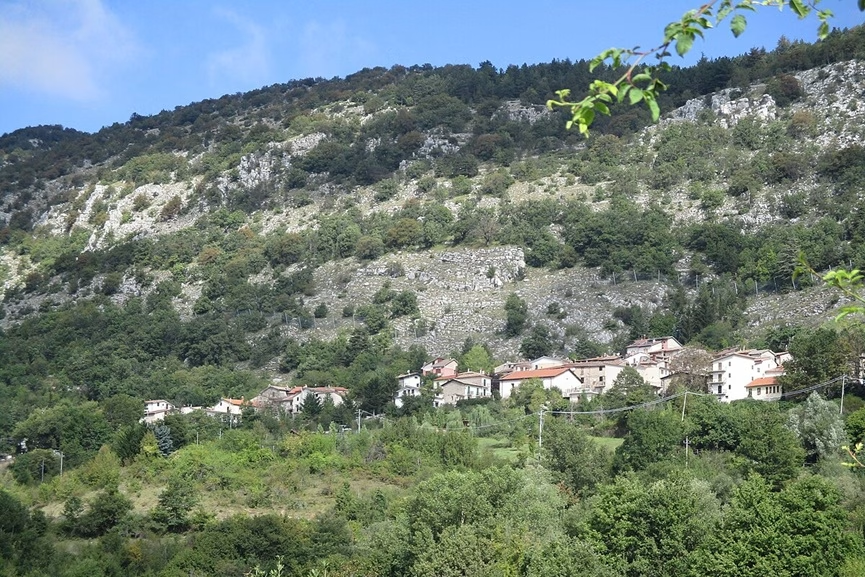
Italy: High in the Abruzzo mountains, the small village of Pagliara dei Marsi has long been a place ruled by cats. They slip through doorways, lounge on stone walls, and roam lanes that have grown quieter with the years. Human voices had faded here, leaving the soft echo of paws and purring as the village’s main soundtrack.
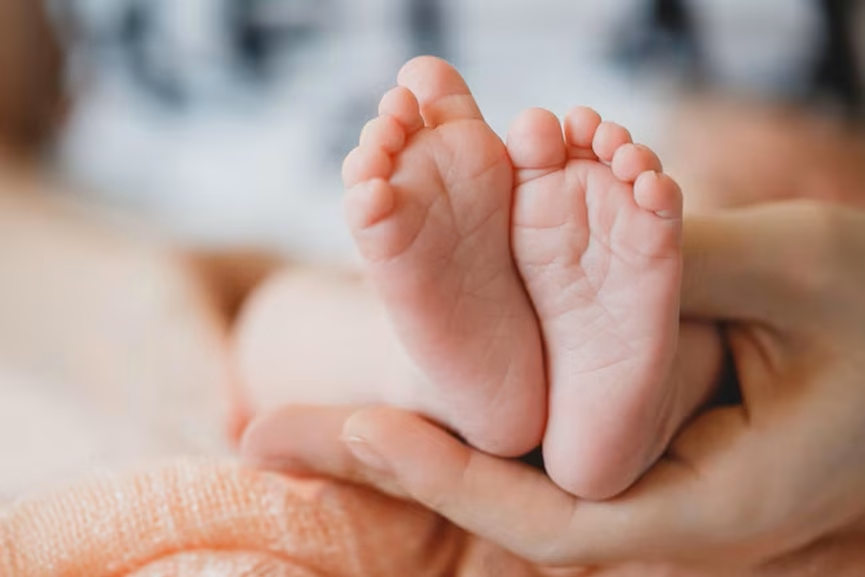
That silence was broken in March, when a baby was born for the first time in nearly three decades. Nine-month-old Lara Bussi Trabucco has lifted the village’s population to around 20 and brought a spark of life to daily routines. Her baptism filled the tiny church opposite her home, drawing every resident and more than a few cats. In a place accustomed to ageing faces, Lara has become a celebrated figure. Her mother, Cinzia Trabucco, said her daughter’s arrival has even drawn visitors who had never heard of the village.
While Lara’s birth has sparked joy, it also highlights a national challenge. Italy recorded just 369,944 births in 2024, the lowest ever documented, according to the national statistics agency Istat. The fertility rate fell to 1.18 children per woman, one of the lowest in the European Union.
Preliminary figures for 2025 suggest the trend is worsening, with Abruzzo among the regions hit hardest. Births in the first seven months of 2025 dropped 10.2 percent compared with the same period in 2024. Pagliara dei Marsi, though tiny, reflects a broader reality of shrinking communities, empty classrooms, and a rapidly ageing population.
Mayor Giuseppina Perozzi, who lives near Lara’s home, said the village has lost generation after generation. Many elderly residents have passed away, leaving few replacements, and she hopes Lara’s arrival might inspire others, even as she acknowledges how rare such decisions have become.
Cinzia Trabucco, a music teacher who spent years working in Rome, moved to the village of her grandfather’s birth to raise a child away from city congestion. Her partner, Paolo Bussi, works in construction and is originally from the area. The couple receives a €1,000 baby bonus and a monthly child allowance of about €370, incentives introduced by Prime Minister Giorgia Meloni’s government to address what she has called Italy’s ‘demographic winter.’
Yet the family says money alone does not solve deeper challenges. Balancing work and childcare remains difficult, with limited nursery spaces and weak support for working mothers. Many women leave the workforce during pregnancy and struggle to return.
Education is another concern: Pagliara dei Marsi has not had its own teacher in decades, and school closures in nearby towns raise doubts about long-term viability. Trabucco said high taxes provide little support for family life, calling for a complete overhaul of the system.
For now, Lara is the village’s brightest hope, a symbol of renewal in a place where life had grown quiet. Her presence is not just a joyful event- it is a reminder of the challenges Italy faces in reversing a demographic decline that touches even the most remote corners of the country.