
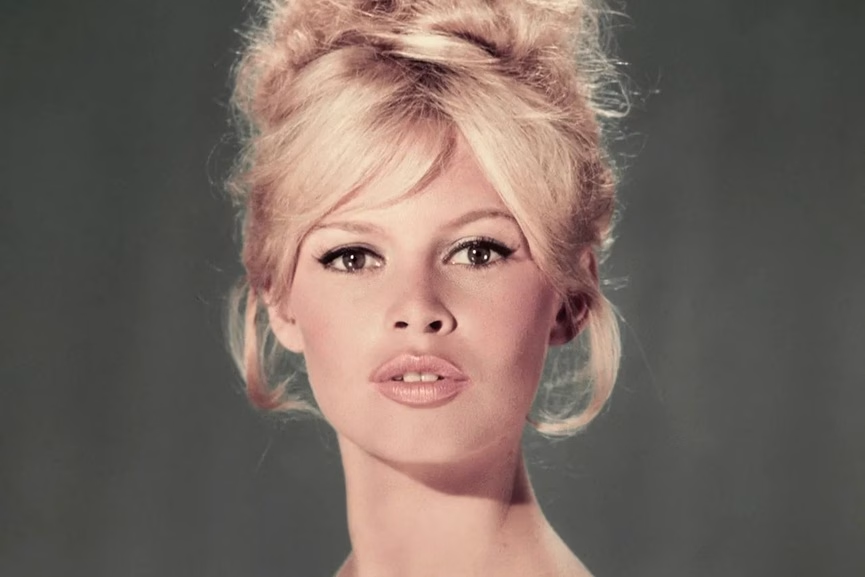
France: Brigitte Bardot, the French actress and singer who rose to global fame in the 1950s before retiring from cinema to devote her life to animal rights, has died at the age of 91. Her death was announced by the Brigitte Bardot Foundation, which said its founder and president had passed away after dedicating decades of her life to the protection of animals.
Born in Paris on September 28, 1934, Bardot grew up in a wealthy, conservative family. Trained as a ballet dancer, she earned a place at the Conservatoire de Paris and began modelling as a teenager. At just 15, she appeared on the cover of Elle magazine, an exposure that soon led to film auditions and small screen roles.
Her breakthrough came in 1956 with ‘And God Created Woman,’ directed by her then-husband, Roger Vadim. The film caused a sensation, both in France and abroad, her tousled hair and fierce energy radiating a sexual magnetism rarely seen in mainstream cinema at the time turned Bardot into an international star.
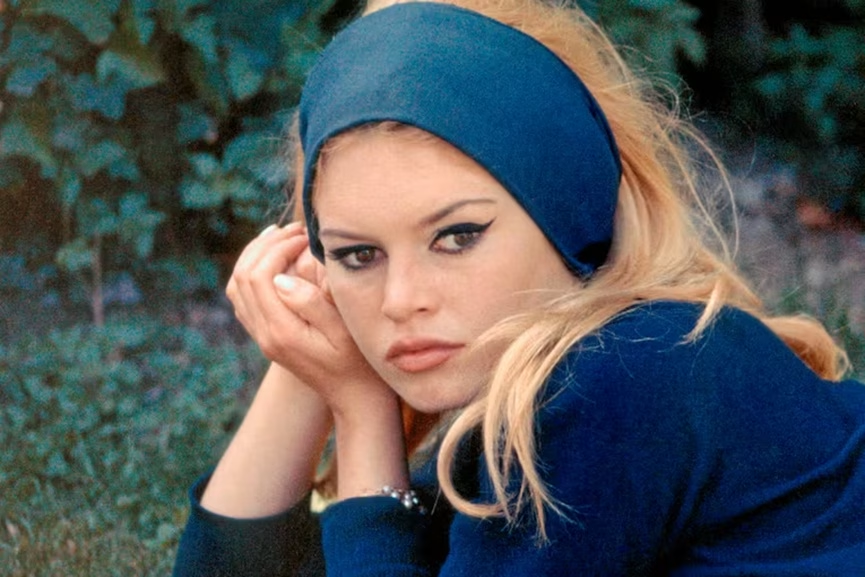
At just 21, she scandalised censors and captivated audiences, her free-spirited presence marking a sharp break from the demure heroines who had dominated the screen in earlier decades. With her uninhibited screen presence, she came to embody a new image of female freedom and desire, earning the nickname BB and becoming one of the defining cultural figures of her era.
Over the next two decades, Bardot appeared in nearly 50 films, working with some of Europe’s most celebrated directors. Her notable performances included roles in The Truth, Contempt, and Very Private Affair, as well as international productions alongside stars such as Marcello Mastroianni, Jeanne Moreau, and Sean Connery. In 1969, she was chosen as the first real-life model for Marianne, the symbol of the French Republic.
Alongside her film career, Bardot also pursued music, recording several popular songs. One of the most famous was the original version of Je T’Aime… Moi Non Plus, written for her by Serge Gainsbourg, though it was never released in her voice.
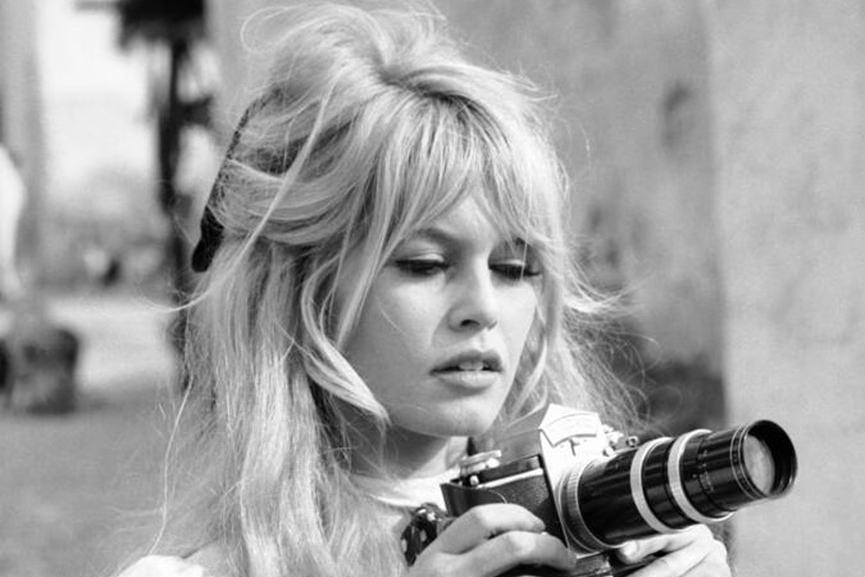
Despite her fame, Bardot grew increasingly uncomfortable with celebrity life. In 1973, at the age of 39, she retired from acting entirely. From that point on, she devoted herself almost exclusively to animal welfare, becoming a vocal campaigner against seal hunting and other forms of animal cruelty. In 1986, she founded the Brigitte Bardot Foundation, which went on to play a prominent role in international animal rights campaigns.
Her later years were marked by controversy. Bardot was fined several times for inciting racial hatred following public statements and writings that targeted ethnic and religious minorities. She openly supported France’s far-right political movements and figures, positions that drew widespread criticism and overshadowed her activism.
Bardot was married four times and had one son. Her personal life, like her career, was often lived in the public eye. Revered by admirers as a symbol of cinematic freedom and condemned by critics for her political views, Brigitte Bardot remained a divisive figure until the end. Her legacy reflects both her lasting impact on film and culture and the controversies that came to define her later life.