
China: Chinese astronauts have carried out new safety work on the Tiangong space station after a piece of high-speed debris cracked the window of a docked return capsule last month, prompting the first emergency response of China’s crewed space programme. The incident has renewed concern over the growing threat posed by space junk in Earth’s orbit.
In early November, a small fragment of debris travelling at high velocity struck the Shenzhou-20 return capsule while it was docked at Tiangong. The impact cracked one of its windows and raised immediate safety concerns, coming just as the spacecraft was preparing to bring three astronauts back to Earth. China’s space authorities judged the damage too severe to risk a crewed re-entry and decided to delay the return.
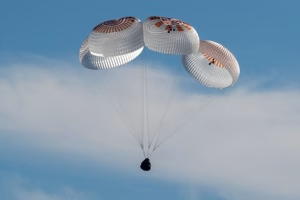
As a result, the astronauts were redirected to the only other available spacecraft, Shenzhou-21, forcing China to launch its first emergency mission. For 11 days, the Shenzhou-21 crew remained without a flightworthy return vessel until their own replacement craft was safely docked. The episode was unprecedented for China’s fast-growing programme and highlighted the increasing danger of debris in low Earth orbit.
Space junk, created by the breakup of old satellites, accidental collisions and weapons tests, can remain in orbit for years and travel at speeds capable of damaging even well-protected spacecraft.
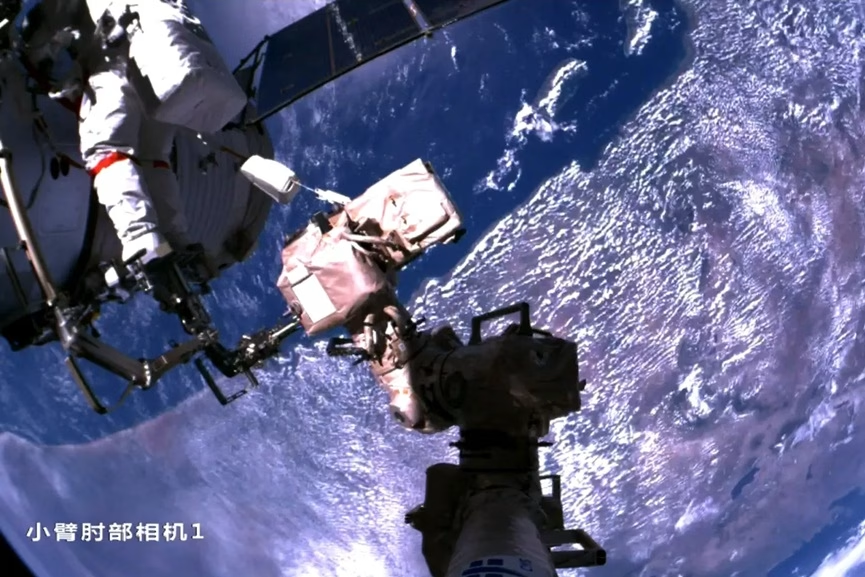
To reduce the risk of another emergency, two astronauts from the Shenzhou-21 crew conducted a spacewalk on Tuesday to install new debris-protection equipment using Tiangong’s robotic arm.
During the spacewalk, the crew also inspected and photographed the damaged window of Shenzhou-20. The vessel remains attached to the station and will later be sent back to Earth without a crew for detailed analysis. Engineers are considering reinforcing the cracked window during future spacewalks if necessary.
China’s space authorities say the new shielding will strengthen Tiangong’s ability to withstand debris strikes as the country moves forward with its long-term plans for human spaceflight and deeper space exploration.