
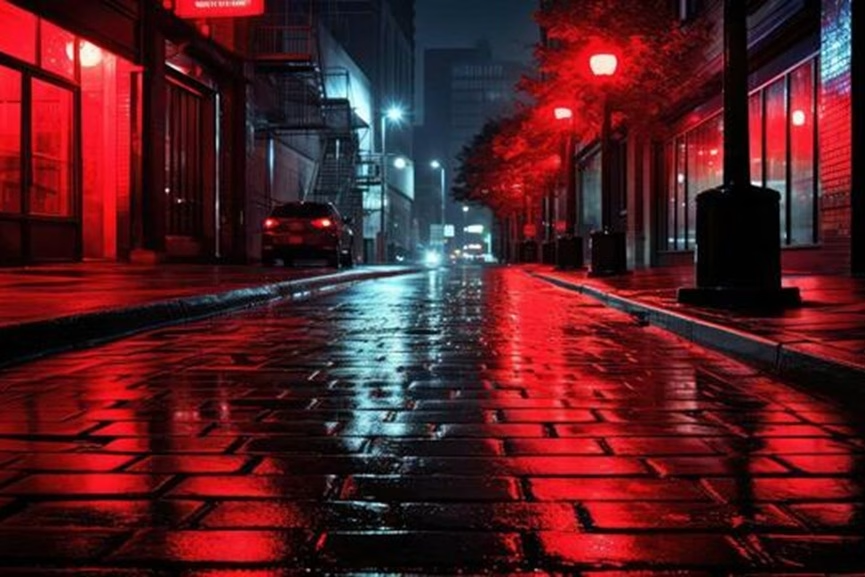
Copenhagen: Denmark, is testing an unusual but carefully thought-out solution to protect wildlife without compromising public safety, by replacing white streetlights with red lighting along selected roads near Copenhagen.
The experiment is underway in Gladsaxe, a suburb on the outskirts of the capital, where conventional streetlights on parts of Frederiksborgvej near Skovbrynet have been swapped for red-hued lamps.
The area is home to a local bat colony, and municipal authorities say the change is aimed at reducing the harmful impact of artificial light on wildlife while keeping roads usable for people.
Rather than switching the lights off entirely, officials chose a colour that alters how light affects animals. The difference is visible only at night and only along specific stretches of the road, making the change subtle for residents and motorists.
Bats played a central role in the planning. Research shows that artificial lighting can interfere with their movement, feeding, and navigation, particularly short-wavelength light such as blue, green, and white. Studies from the Netherlands indicate that red light, which has longer wavelengths, is far less disruptive to bat behaviour and may even make it easier for them to hunt insects.
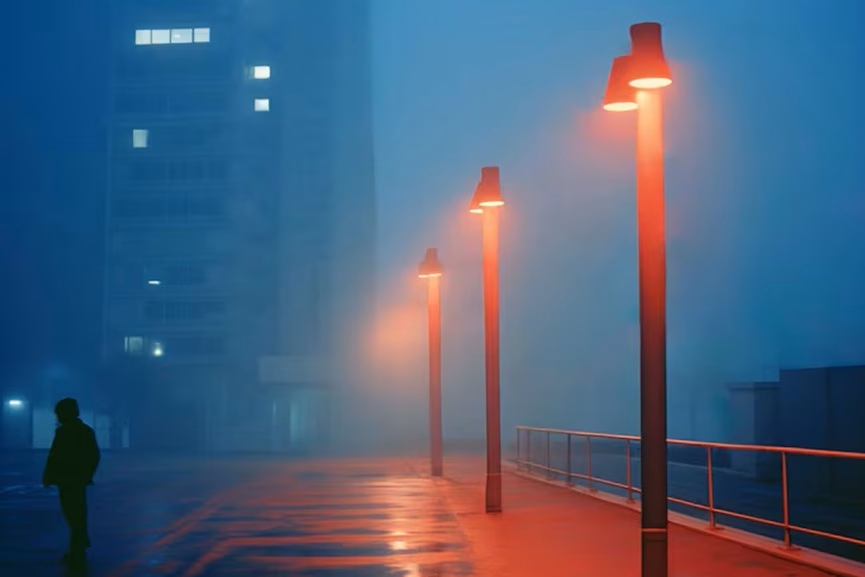
Safety concerns meant darkness was never an option. Authorities said turning off streetlights would have created risks for drivers, cyclists, and pedestrians. Red lighting was selected as the best compromise between protecting wildlife and maintaining visibility.
Road safety remains a priority in the new design. Warm white lights are still used at intersections and pedestrian crossings, mounted on taller poles to improve visibility in areas with higher risk. The lighting changes gradually along the route, tailored to how different sections are used by both people and animals.
Jonas Jørgensen, a road engineer with the Gladsaxe Municipality, said the goal was to reduce disruption to wildlife while keeping roads accessible. He noted that while complete darkness would benefit bats most, it is not practical on a public road. The solution, he said, lies in careful planning rather than a single, uniform lighting approach.