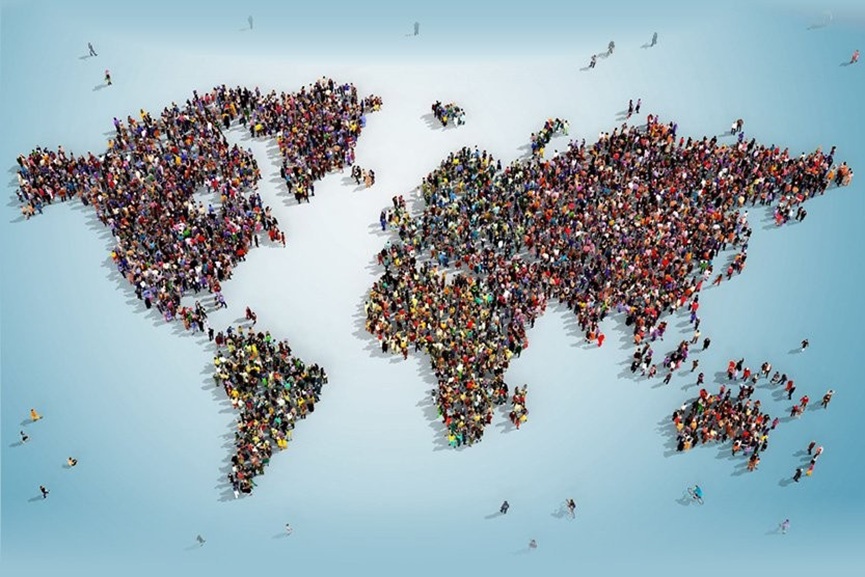
Geneva: Every year on July 11, the world comes together to observe World Population Day, a moment dedicated to raising awareness about pressing population challenges.
First celebrated in 1990 following the historic ‘Day of Five Billion’ on July 11, 1987, this global event was established by the United Nations Development Program to highlight the importance of population issues in the context of development and environmental sustainability.
The theme for World Population Day 2025, “Empowering Youth to Build the Families They Want in a Fair and Hopeful World,” underscores the growing need to ensure that young people have the autonomy, resources, and opportunities to shape their futures and make informed reproductive choices.
Changing Face of the Global Population
The world’s population has witnessed a staggering rise, tripling since the mid-20th century. According to the latest UN estimates, the global population reached 8.2 billion in July 2025 and is expected to climb to 9.7 billion by 2050, before peaking at 10.4 billion in the 2080s.
Today on #WorldPopulationDay, we celebrate the largest youth generation ever.
They’re leading with courage, demanding a fairer, more hopeful world. Let’s invest in their rights, choices & futures.
👉 https://t.co/MC05RuXSO2#YouthPower #UN #HopeForTheFuture pic.twitter.com/5gjw11oqDZ
— United Nations in Myanmar (@UNinMyanmar) July 11, 2025
Two nations, India and China, continue to dominate the demographic landscape, each home to over a billion people and comprising around 18 percent of the world’s total population.
However, in a historic shift, India has overtaken China as the most populous nation, with its population projected to reach 1.46 billion by the end of 2025.
India’s Demographic Snapshot
India’s demographic journey is undergoing significant transformation. The UN Population Fund (UNFPA) 2025 State of World Population Report reveals that India’s fertility rate has dropped below the replacement level.
Key demographic indicators include:
- 1.46 billion projected population in 2025.
- Approximately 24 percent are aged 0-14 years.
- Around 26 percent of the population is aged 10-24 years.
- 68 percent in the working-age group of 15-64 years.
- 7 percent of the population is aged 65 and above, with a life expectancy of 71 years for men and 74 years for women.
World Population Day serves as a platform to raise awareness about family planning and renew our commitment to addressing population-related challenges.
This year’s theme, “Healthy Timing and Spacing of Pregnancy for the Health and Well-being of Mother and Child,” highlights the… pic.twitter.com/nCsjGzdNEf
— Jagat Prakash Nadda (@JPNadda) July 11, 2025
Economic Impact of Population Growth
The post-World War II era has seen unprecedented population growth, bringing with it complex challenges for economic and social development. While a growing population can drive economic dynamism and labor force expansion, it also strains infrastructure, healthcare, education, and environmental resources.
Population growth influences economic outcomes through factors like:
- Age structure: A youthful population can fuel growth if harnessed properly.
- Resource management: Rapid growth increases demand for food, water, and energy.
- Policy planning: Government strategies play a key role in balancing growth with sustainability.
Recognizing the importance of population stabilization, the Indian government has implemented a range of measures under the Mission Parivar Vikas and other schemes to promote family planning and reproductive health. These efforts aim to empower individuals, especially women and youth, to make informed decisions about family size and reproductive health.


While some regions grapple with population surges, others face the opposite challenge: population decline. Shrinking populations, often driven by low birth rates, aging citizens, and emigration, threaten economic stability and social security systems.
Japan, Russia, Poland, Latvia, Lithuania, Romania, Bulgaria, Estonia, Puerto Rico, and the Cook Islands are among the countries witnessing significant population decrease. The trend of declining populations raises concerns over labor shortages, pension sustainability, and economic stagnation.
Investing in education, gender equality, health services, and economic opportunities for young people will be key to building a future where individuals can create the families they desire in a world that supports their aspirations.