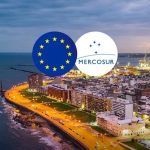

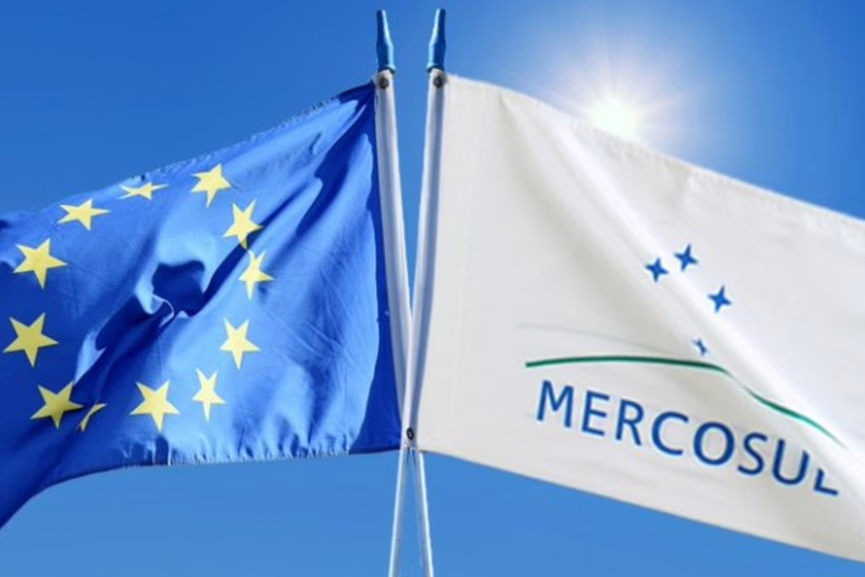
Brussels: European Union member states have given provisional approval for the bloc to sign its largest-ever free trade agreement with the South American Mercosur group, ending more than 25 years of negotiations and months of political wrangling. The Mercosur bloc will sign the trade agreement with the European Union on January 17 in Paraguay, Argentina’s foreign ministry said.
The deal, covering Argentina, Brazil, Paraguay, and Uruguay, secured enough backing despite strong opposition from several countries concerned about its impact on farmers. At least 15 EU states representing 65 percent of the bloc’s population voted in favour, meeting the threshold required for approval. France voted against the agreement, while Belgium abstained. Diplomats said a total of 21 countries supported the deal.
Supporters, including Germany and Spain, argue the agreement is strategically important at a time of rising global trade tensions. They say it will help European companies offset losses from potential US tariffs and reduce dependence on China by improving access to key raw materials and new markets.
Today’s Council decision to support the EU-Mercosur deal is historic.
Europe is sending a strong signal.
We are serious about creating growth, jobs and securing the interests of Europeans consumers and businesses.
With Mercosur, we are creating a shared market of 700 million… pic.twitter.com/WMGXWzFgua
— Ursula von der Leyen (@vonderleyen) January 9, 2026
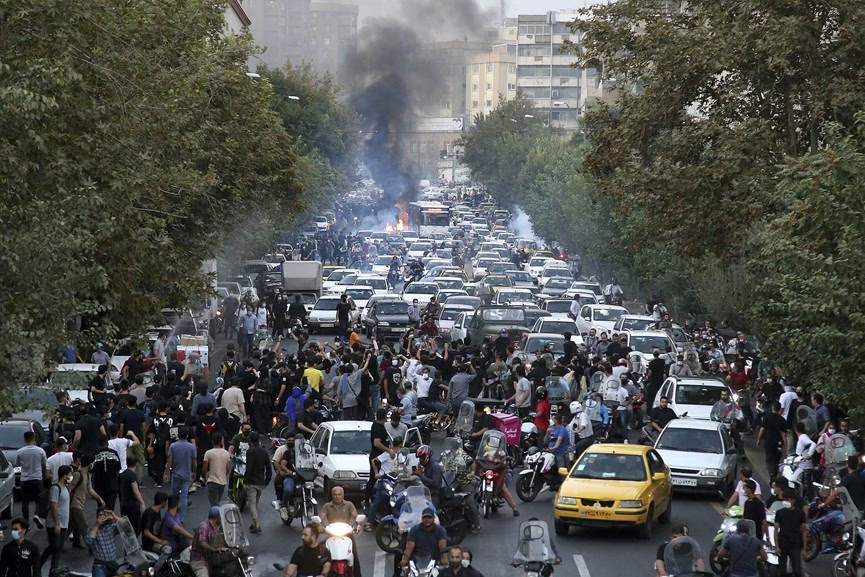
Opponents, led by France, warn the agreement could flood Europe with cheaper agricultural imports such as beef, poultry, and sugar, undercutting domestic farmers. Those concerns have led to widespread protests across the bloc, with farmers blocking highways in France and Belgium and staging demonstrations in Poland.
Germany’s chancellor described the vote as a major step forward for Europe’s trade policy, while also stressing that future trade talks should move far faster than the quarter-century it took to reach this deal. Italy, which had opposed the agreement late last year, switched to supporting it, with its prime minister saying the final balance was acceptable.
The European Commission concluded negotiations on the agreement a year ago and has since offered safeguards to reassure sceptical governments. These include the ability to suspend imports of sensitive farm products, tighter controls on pesticide residues, a crisis fund for farmers, and reduced duties on fertilisers. Even so, these measures failed to sway France and Poland.
The Council has authorised the signing of the EU-Mercosur partnership and trade agreements.
In 2024, EU-Mercosur trade was worth over €111 billion.
More facts and figures👇https://t.co/4xNFo9jTUB pic.twitter.com/tuWWoDc8EY
— EU Council (@EUCouncil) January 9, 2026
If EU capitals confirm their votes in writing by the deadline on Friday, Commission President Ursula von der Leyen will be able to sign the agreement with Mercosur leaders, possibly as early as next week in Paraguay’s capital, Asuncion.
The deal would eliminate around 4 billion euros a year in tariffs on EU exports. Mercosur currently imposes high duties on items such as car parts, dairy products, and wine. Goods trade between the two sides was worth about 111 billion euros in 2024, split roughly evenly. EU exports are led by machinery, chemicals, and transport equipment, while Mercosur mainly sells agricultural goods, minerals, pulp, and paper.
The agreement still faces hurdles. It must be approved by the European Parliament before it can take effect, and that vote could be closely contested. French political parties on both the far right and far left have threatened no-confidence motions against the government, while environmental groups argue the deal could accelerate deforestation in the Amazon.
Despite the resistance, senior figures in the European Parliament’s trade committee said they were confident the agreement would ultimately be approved, with a final vote expected in the coming months.