
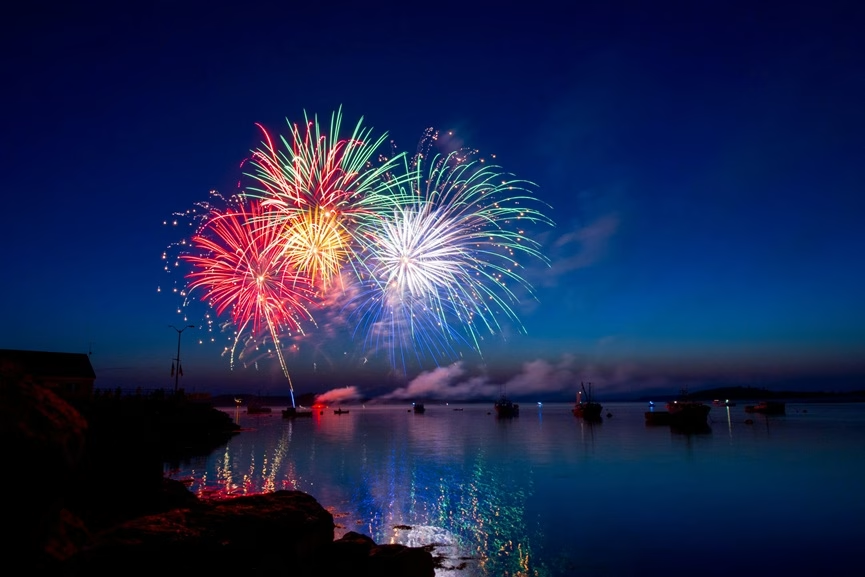
New Delhi: As the clock approaches midnight on December 31, millions of people around the world prepare to welcome the New Year.
While many will count down together, not everyone enters the new year at the same moment. Because of time zones and the Earth’s rotation, some countries celebrate well before others, with festivities beginning in the far Pacific and moving steadily westward.
The first place on Earth to welcome the New Year is the Pacific island nation of Kiribati, specifically Kiritimati, also known as Christmas Island. Located just west of the International Date Line, Kiritimati falls in the world’s earliest time zone. When midnight strikes there, much of the world is still in the previous day.
This unique position dates back to 1995, when Kiribati realigned the International Date Line to ensure all its islands shared the same calendar day. As a result, Kiritimati now greets the New Year earlier than any other inhabited place. When the island enters January 1, it is still around mid-afternoon on December 31 in India, with Kiribati about eight and a half hours ahead of Indian Standard Time.
Close behind Kiribati are other Pacific nations, including Samoa, Tonga, and Tokelau. New Zealand is also among the early celebrants, followed by parts of Russia, Fiji, and several smaller island nations in the Pacific. Australia enters the New Year later in the sequence, with cities such as Sydney welcoming midnight while much of Asia is still hours away from celebrations.
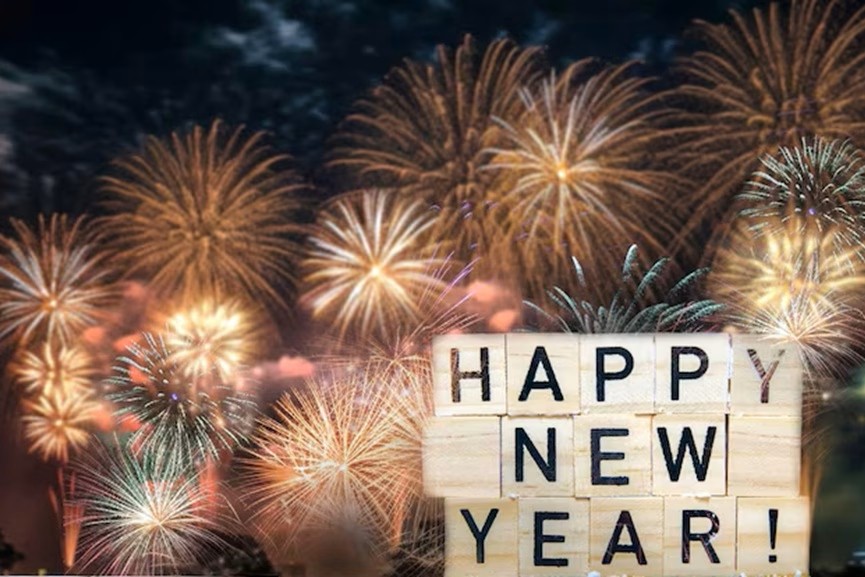
The staggered celebrations highlight how the New Year travels across the globe, beginning near the International Date Line and ending almost a full day later in the eastern Pacific.
At the other end of the calendar are American Samoa and a handful of remote US territories. American Samoa is one of the last inhabited places to welcome the New Year, nearly 24 hours after Kiribati. Even later are the uninhabited Baker and Howland Islands, which mark the final points on Earth to enter the new year.
This global progression underscores the role of time zones in shaping one of the world’s most widely shared celebrations, reminding people that while the New Year arrives at different hours, it is welcomed with the same sense of hope and anticipation everywhere.