
Germany: Germany has approved a voluntary military service programme as part of a broader effort to rebuild its defence capabilities. The move marks a sharp turn in German security policy following Russia’s invasion of Ukraine and supports Chancellor Friedrich Merz’s ambition to develop Europe’s strongest conventional army.
Under the new system, every 18-year-old will receive a questionnaire from January 2026 asking if they are willing to join the armed forces. Completing the form will be mandatory for men and optional for women. The government says the programme will remain voluntary, but it has left open the possibility of compulsory service if security conditions worsen or if recruitment numbers fall short.
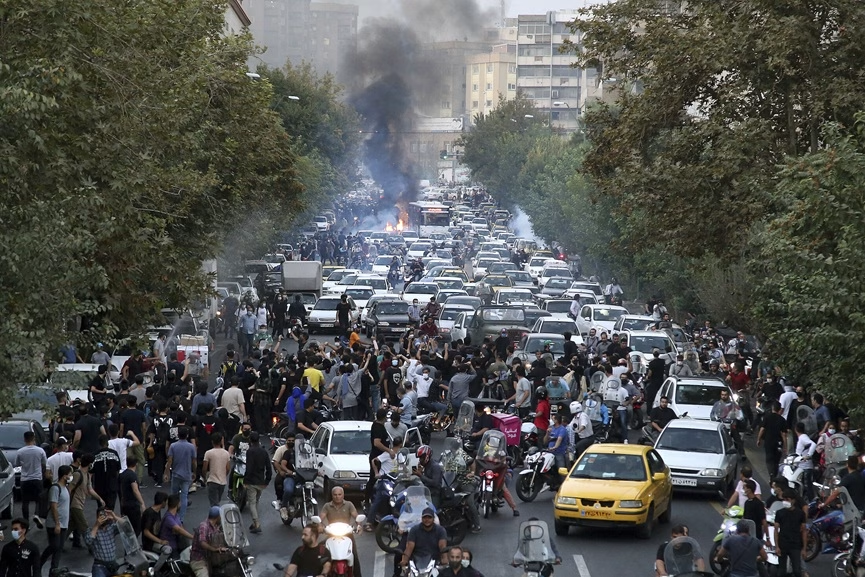
The plan has stirred widespread discontent among young people. Students from as many as 90 cities announced nationwide strikes to protest against the proposal, arguing that military service offers no meaningful future and drags them into a system they do not support. In Hamburg alone, more than 1,500 students were expected to join demonstrations, prompting school leaders to warn parents not to remove children from classes.
Despite the pushback, the Bundestag voted 323 to 272 in favour of the reform. The approval brings Germany in line with several European countries revisiting national service in response to geopolitical tensions. France recently announced a 10-month voluntary military training programme for young adults.
Der Bundestag hat den neuen Wehrdienst beschlossen. Verteidigungsminister Pistorius sagte in der Debatte: Meinungsfreiheit, Demonstrationsfreiheit, Religionsfreiheit und der Staat „schützen sich nicht von alleine. Das müssen Menschen tun, die bereit sind, für ihn einzutreten.“ pic.twitter.com/q37rFJfRq9
— Bericht aus Berlin (@ARD_BaB) December 5, 2025
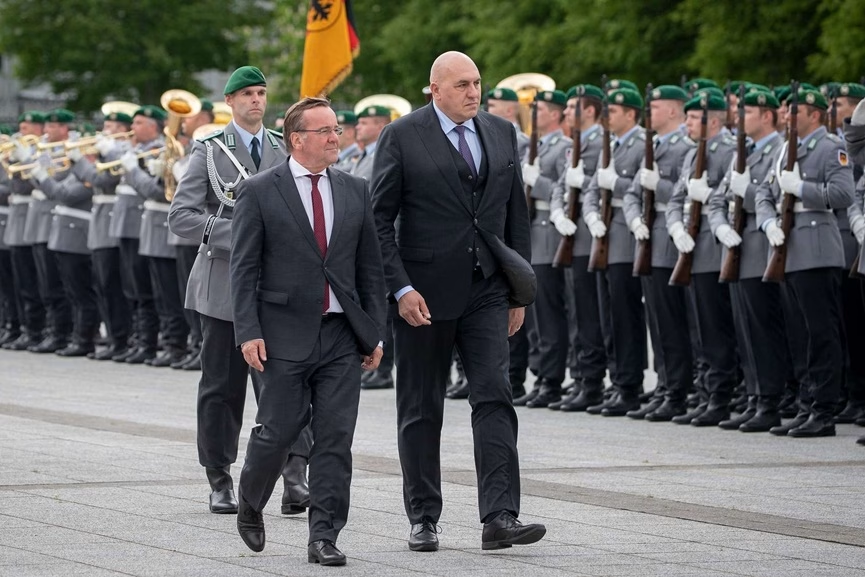
Germany’s Defence Minister Boris Pistorius says the new system also includes compulsory medical examinations for all 18-year-old men starting July 2027. This step, he argues, will ensure the military can quickly identify who is physically fit to defend the country should a conflict erupt.
The Bundeswehr currently has about 182,000 troops. The government aims to add 20,000 soldiers within the next year and boost the total force to around 260,000 by the early 2030s. A reserve force of about 200,000 would bring Germany closer to meeting NATO’s new operational targets. Incentives for volunteers are generous, with entry-level monthly pay of roughly €2,600.
Germany once maintained a large Cold War-era army of nearly half a million but scaled back its forces significantly after the 1990s. Compulsory service ended in 2011 under former Chancellor Angela Merkel. Today’s shift reflects growing fears about Russia as well as strong pressure from the United States for European allies to strengthen defence budgets.
The Bundestag’s session also included a critical vote on a pensions reform bill that would keep state pensions stable until 2031. The measure is a central part of the coalition agreement between Merz’s conservatives and the Social Democrats, who hold a narrow majority.
Concerns arose over a possible rebellion from younger conservative MPs who argue the plan would burden future generations. However, the opposition Left party said it would abstain, lowering the threshold for approval and giving the coalition a clearer path to passage.