

Indonesia: The floods and landslides that ripped through Indonesia’s Batang Toru ecosystem in November 2024 left behind a trail of devastation that shocked conservationists and communities alike.
More than 1,100 people were killed as mud, debris, and felled logs surged into nearby villages. The disaster also dealt a severe blow to the critically endangered Tapanuli orangutan, with scientists estimating that up to 11 percent of the species may have been wiped out in a matter of days.
In the weeks that followed, scrutiny intensified over the activities of extractive companies operating in and around the fragile forest landscape. Investigators focused on whether mining, logging and energy projects had weakened the Batang Toru and Garoga watersheds before the catastrophe struck.
Now, the Indonesian government has begun to act. Over the past week, President Prabowo Subianto announced a series of measures aimed at holding companies accountable for an extinction-level disturbance to the world’s rarest great ape.
On Tuesday, authorities confirmed that the permits of 28 companies operating in the area would be revoked, effectively stopping their activities. The decision affects a wide range of operations, including timber harvesting, oil palm plantations, and major industrial projects. Among them are PT Agincourt Resources, operator of the Martabe goldmine, and PT North Sumatera Hydro Energy, which is developing a large hydropower project along the Batang Toru River.
The move follows findings by Indonesia’s Forest Area Regulation Task Force, which examined land use and compliance in the region. Separately, the environment ministry has filed a lawsuit against six companies, seeking 4.8 trillion rupiah in damages over alleged links to environmental harm across roughly 2,500 hectares of watershed land.
PT Agincourt Resources said it learned of the permit revocation through media reports and is now engaging with regulators. Mining operations at the site have been suspended since early December.
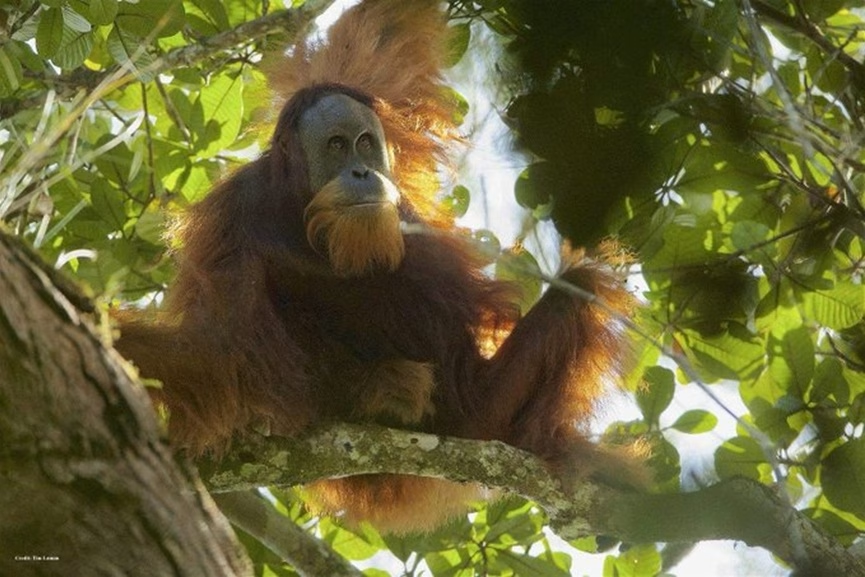
Scientists have long warned that Batang Toru’s forests are irreplaceable. The Tapanuli orangutan is found nowhere else on Earth, and its total population is estimated to be around 800. Early assessments after the floods suggest that between 6 percent and 10 percent of the animals may have died.
A full field assessment of the impact on orangutans is expected in the coming weeks. Some researchers caution that extreme rainfall played a major role in triggering landslides, particularly in remote, steep forest areas. Campaigners are now urging Jakarta to take further action by permanently ending deforestation in Batang Toru and restoring the damaged areas.