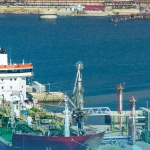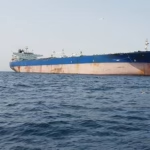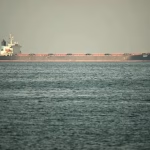

Tehran: A French container ship, three Oman-linked tankers, and a Japanese-owned LNG carrier have successfully transited the Strait of Hormuz, marking a significant development as some vessels cautiously navigate the contested waterway.
The Malta-flagged container vessel Kribi, operated by French shipping giant CMA CGM, became the first Western vessel known to have passed through the strait since Iran effectively closed it, according to data from MarineTraffic.
Vessel-tracking data suggests that the ship’s AIS transponders were switched off during the crossing, a precaution likely taken to ensure security in the disputed waters.
Meanwhile, two very large crude carriers (VLCCs) and one LNG tanker operated by Oman Shipping Management also exited the Gulf.
Japan’s Mitsui OSK Lines confirmed that its co-owned LNG tanker, Sohar LNG, had crossed the strait, making it the first Japan-linked vessel and the first LNG carrier to navigate the route since hostilities began on February 28.
Since March 1, only about 150 vessels, including tankers and container ships, have transited the strait, according to Lloyd’s List Intelligence. The majority were linked to Iran or to countries such as China, India, and Pakistan. Beijing expressed gratitude after three Chinese ships, including two state-owned Cosco container vessels, passed through the strait earlier this week.
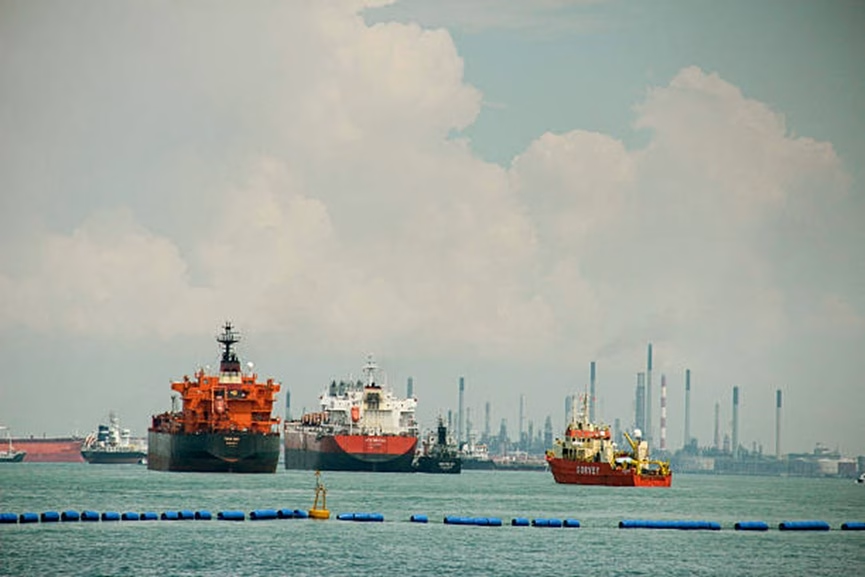
The blockade of the Strait of Hormuz has intensified the global energy crisis. Previously a vital route for roughly 20 percent of global oil and liquefied natural gas supplies, the strait’s closure has contributed to soaring fuel prices worldwide.
US President Donald Trump said that petrol prices would decline rapidly once the war concludes, though he offered no concrete plan to reopen the strait, suggesting instead that US allies should take the initiative.
French President Emmanuel Macron emphasized that a military operation to reopen the strait would be unrealistic, advocating for diplomatic solutions. He has been coordinating with European and international partners to build a coalition aimed at ensuring free navigation once hostilities end.
In a related development, Iran’s former foreign minister Mohammad Javad Zarif wrote in Foreign Affairs that Tehran could negotiate with the United States to end the war.