
New Delhi: India is staring at a steep rise in cancer cases, with annual numbers projected to climb from about 1.5 million at present to more than 2.45 million by 2045, underscoring the urgent need to prioritise prevention and early detection alongside treatment.
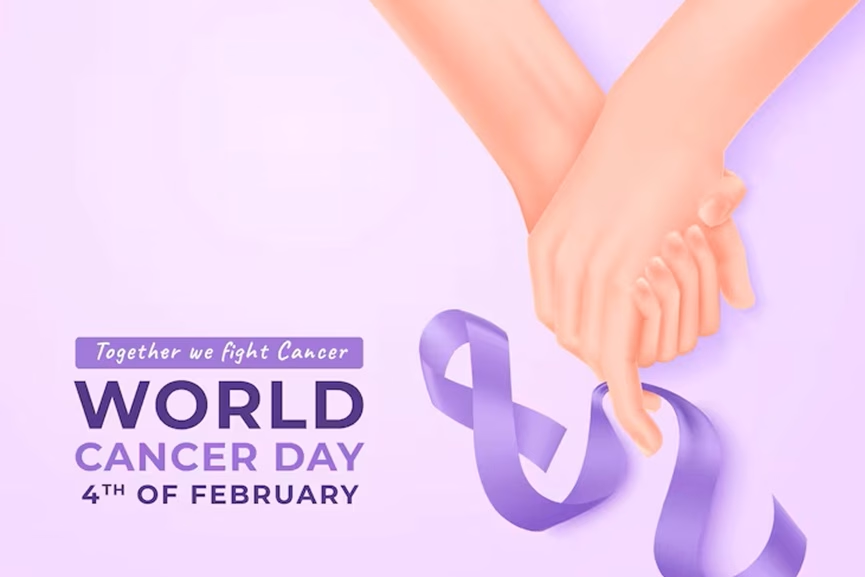
The warning was sounded by the Indian Cancer Society (ICS) during a media interaction held in the capital on the eve of World Cancer Day. Health experts, policymakers, and cancer survivors came together to discuss emerging cancer trends, persistent gaps in care, and the growing importance of preventive strategies.
The discussion took place against the backdrop of the Union Budget 2026–27, which announced key steps to improve access to cancer treatment, including customs duty exemptions on select cancer drugs and a renewed push for domestic biopharma manufacturing. While public health experts welcomed these measures, they cautioned that expanding treatment alone would not be enough to tackle India’s rising cancer burden.
“The Budget has opened new pathways for affordable treatment, but our core focus remains preventing cancers and detecting them early, before patients reach advanced stages,” an ICS spokesperson said.
Close to 40% of new #cancer cases in 2022— affecting 7.1 million people — were linked to preventable causes.
Kick cancer to the curb!
Smart moves like quitting tobacco, eating well, staying active, choosing clean energy, and getting vaccinated can cut your risk of… pic.twitter.com/cY32SIxmd1
— World Health Organization (WHO) (@WHO) February 4, 2026
Focus on prevention and early care
Highlighting the organisation’s long-standing work, Jyotsna Govil, Chairperson of ICS Delhi, said the society has spent decades working on cancer prevention, patient support, and advocacy. She stressed the role of responsible and informed media in breaking myths around cancer and encouraging people to seek early screening.
Dr Urvashi Prasad, cancer survivor and former Director at NITI Aayog, pointed to systemic challenges such as gaps in cancer data, regional inequalities in care, and financial barriers that delay diagnosis and treatment. She called for stronger coordination between the Centre and states, along with sustained public investment in cancer care.
Offering a survivor’s perspective, Renuka Prasad, Secretary of ICS Delhi, spoke about the emotional, physical, and financial strain faced by patients and families. She highlighted community-led initiatives such as large-scale screening drives, the ‘Prashanti’ rehabilitation centre, the Rise Against Cancer app, and patient support programs.
Union Health Minister Releases Lung Cancer Treatment and Palliation Guidelines Ahead of World Cancer Day
India Must Lead with Indigenous, Evidence-Based Healthcare Solutions, Not Merely Replicate Global Models: Union Health Minister
Tailored Clinical Guidelines… pic.twitter.com/V0L3cJuW9N
— Ministry of Health (@MoHFW_INDIA) February 3, 2026
Govt push and new guidelines
On the same day, Union Health Minister J P Nadda reaffirmed the government’s commitment to fighting cancer through science-driven, compassionate, and inclusive healthcare. Releasing the Lung Cancer Treatment and Palliation: Evidence-Based Guidelines, he said, early detection remains one of the biggest challenges, particularly for lung cancer.
Nadda emphasised the need to strengthen prevention and screening among high-risk groups and said India must develop context-specific solutions rather than simply adopting global models. The new guidelines, comprising 15 evidence-based recommendations on treatment and palliative care, aim to standardise clinical practices and improve patient outcomes nationwide.
Together, experts said, stronger prevention, early detection, and coordinated care will be key to slowing India’s growing cancer burden and ensuring better quality of life for patients.