
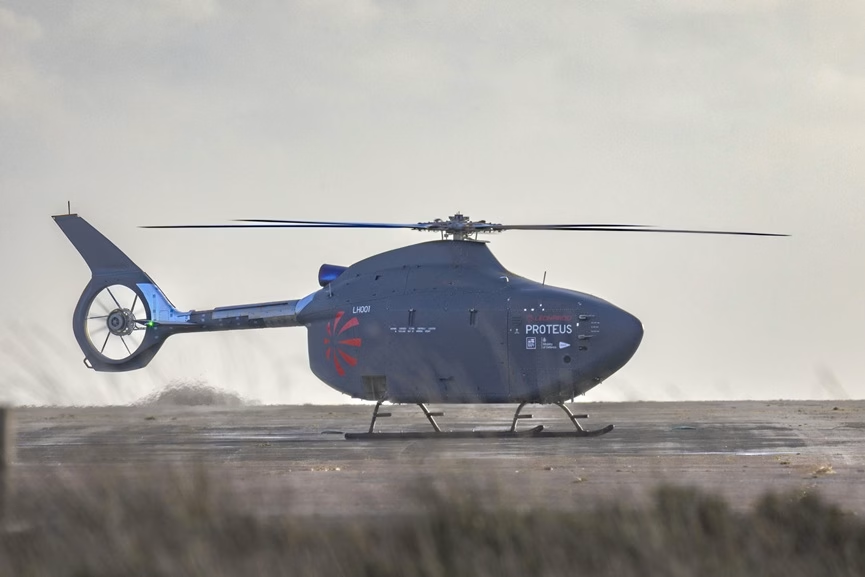
London: Britain’s Royal Navy has successfully flown its first full-sized autonomous helicopter to patrol and protect increasingly contested waters in the North Atlantic.
The aircraft, named Proteus, completed its maiden test flight this week, performing a short but critical routine that confirmed its ability to operate without a pilot onboard.
Designed to track submarines and conduct high-risk maritime missions, the helicopter is expected to support operations where human crews would otherwise face significant danger.
The flight comes at a time when Europe’s defence priorities are being reshaped by heightened security concerns following Russia’s invasion of Ukraine in 2022. Since then, governments across the continent have raised defence budgets and focused more closely on naval activity in northern waters used by Russian vessels and submarines.
This is aviation history.
The UK’s first pilotless helicopter, Proteus, has made its debut in the skies. 🚁
Designed by @Leonardo_UK, the autonomous helicopter made 2 short flights in Cornwall. It will serve as a testbed for future hybrid air wings.https://t.co/wauUT9petY pic.twitter.com/W9083fpf4C
— Royal Navy (@RoyalNavy) January 16, 2026
Interest in monitoring key sea routes between Greenland, Iceland, and Britain has grown, as these waters are seen as strategically vital for detecting underwater movement. Moscow has rejected claims that it poses a threat in the region, but naval surveillance efforts have continued to intensify.
Proteus has been developed under a 60-million-pound programme and is intended to strengthen Britain’s ability to safeguard its own waters and those of its NATO allies. Built by defence and aerospace company Leonardo, the helicopter relies on a network of sensors and onboard computer systems that allow it to assess its environment and operate independently.
The Royal Navy said Proteus is designed for anti-submarine warfare, maritime patrols, and the tracking of underwater vessels. While the navy already uses several drone platforms, including smaller unmanned helicopters, Proteus stands out for its size and capability, offering longer reach and greater persistence at sea.