
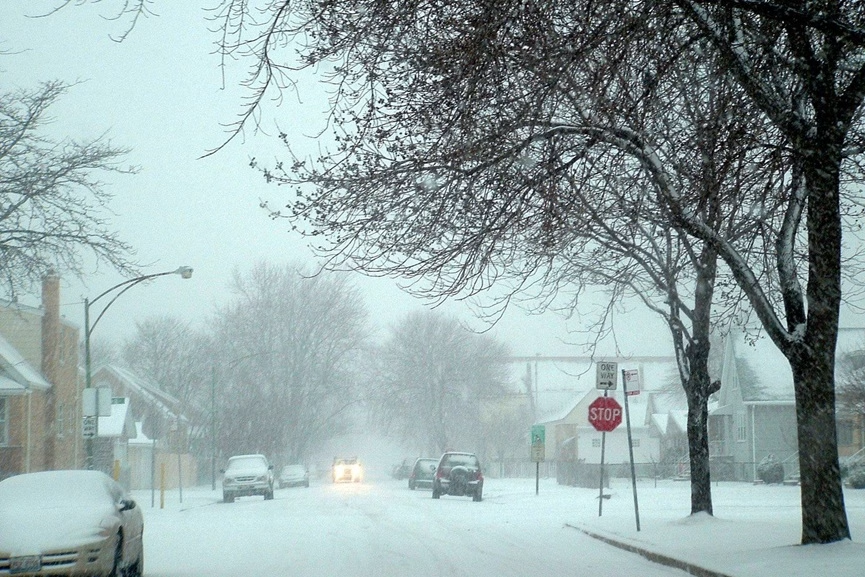
Washington: A powerful winter storm sweeping across the southern and eastern United States is expected to affect more than 180 million people, nearly half of the country’s population.
The National Weather Service warned that the storm would bring heavy snow, freezing rain, and sleet, beginning in the Southern Rockies on Friday before pushing east and north through the weekend. Areas from Texas and Oklahoma to the Northeast are bracing for dangerous road conditions and bitter cold.
States in the South, where snow and ice are less common, moved quickly to prepare. Crews spread salt on highways, schools were closed, and additional law enforcement and utility workers were placed on standby. In Houston, Mayor John Whitmire said the city was preparing for the worst as conditions deteriorated.
Air travel was already disrupted ahead of the storm, with more than 800 flights delayed or cancelled on Friday, including at major hubs in Dallas, Atlanta, and Oklahoma City, according to flight tracking data.
Forecasters warned that travel conditions would worsen late Friday and remain hazardous through the weekend as snow and ice spread across large parts of the country.
The storm is expected to dump up to 30 centimetres of snow from Oklahoma through Washington, DC, and into cities such as New York and Boston. It will be followed by an intense blast of Arctic air, driving wind chills as low as minus 50 degrees Fahrenheit in parts of Minnesota and North Dakota, approaching record levels. The extreme cold is likely to slow the melting of snow and ice, extending disruptions for days.
🚨 Major Winter Storm Begins Today 🚨
Heavy snow and crippling ice will impact a large region, along with over 170 million Americans from the Southern Rockies/Plains today towards the Northeast by Sunday.
Be sure to stay safe and follow winter safety: https://t.co/DXnRXKLJ8L pic.twitter.com/hiqONM36iJ
— NWS Weather Prediction Center (@NWSWPC) January 23, 2026
By Friday, at least 14 states had declared states of emergency, including New York, Texas, Virginia, and several others across the South and Midwest. New York Governor Kathy Hochul warned that the combination of heavy snow and severe cold posed serious risks, urging residents not to underestimate the storm.
In Virginia, Governor Abigail Spanberger cautioned that some communities could face prolonged power outages or become temporarily isolated. She also urged residents to seek emergency help without hesitation, stressing that public safety services remain available to everyone.
Transportation officials across affected states pleaded with residents to stay off the roads once conditions worsen, warning that freezing rain, sleet, and snow would make travel especially dangerous.
The Federal Emergency Management Agency advised households to prepare by stocking essential supplies, charging power banks, securing medications, and planning for school and workplace closures. In many cities, shoppers rushed to grocery stores as businesses prepared to shut down. Outside a crowded supermarket in Dallas, residents reported empty shelves and shortages of basic items as people stocked up ahead of the storm.
The extreme weather also sparked political commentary. President Donald Trump used social media to question climate change, incorrectly linking the severe cold to long-term global temperature trends, despite scientists noting the difference between short-term weather events and climate patterns.