
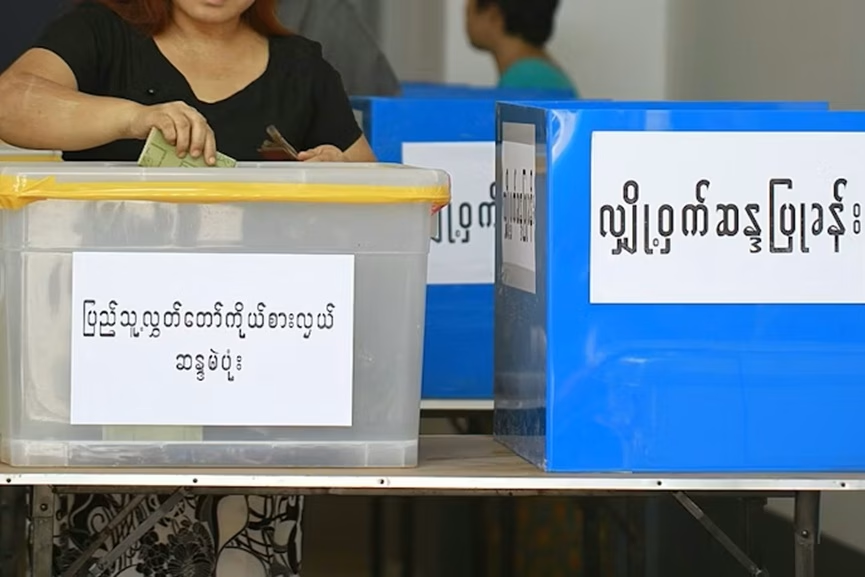
Yangon: Myanmar’s military-backed Union and Solidarity Party has completed a sweeping victory in the country’s three-phase general election. The USDP dominated all stages of the vote, winning an overwhelming majority in both chambers of parliament.
Official results released on Thursday and Friday showed the party secured 232 of the 263 contested seats in the lower Pyithu Hluttaw, and 109 of the 157 seats announced so far in the upper Amyotha Hluttaw.
Parliament is expected to convene in March to elect a president, with a new government set to take office in April, pro-military media have reported, citing junta spokesman Zaw Min Tun.
The final round of voting in late January concluded an election process that began on December 28, more than four years after the military seized power in a coup that overturned the elected government of Nobel Peace Prize laureate Aung San Suu Kyi.
Since the 2021 takeover, Myanmar has been gripped by political turmoil. The violent suppression of pro-democracy protests triggered a nationwide rebellion involving ethnic armed groups and local resistance forces. The United Nations estimates that about 3.6 million people have been displaced by the conflict.
The election has drawn sharp criticism from regional and international observers. The 11-member Association of Southeast Asian Nations said it would not endorse the process, while human rights groups and several Western governments dismissed the vote as lacking credibility.
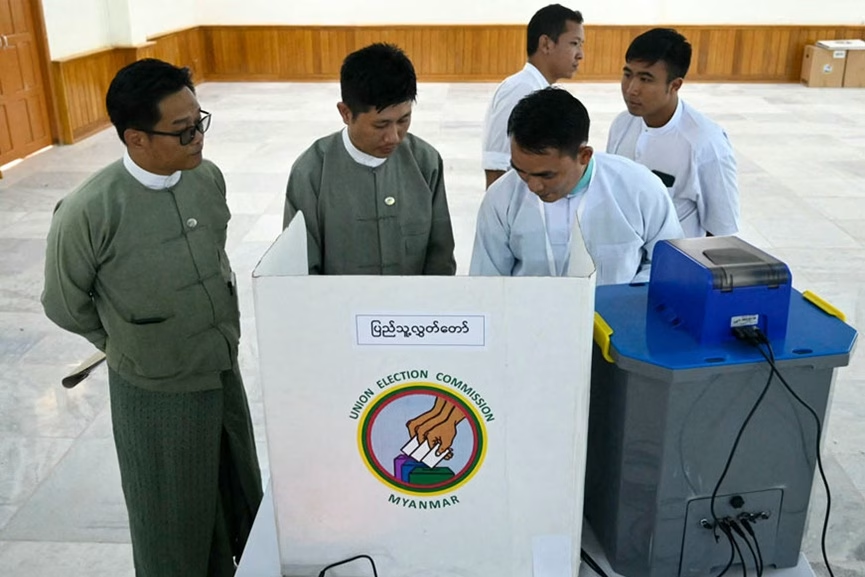
The military authorities insist the polls were free and fair and reflected public support. However, Suu Kyi’s National League for Democracy was dissolved along with dozens of other parties, while several groups refused to participate. Critics argue the process was designed to entrench military control rather than restore genuine civilian rule.
Under Myanmar’s political system, the armed forces are guaranteed 25 percent of parliamentary seats, ensuring continued influence even after a formal transfer of power to a civilian-led administration.
Founded in 2010 after decades of direct military rule, the USDP has long been seen as a proxy for the Tatmadaw, Myanmar’s armed forces. The party is led by a retired brigadier general and includes many former senior officers. It fielded 1,018 candidates, about a fifth of all those registered nationwide.
Junta chief Min Aung Hlaing is widely expected to retain a central role in the next administration. He has defended the election as a step toward stability and said state responsibilities would be transferred to the elected government, while stressing the military’s continuing role in national defence and security.
Overall turnout stood at about 55 percent across the three phases, well below the roughly 70 percent seen in previous elections, including the 2015 vote that brought Suu Kyi to power. Voting was held in 263 of Myanmar’s 330 townships and cancelled in many areas due to ongoing fighting and the lack of full junta control.