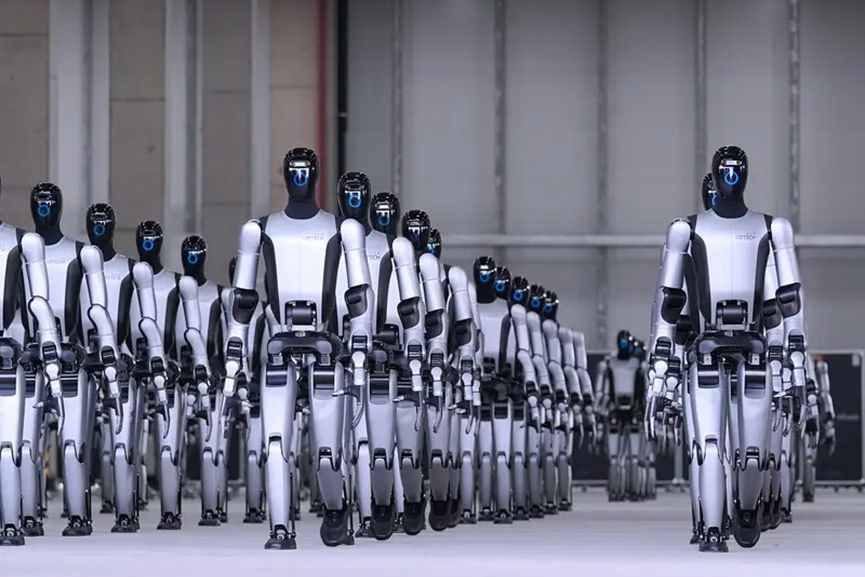

Las Vegas: Hyundai Motor Group has announced plans to introduce humanoid robots into its manufacturing plants from 2028, signalling a major shift in how factories operate as global carmakers race to adopt advanced automation.
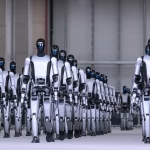
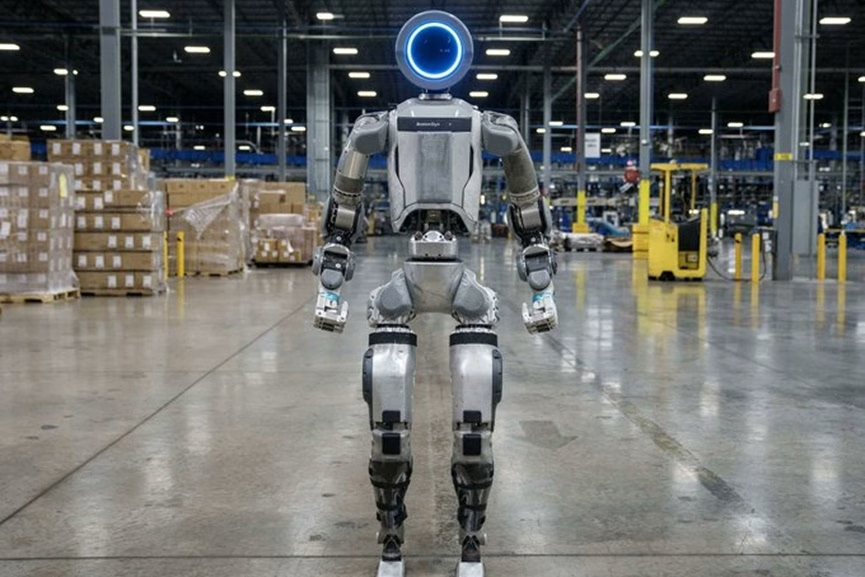
The South Korean auto giant revealed the timeline while showcasing Atlas, a human-like robot developed by its subsidiary Boston Dynamics, at the Consumer Electronics Show in Las Vegas. The move places Hyundai among a growing group of technology and automotive companies investing heavily in robotics to reshape industrial work.
Hyundai said the robots are expected to reduce physical strain on workers, handle dangerous or repetitive tasks and help accelerate the wider use of robotic systems across its factories. The company did not specify how many robots would be deployed in the initial phase or how much the programme would cost.
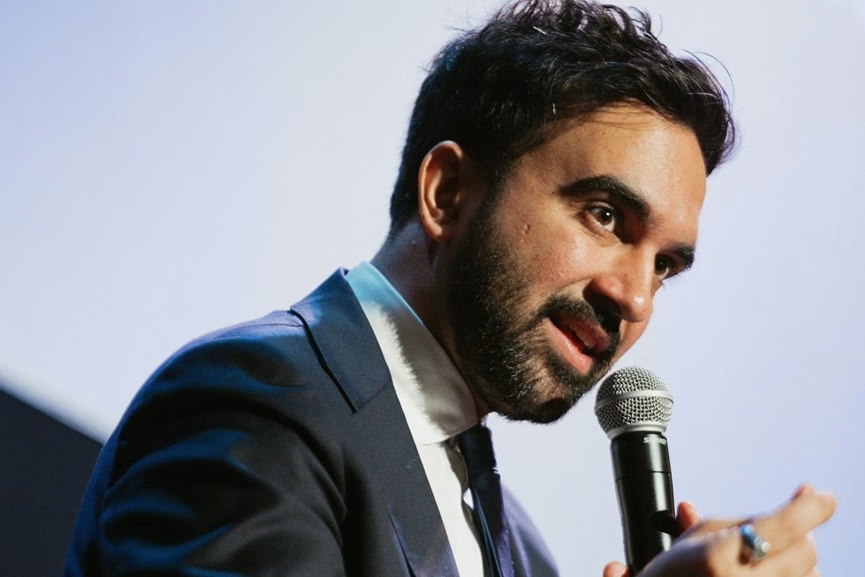
Speaking at CES, Hyundai vice chairman Jaehoon Chang acknowledged concerns that robots could replace human jobs but stressed that people would remain central to factory operations. He said workers would still be needed to train, manage and supervise the machines as automation expands.
The grand unveiling of Atlas product—evolved from prototype—took place at the CES Media Day, setting the stage for a bold vision of AI Robotics.
Discover how Hyundai Motor Group is shaping the future of AI Robotics and pushing the boundaries of what’s possible at CES 2026. pic.twitter.com/Ac1VH0Qi4O
— Hyundai Motor Group (@HMGnewsroom) January 6, 2026
The announcement follows Hyundai’s pledge last year to invest more than $20 billion in the United States; a move aligned with President Donald Trump’s push to strengthen domestic manufacturing. The investment plan includes expanding vehicle production, as well as funding advances in autonomous driving and advanced computing systems.
Hyundai is not alone in pursuing humanoid robotics. Tesla, led by Elon Musk, has also committed significant resources to developing its own human-like robot, Optimus, highlighting intensifying competition in the sector.
The rollout plans come against the backdrop of recent tensions surrounding Hyundai’s US operations. The company’s Georgia battery plant, operated jointly with LG, is one of its most strategic facilities. In September 2025, US immigration authorities raided the site and detained hundreds of workers, including at least 300 South Korean nationals, triggering outrage in South Korea.
Following the incident, South Korean President Lee Jae Myung and Hyundai chief executive José Muñoz warned that such actions could discourage foreign investment in the United States. The dispute later eased after Washington and Seoul reached an agreement that led to the release of the detained workers.