
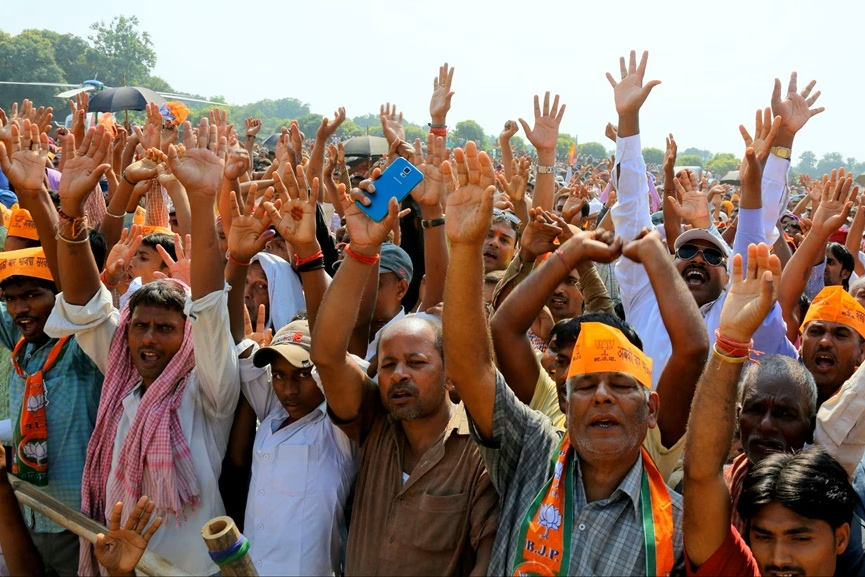
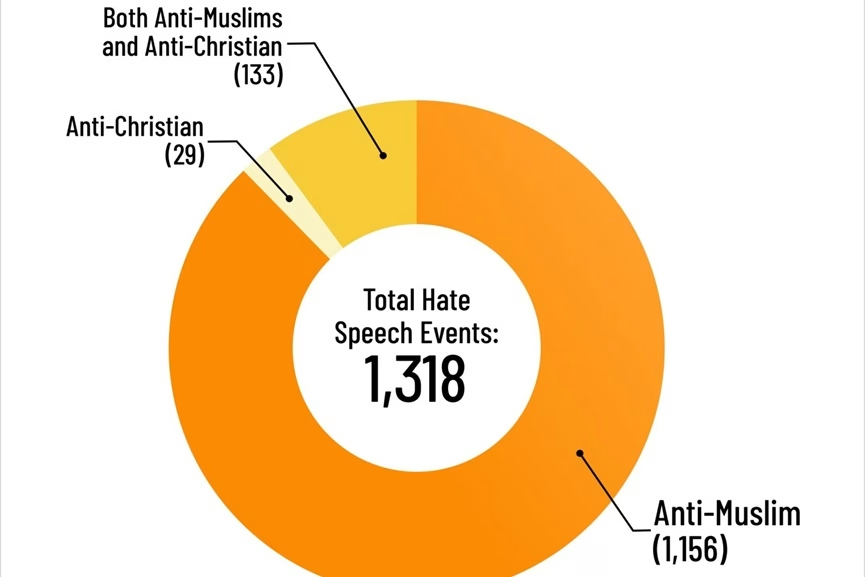
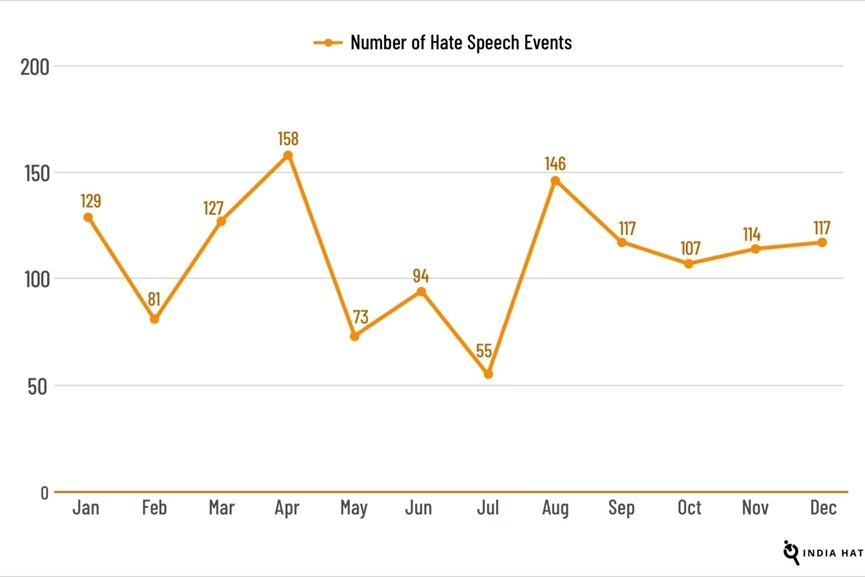
New Delhi: India recorded a sharp and deeply concerning rise in in-person hate speech events in 2025, with at least 1,318 incidents documented across states and union territories, averaging more than three incidents a day.
A comprehensive new report by the India Hate Lab finds that this surge reflects not isolated excesses but a sustained and organised pattern of public incitement, largely driven by Hindu nationalist organisations and political actors affiliated with the ruling Bharatiya Janata Party.
The study points to a troubling shift in India’s political culture, where hate speech has moved from the fringes into the mainstream of public mobilisation. Researchers argue that the scale, frequency, and visibility of these events indicate a deliberate political strategy that undermines the rule of law and weakens the constitutional promise of equal citizenship.
Minorities Overwhelmingly Targeted
The report found that religious minorities were the primary targets of the surge in hate speech. Muslims were targeted in nearly all incidents, either exclusively or alongside Christians, accounting for about 98 percent of documented events. Hate speech directed at Christians also rose sharply, with a widening arc of hostility beyond a single community.
Researchers note that the language used has become increasingly explicit and dehumanising, with minorities portrayed as threats to society, culture, or national security. Such rhetoric, the report warns, lowers social inhibitions against discrimination and violence.
Geography and Political Power
The highest number of incidents was recorded in Uttar Pradesh, followed by Maharashtra and Madhya Pradesh. Uttarakhand and the national capital region of Delhi also featured prominently. Nearly nine out of ten hate speech events took place in states governed by the BJP or its National Democratic Alliance partners.
Several incidents were led directly by sitting ministers, chief ministers, or senior party leaders, many of whom also ranked among the most frequent individual speakers identified in the study.
In contrast, opposition-ruled states saw a significant decline in hate speech incidents compared to 2024, even though some regions remained politically volatile ahead of elections.
Flashpoints and Mobilisation
April emerged as the most volatile month of the year. A sharp spike in hate speech coincided with Ram Navami processions and public mobilisation following the Pahalgam terror attack. The report notes that religious festivals and national security crises were repeatedly used as triggers to galvanise communal sentiment.
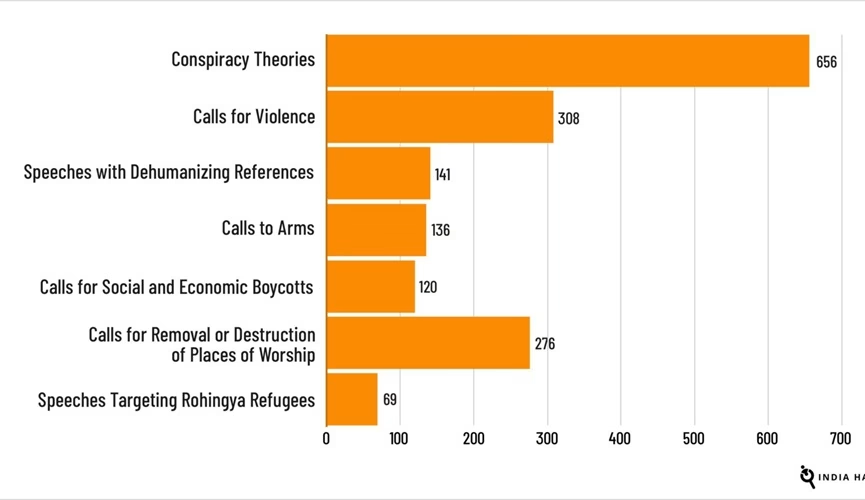
Many events were organised or facilitated by Hindu nationalist groups such as the Vishwa Hindu Parishad, Bajrang Dal, and Antarrashtriya Hindu Parishad. Over half of all speeches relied on conspiracy narratives that cast minorities as part of organised plots to undermine the Hindu majority.
These included claims that Muslim men were targeting Hindu women through marriage, that Muslims were encroaching on land to alter demographics, or that food was being deliberately contaminated. Researchers stress that such claims lack evidence but are framed as everyday truths, making them powerful tools for mobilisation.
The content of the speeches raises a serious alarm. Nearly a quarter contained direct calls for violence or the use of arms. Others promoted social and economic boycotts or called for the removal and destruction of mosques, shrines, and churches.
Disputed religious sites in Uttar Pradesh were frequently named, while Christians faced increased harassment toward the end of the year, including disruptions of prayer services during Christmas.
Minorities were repeatedly described using language that stripped them of dignity and legitimacy, a pattern the report warns can normalise exclusion and make violence appear justified.
Methodology and Reach
The India Hate Lab applied United Nations standards to classify incidents, using the Rabat Plan of Action, which examines intent, speaker influence, audience reach, and the likelihood of harm. The analysis was based on verified videos, news reports, and field documentation.
Nearly all of the hate speech events were broadcast online, primarily through Facebook, YouTube, and Instagram, vastly expanding their reach beyond physical gatherings and embedding them further into everyday political discourse.
Researchers argue that the repeated public vilification of minorities, combined with inconsistent legal consequences, reflects a shift in how state authority functions.
The study also highlights how hate speech has become intertwined with electoral strategy. Senior political figures were repeatedly documented delivering inflammatory speeches during election campaigns or in the aftermath of security incidents. The persistence of these patterns even outside election periods suggests a long-term approach aimed at keeping polarisation alive as a governing tool.
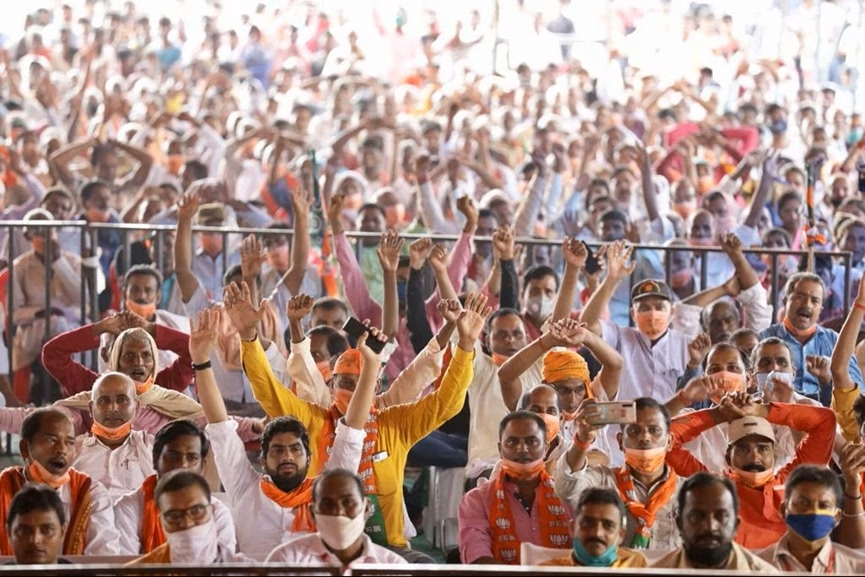
Another disturbing trend identified is the ritualisation of hate. Public ceremonies, religious processions, oath-taking events, and mass rallies increasingly serve as platforms for exclusionary rhetoric.
Limited Institutional Response
The Union government has largely deflected responsibility to states, while judicial intervention appeared restrained in 2025. Although the Supreme Court has previously ruled that hate speech is not protected speech, there are no measures to monitor incidents nationwide.
One notable exception came from Karnataka, which enacted the Karnataka Hate Speech and Hate Crimes Prevention Bill in 2025. The law sets out clear definitions and penalties, including prison terms of up to seven years. While the move faced political resistance, the report describes it as a significant acknowledgment of the scale of the problem.
The India Hate Lab concludes that hate speech in India is no longer episodic or confined to election seasons. It has become a continuous feature of political mobilisation and governance, reshaping public discourse and redefining who belongs.