

New Delhi: A major political controversy has erupted in India after the government ordered smartphone makers to pre-install a state-developed mobile application.
The move triggered strong concerns over privacy and surveillance from opposition leaders and digital rights groups. Under the directive, companies including Apple, Samsung, and Xiaomi have 90 days to ensure that all new smartphones sold in the country come with the Sanchar Saathi app.
#SancharSaathiApp is built to empower every mobile user, not monitor them. The app is fully voluntary, activates only after user consent, and can be deleted anytime.
With transparent tools, fraud protection features, and lakhs of stolen phones traced, Sanchar Saathi continues to… pic.twitter.com/pzmpCh5m04
— DoT India (@DoT_India) December 2, 2025
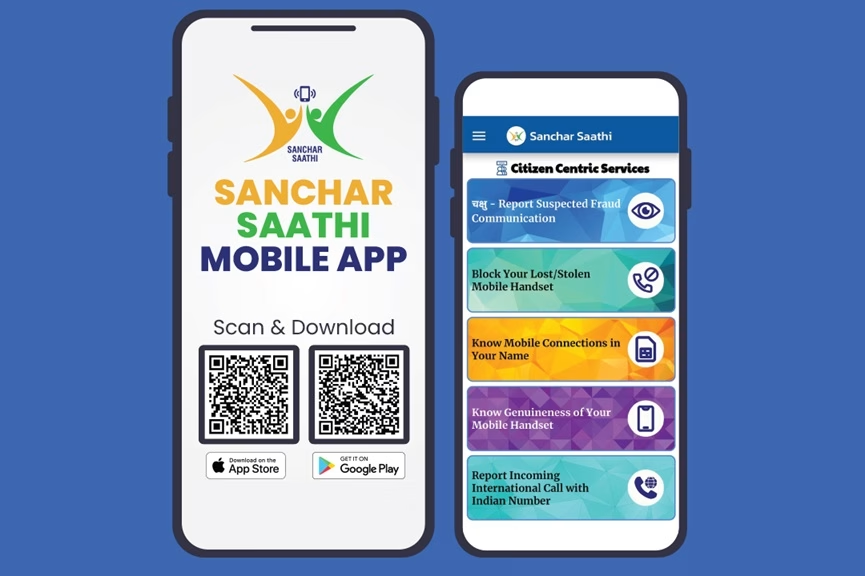
Phones already in use must receive the app through software updates. The app, introduced as a safety tool, helps users block or track stolen devices, check how many mobile numbers are registered under their name, and report suspected scam calls. It also allows buyers to verify whether a used device has been stolen.
The government insists the move has no privacy risks and says the app does not collect personal information without notifying users. Officials describe it as a key measure to curb widespread cyber fraud and regulate India’s growing second-hand phone market.
However, the order was issued quietly, and once made public, it triggered immediate backlash. Opposition parties accused the government of trying to gain unrestricted access to the more than 700 million smartphones in India.
#SancharSaathiApp will come pre-installed, but that will not mean it’s watching you. It will not act as a surveillance tool, and it will not track your data in any way. Its only job will be to protect your mobile identity without accessing your personal information.#DoT… pic.twitter.com/H9gJ51a8f6
— DoT India (@DoT_India) December 2, 2025
Adding to the tension, Reuters reported that Apple is preparing to refuse compliance due to concerns about the security of its operating system. Sources said the company does not agree to similar orders anywhere in the world and fears that forced integration of external apps could weaken the security of iPhones. Apple has not commented publicly.
According to the app’s privacy policy, iPhone users will be asked for access to cameras, photos, and files. Android users, who form the vast majority of India’s smartphone base, will be asked to grant permissions covering call logs, messaging for verification, and management of phone calls.
Reports earlier suggested the app would be non-removable, but Communications Minister Jyotiraditya Scindia dismissed this, saying users can delete it like any other application.