
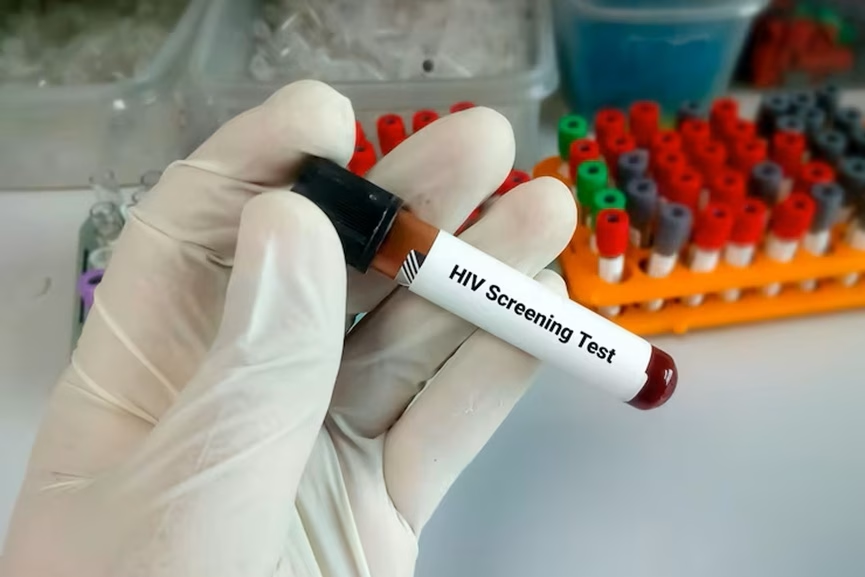
India: A deeply troubling incident in Madhya Pradesh has raised serious questions about the safety of India’s blood transfusion system after several thalassaemic children in Satna district were found to be HIV positive following treatment at government health facilities.
At least six children suffering from thalassemia major, a genetic blood disorder that requires lifelong and frequent transfusions, contracted HIV after receiving infected blood.
The infections were detected during routine screening earlier this year but drew national attention after media reports highlighted the scale of the lapse. A similar incident had surfaced only weeks earlier in Jharkhand, where children undergoing transfusions at a state-run hospital were also found to be HIV positive.
Health officials said the affected children in Satna had collectively received 189 units of blood sourced from three blood banks, exposing them to blood from more than 150 donors. A seven-member inquiry committee concluded that the virus was transmitted through donor blood, pointing to serious failures in screening and oversight.
Following the findings, the Madhya Pradesh health department suspended the blood bank in charge and two laboratory technicians, while the former civil surgeon of Satna District Hospital was asked to explain the lapses. Authorities confirmed that all affected children are now receiving treatment and remain clinically stable.

Officials noted that children who require multiple transfusions are considered high-risk and are routinely screened for infections. In some cases, parents tested negative for HIV, ruling out transmission from mother to child. In one instance, both parents were HIV positive.
Medical experts say the incident reflects a wider systemic problem. Many blood banks in India continue to rely on older HIV screening methods that carry a long window period, during which infected donors may test negative. This significantly increases the risk of transfusion-transmitted infections and highlights the need for urgent technological upgrades.
India sees an estimated 12,000 births of thalassemia major each year, making thousands of children dependent on regular transfusions for survival. Repeated incidents of HIV transmission have sparked fears that more patients may be silently living with undetected infections.
The human cost has been devastating for families. Parents say they are grappling not only with their children’s medical complications but also with social stigma and emotional trauma. In some cases, families have faced eviction and discrimination after a child’s HIV status became known.
Public health advocates are urging swift passage of the National Blood Transfusion Bill 2025, which aims to strengthen regulation, testing, and quality control across blood banks. Campaigners say the tragedy underscores the urgent need for safer, accountable, and modernised blood transfusion practices across India.