
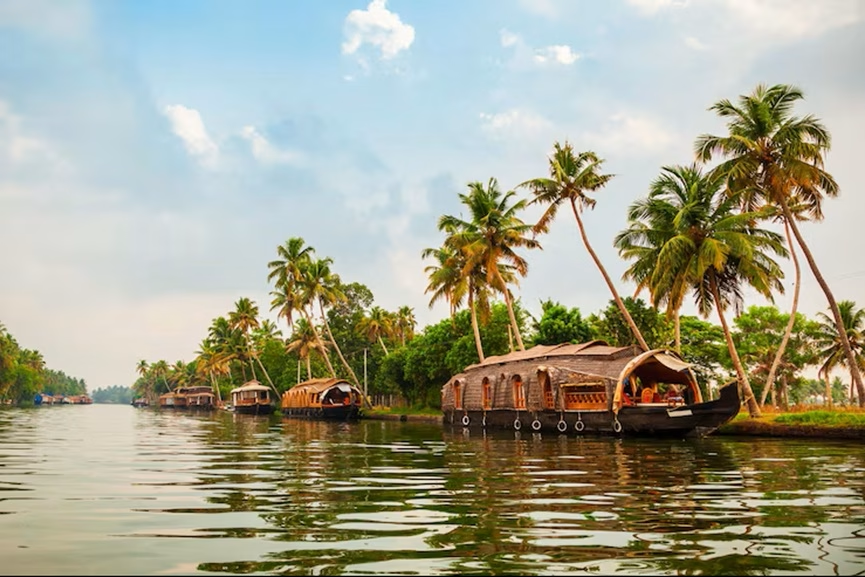
Thiruvananthapuram: India’s southern state of Kerala, renowned for its golden beaches, backwaters, and tea plantations, is set to be officially renamed Keralam.
The Union Cabinet, led by Prime Minister Narendra Modi, approved the proposal to align the English spelling of the state’s name with its Malayalam pronunciation.
In Malayalam, the state has always been called Keralam – with ‘Kera’ meaning coconut tree and ‘alam’ meaning land. The name reflects the state’s identity as the ‘land of coconut trees’, a fitting tribute to Kerala’s significant contribution to India’s coconut production, which accounts for nearly 45 percent of the national output.
Kerala’s Chief Minister Pinarayi Vijayan emphasized that the change is about respecting the state’s language and cultural identity. “The state should be known by the name its people use,” he said. The proposal received unanimous support in the Kerala Legislative Assembly.
Heartiest congratulations to the people of Keralam. The Union Cabinet’s decision under the leadership of Modi Ji to rename Kerala as ‘Keralam’ is a significant step towards fulfilling the long-standing demand of the people of the state. The name ‘Keralam’ will manifest the… pic.twitter.com/XAdXap5HlA
— Amit Shah (@AmitShah) February 24, 2026
The renaming follows a broader trend in India of reverting to indigenous names, a pattern accelerated under the Modi government: Mumbai (formerly Bombay), Chennai (Madras), Kolkata (Calcutta), Bengaluru (Bangalore), and Odisha (Orissa) have all undergone similar changes.
The next step is for the proposal to be approved by India’s national parliament, after which Keralam will become the official English name in all government and international records.
Some questions remain, particularly around the demonym for the state’s residents. Shashi Tharoor, Congress MP and author, welcomed the change but asked on social media: “What happens now to the terms ‘Keralite’ and ‘Keralan’ for the denizens of the new Keralam?”
The renaming marks a symbolic step toward linguistic authenticity and cultural pride, reinforcing the state’s identity while preserving its rich heritage for future generations.