
New Delhi: India and Brazil have signed a landmark agreement to deepen cooperation in critical minerals and rare earths, marking a strategic move by New Delhi to diversify supply sources and reduce heavy reliance on China.
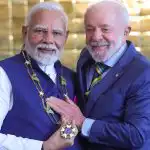
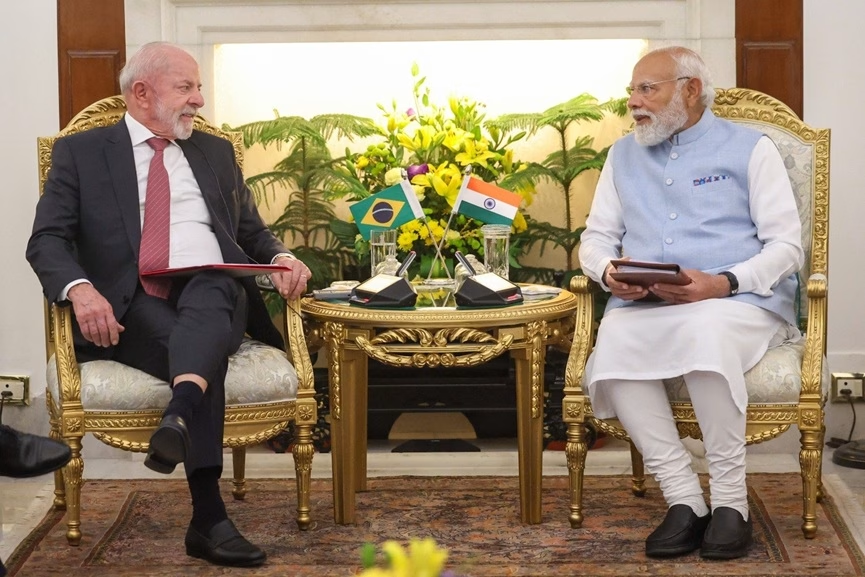
The agreement was signed after talks between Indian Prime Minister Narendra Modi and Brazilian President Luiz Inacio Lula da Silva in New Delhi on Saturday.
Both leaders emphasized the importance of building resilient and future-ready supply chains as global competition intensifies over access to strategic resources.
Calling the pact a ‘major step,’ Modi said stronger cooperation in critical minerals would help both nations secure long-term industrial growth and technological advancement.
Lula echoed the sentiment, describing the agreement as central to expanding collaboration in renewable energy and mineral development.
Our talks focussed on ways to deepen the India-Brazil trade partnership. We are committed to taking bilateral trade much beyond $20 billion in the next five years. Our nations will also work closely in areas such as technology, innovation, Digital Public Infrastructure, AI,… pic.twitter.com/o3sWSJoR9H
— Narendra Modi (@narendramodi) February 21, 2026
Reducing dependence and expanding partnerships
China currently dominates the mining and processing of rare earth elements and other critical minerals essential for electric vehicles, solar panels, smartphones, jet engines, and advanced defense systems. In recent months, Beijing has tightened export controls, prompting countries such as India to actively seek alternative suppliers.
Brazil holds the world’s second-largest reserves of several critical minerals, making it a natural partner for India’s growing manufacturing and clean energy ambitions.
The partnership is expected to cover exploration, processing, technology exchange, and investment cooperation, although detailed terms have not yet been disclosed.
Demand for iron ore, another key Brazilian export, is also rising in India amid rapid infrastructure expansion and industrial growth. Brazil is the second-largest producer and exporter of iron ore after Australia.
Other strong pillars of the India-Brazil friendship are sectors like energy, agriculture, critical minerals, education, defence and multilateral issues. Our discussions today also included how to enhance the people-to-people linkages between our nations. pic.twitter.com/C1siwtIMjc
— Narendra Modi (@narendramodi) February 21, 2026
Part of a broader strategic push
The minerals agreement is one of ten pacts signed during Lula’s visit. According to India’s Ministry of External Affairs, the agreements span areas such as digital cooperation, health, and trade facilitation.
India’s External Affairs Minister Subrahmanyam Jaishankar said the discussions would give fresh momentum to bilateral ties.
Modi described Brazil as India’s largest trading partner in Latin America and set an ambitious target of taking bilateral trade beyond $20 billion within five years. “Our trade is not just a number, but a reflection of trust,” he said, adding that closer cooperation would strengthen the collective voice of the Global South.
Data from the Observatory of Economic Complexity shows that in 2024, India exported goods worth $7.23 billion to Brazil, led by refined petroleum. Brazilian exports to India stood at $5.38 billion, with raw sugar as the primary export.
As geopolitical shifts reshape global supply chains, the India–Brazil partnership signals a broader effort among emerging economies to secure resources, expand trade, and assert greater influence in shaping the rules of global commerce.