
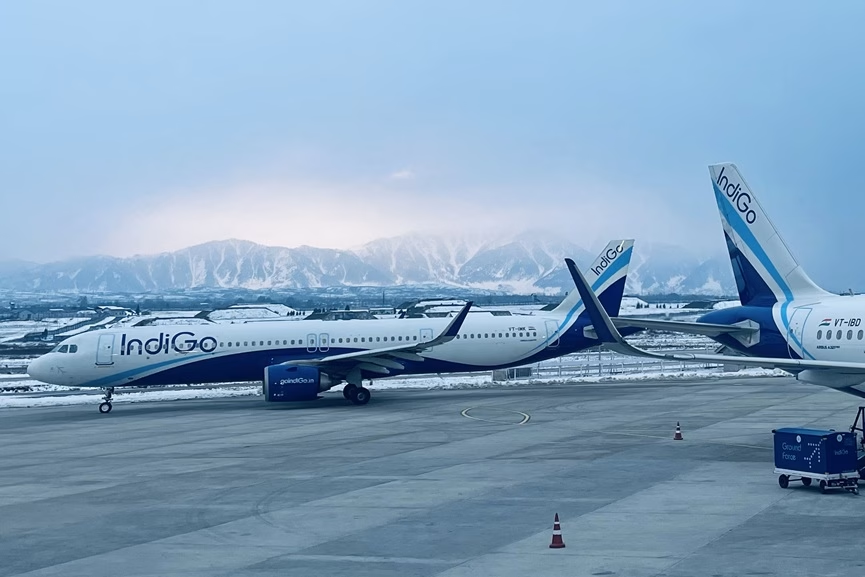
New Delhi: India’s largest airline, IndiGo, is facing one of its most disruptive weeks in recent times, with more than 300 flights cancelled on Thursday, hundreds more delayed, and one-way fares on key routes soaring to ₹45,000.
The airline’s on-time performance plummeted to just 19.7 percent on December 3, causing chaos at airports across the country during one of the busiest travel periods of the year.
IndiGo has apologised, citing a “combination of operational challenges,” but aviation experts say the disruption was predictable. Many argue the airline failed to prepare adequately for the new Flight Duty Time Limitations (FDTL), which had been in the works for over a year.
Aviation analyst Harsh Vardhan said IndiGo’s problems stem from poor manpower planning. He noted that discussions about the FDTL rules had been ongoing for 18 months, yet the airline did not take sufficient steps to ensure compliance. He added that IndiGo may have assumed the regulator, DGCA, would grant an extension, which did not happen. Vardhan also highlighted that the DGCA shares responsibility, as it monitors crew availability and flight schedules, but did not flag potential shortages in advance.
Another expert, Shakti, explained that IndiGo’s operational structure made it particularly vulnerable. With high night operations linked to daytime flights, cancellations of one flight triggered a cascading effect, leaving crews and aircraft stranded and further worsening delays. IndiGo operates over 2,300 flights daily with tight turnarounds and dense crew rotations, which the new FDTL rules now restrict.
The last two days have seen widespread disruption across IndiGo’s network and operations. We extend a heartfelt apology to all our customers and industry stakeholders who have been impacted by these events. IndiGo teams are working diligently and making all efforts with the…
— IndiGo (@IndiGo6E) December 4, 2025
The disruption has pushed last-minute fares on popular routes, including Delhi, Mumbai, and Bengaluru, up to ₹45,000 one-way. Vardhan said the surge is a direct response to high demand during the peak travel, wedding, and festival season. Delays and cancellations affected nearly 10 percent of IndiGo’s daily operations. Airports saw long queues, overcrowded gates, and frustrated passengers, many of whom complained about misinformation and poor support from airline staff.
CEO Pieter Elbers acknowledged the severity of the situation, saying the airline had failed to meet customer expectations. He attributed the crisis to a combination of factors, including FDTL implementation, weather, technology glitches, schedule changes, and congestion. Elbers said restoring punctuality is the airline’s top priority, but admitted it would not be easy due to the scale and complexity of IndiGo’s operations.
Passengers are paying inflated fares, facing long waits, and struggling with uncertain flight schedules. Other airlines are increasing flights on select routes to capture spillover demand, but fares are expected to remain high until IndiGo restores at least 90 percent of its regular schedule.
Experts say the crisis exposes the fragility of India’s aviation sector, which is heavily dependent on a single dominant airline. The need for better aircraft availability, crew planning, and airport infrastructure to prevent future disruptions is inevitable.