
New Delhi: The United States is set to return three ancient bronze sculptures to India after a detailed museum investigation confirmed they were illegally removed from temples in Tamil Nadu decades ago.
The Smithsonian’s National Museum of Asian Art in Washington said the sculptures would be handed back to the Government of India following extensive provenance research that traced their removal from temple sites in southern India. The findings were the result of a systematic review of the museum’s South Asian collections and a close examination of each object’s transaction history.
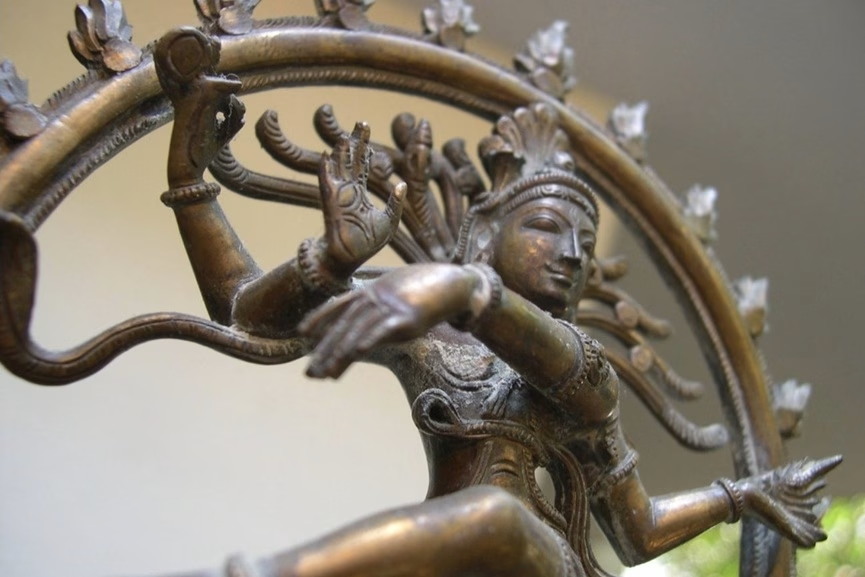
The sculptures include a Shiva Nataraja from the Chola period dating to around 990 CE, a Somaskanda sculpture from the 12th-century Chola era, and a bronze depiction of Saint Sundarar with Paravai from the 16th-century Vijayanagar period. All three were originally sacred objects, traditionally used in temple rituals and religious processions.
The museum said India has agreed to place one of the sculptures, the Shiva Nataraja, on long-term loan. This arrangement will allow the museum to continue displaying the work while presenting its full history, including its origins, removal, and eventual return, as part of a broader commitment to transparency and ethical collecting.
The Shiva Nataraja will be shown in the exhibition The Art of Knowing in South Asia, Southeast Asia, and the Himalayas. The museum said it is coordinating closely with the Indian Embassy to finalise arrangements for the return and loan.
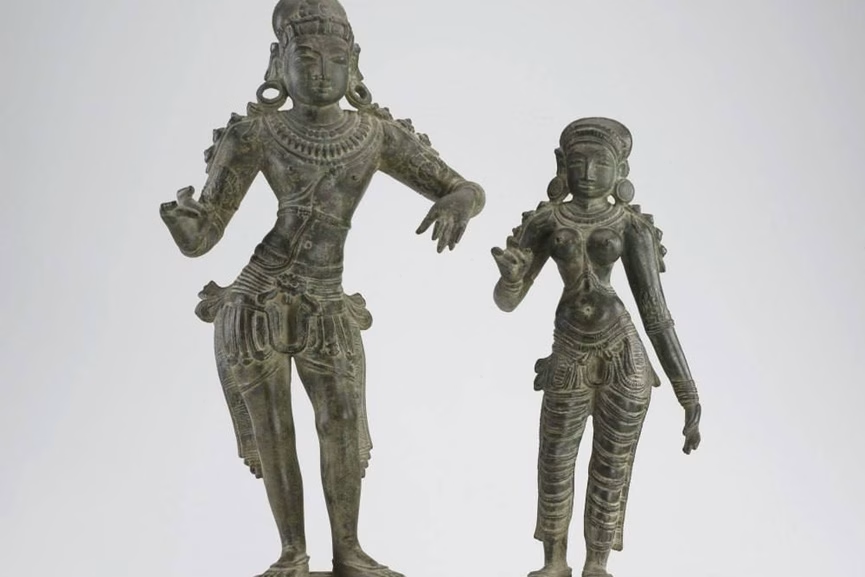
The breakthrough came after researchers, working with the Photo Archives of the French Institute of Pondicherry, confirmed in 2023 that all three sculptures had been photographed in Tamil Nadu temples between 1956 and 1959. The Archaeological Survey of India later reviewed the evidence and concluded the objects had been removed in violation of Indian law.
Further investigation revealed that the Shiva Nataraja, originally from the Sri Bhava Aushadesvara Temple in Tirutturaippundi in Tamil Nadu’s Tanjavur district, was sold to the museum in 2002 using falsified documentation. The Somaskanda and Saint Sundarar sculptures entered the museum’s collection as part of a large donation in 1987.
Museum director Chase Robinson said the return reflected a commitment to responsible stewardship and ethical museum practice, while thanking Indian authorities for allowing continued public access to the Shiva Nataraja through a long-term loan.
The Smithsonian’s National Museum of Asian Art, founded in 1923, houses one of the world’s most important Asian art collections, spanning regions from South and Southeast Asia to the Middle East and East Asia.