
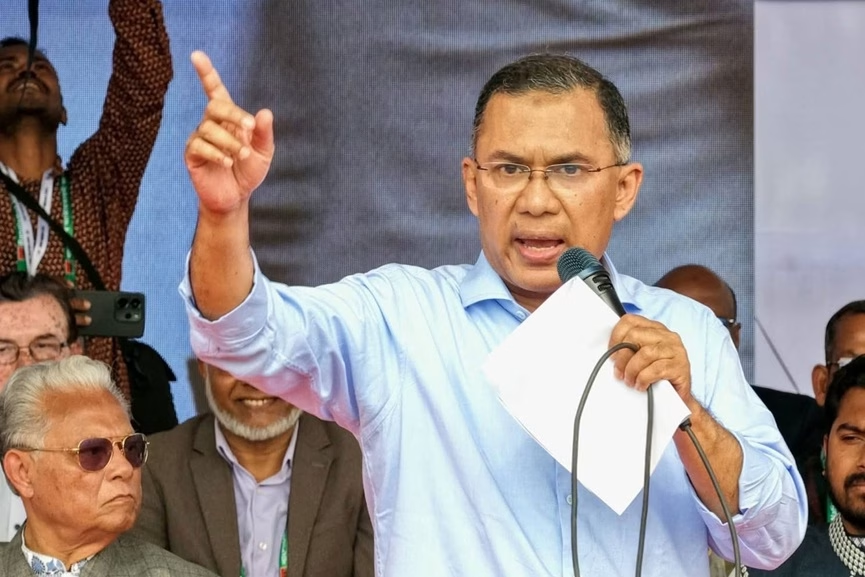
Dhaka: Bangladesh has invited heads of government from 13 countries, including India, to attend the swearing-in ceremony of the new cabinet led by BNP chief Tarique Rahman on February 17.
The invitations have been sent to India, China, Saudi Arabia, Pakistan, Turkey, the United Arab Emirates, Qatar, Malaysia, Brunei, Sri Lanka, Nepal, the Maldives, and Bhutan—a clear signal that Dhaka wants its new political chapter to begin with a strong regional focus.
The ceremony follows the sweeping victory of the Bangladesh Nationalist Party (BNP) in the 13th parliamentary elections earlier this month. The result brings an end to the interim administration headed by Chief Adviser Muhammad Yunus.
The newly elected Members of Parliament will take an oath in the morning, administered by the Chief Election Commissioner. Rahman and his cabinet are scheduled to be sworn in later in the evening.
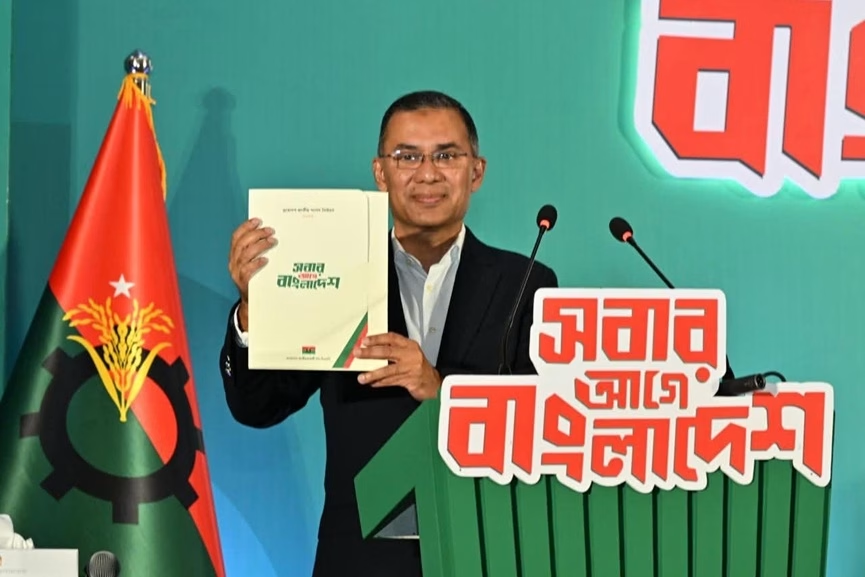
A Diplomatic Reset
Although the invitations were formally issued by Yunus on behalf of the transitional authorities, they reflect the priorities of the incoming government. BNP leaders have made it clear that strengthening ties within South Asia and the broader region will be central to their foreign policy approach.
Humayun Kabir, foreign policy adviser to Rahman, confirmed that Indian Prime Minister Narendra Modi has been invited. He described the outreach as a goodwill gesture aimed at reinforcing Bangladesh’s role in regional cooperation.
Relations between Dhaka and New Delhi had cooled after the 2024 student-led protests that led to the fall of the Sheikh Hasina government and her subsequent exile in India. The interim period under Yunus marked a politically sensitive phase for the country.
Rahman, who recently returned after 17 years in self-imposed exile in London, led the BNP to a decisive two-thirds majority. In his public remarks since the victory, he has stressed the need for national unity, better law and order, and economic stability after months of unrest.
Prime Minister Modi’s congratulatory phone call soon after the results was seen as a positive step toward rebuilding ties. While confirmations for the ceremony are still awaited, the scale of invitations reflects Dhaka’s intent to steady its foreign relations and strengthen regional engagement as it enters a new political era.