
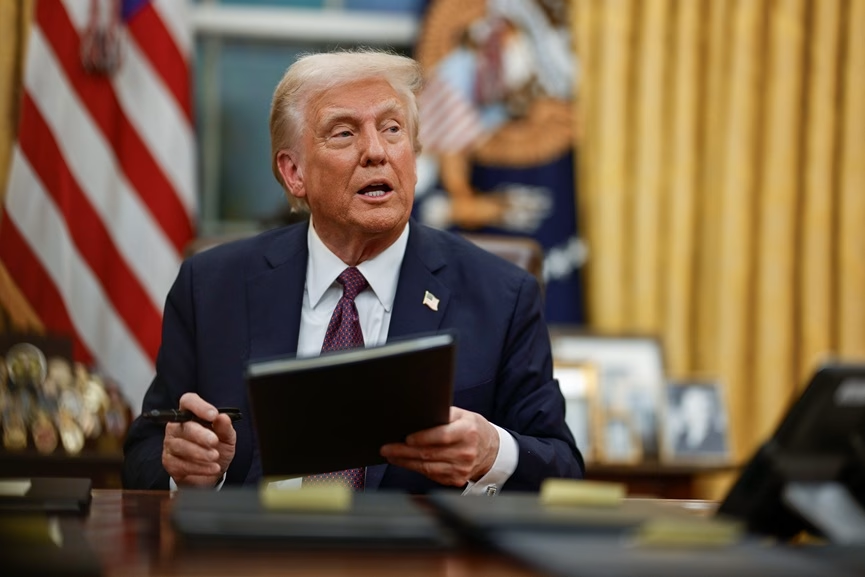
Washington: US President Donald Trump said that the United States would impose a 100 percent tariff on Canadian goods if Canada proceeds with closer trade engagement with China.
Trump said Washington would not allow Canada to be used as a channel for Chinese goods to enter the US market and warned that any such move would trigger immediate trade penalties.
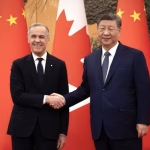
The warning followed Canadian Prime Minister Mark Carney’s recent visit to China, where the two sides agreed to resolve several tariff-related issues. China is Canada’s second-largest trading partner after the United States.
Carney did not directly address Trump’s tariff threat but urged Canadians to support domestic products and focus on strengthening the national economy. He said Canada could not control the actions of other countries but could prioritize its own economic stability.
Canadian officials rejected claims that Ottawa was pursuing a free trade agreement with China. Dominic LeBlanc, the minister responsible for Canada-US trade, said the discussions in China focused on resolving existing tariff disputes rather than negotiating a broader trade deal. China’s embassy in Canada said Beijing was ready to work with Ottawa to implement the understandings reached during the visit.
Tensions between the two countries have increased in recent days following Carney’s public criticism of Trump’s comments on Greenland and his remarks at the World Economic Forum, where he said the global rules-based order was weakening. While Carney did not name the United States directly, his comments were widely seen as a response to Washington’s recent positions.
Trump responded by questioning Canada’s economic independence, comments that Carney rejected, saying Canada’s strength comes from its own institutions and economy.
If implemented, the proposed tariff would significantly raise costs for Canadian exporters. It could affect industries such as metals, automobiles, and machinery, which rely heavily on access to the US market.
Trump has issued several tariff threats since returning to office, some of which have been paused or adjusted during negotiations. Canadian business groups said continued uncertainty risks harming cross-border trade and investment and called for early dialogue between the two governments.