
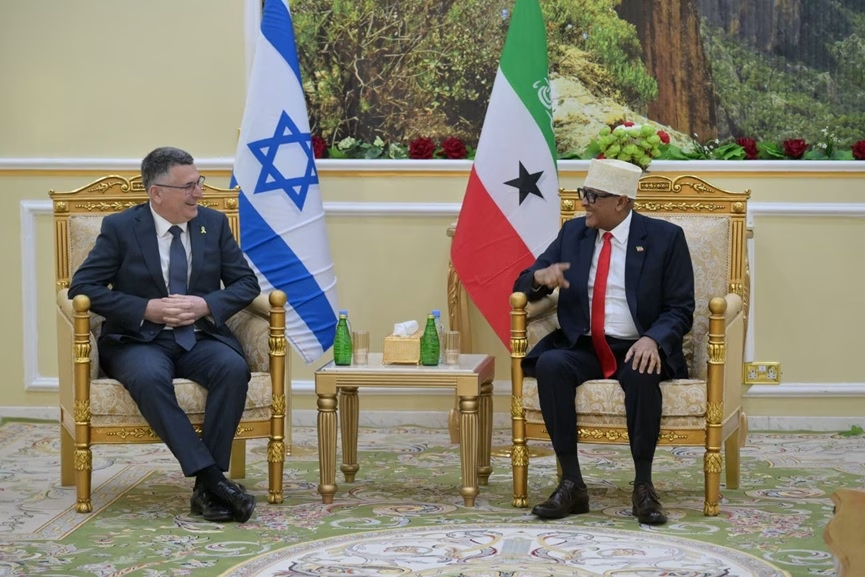
Somaliland: The Israeli Foreign Minister Gideon Saar arrived in Somaliland, marking the first high-level diplomatic visit since Israel became the first country to recognise the breakaway region’s independence.
Saar landed in the capital, Hargeisa, where he was welcomed by senior Somaliland officials before holding talks with President Abdirahman Mohamed Abdullahi at the presidential palace. The visit comes weeks after Israel formally recognised Somaliland, which declared independence from Somalia in 1991 but remains unrecognised by most of the international community.
Somalia’s federal government reacted angrily, insisting that Somaliland is an inseparable part of its territory and warning that Israel’s decision undermines Somalia’s sovereignty. Mogadishu condemned Saar’s visit as an illegal and unauthorised presence, describing it as unacceptable interference in Somalia’s internal affairs.
Israel, however, has made clear it intends to move ahead. Saar said criticism would not alter Israel’s position and confirmed that both sides plan to open embassies and appoint ambassadors in the near future.
The visit has triggered a wave of diplomatic backlash. The African Union convened an emergency ministerial meeting to discuss the issue, while more than 20 countries from the Middle East and Africa, along with the Organisation of Islamic Cooperation, rejected Israel’s recognition of Somaliland.
Egypt warned that the move sets a dangerous precedent that threatens regional stability, and the African Union’s peace and security body called for Israel to immediately reverse its decision.
Somaliland officials welcomed Saar’s visit as a milestone, describing it as a defining step in deepening ties between two democratic partners in a strategically important region. They said the relationship was irreversible and expected other countries to follow Israel’s lead.
Israel’s recognition of Somaliland on December 26 marked its second major diplomatic breakthrough in recent years, following the establishment of ties with Taiwan in 2020. Somaliland’s president has since said more international recognition is likely. In the United States, Senator Ted Cruz has urged President Donald Trump to recognise Somaliland, arguing it aligns with American security interests. Trump, however, has publicly shown little enthusiasm, saying the matter remains under review.
Tensions have been further fuelled by allegations from Somalia’s president that Somaliland accepted conditions in exchange for recognition, including resettling Palestinians from Gaza, hosting an Israeli military base, and joining the Abraham Accords.
Somaliland has firmly denied these claims, saying its engagement with Israel is strictly diplomatic and respects international law, though its representatives have acknowledged that future security cooperation cannot be ruled out.
The diplomatic row is unfolding against a backdrop of rising tensions around the Red Sea. Saudi Arabia and Egypt have reaffirmed their support for Somalia’s territorial integrity, while Türkiye has echoed similar commitments in talks with regional leaders. These moves reflect shifting alliances, particularly amid rivalry with the United Arab Emirates over influence in the region.
The leader of Yemen’s Houthi movement has also weighed in, warning that any Israeli presence in Somaliland would be treated as a military target, further heightening concerns that the dispute could spill over into a wider regional confrontation.