

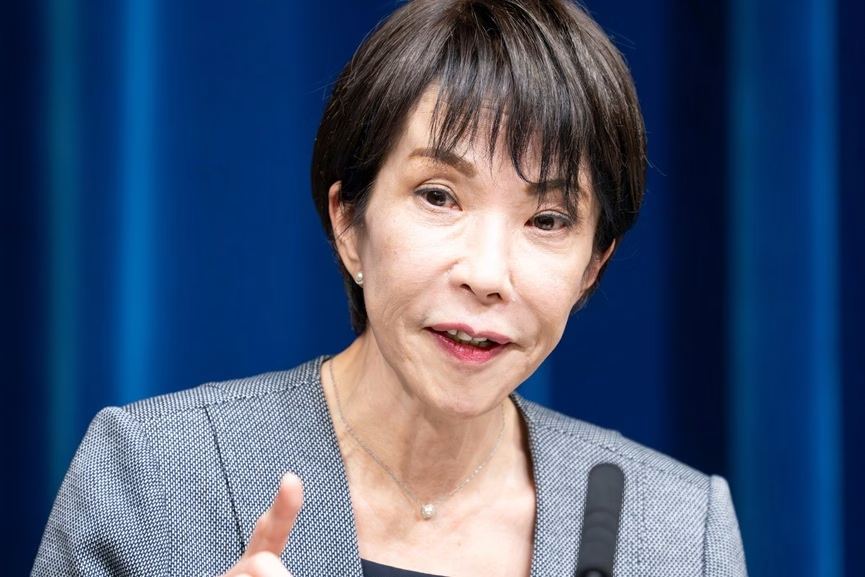
Tokyo: The cabinet of Japan has approved a record 122.3 trillion yen ($784.63 billion) budget for the next fiscal year, as Prime Minister Sanae Takaichi seeks to maintain economic stimulus while easing market concerns over the country’s increasing public debt.
The budget, covering the fiscal year starting in April, is set to be submitted to parliament early next year. It exceeds this year’s initial outlay of 115.2 trillion yen and reflects the administration’s effort to support growth at a time of rising borrowing costs and persistent currency weakness.
Despite the headline increase in spending, the government has been cautious in its approach to new debt issuance. Fresh government bond sales will rise only marginally to 29.6 trillion yen from 28.6 trillion yen this year. As a result, the debt dependence ratio will fall to 24.2 percent, its lowest level since 1998, signalling a measured approach to fiscal expansion.
The Takaichi administration has intensified efforts to reassure investors as government bond yields climb and the yen remains under pressure. Officials have stressed that fiscal policy will avoid excessive debt issuance or unfunded tax cuts, amid growing scrutiny of Japan’s finances.
【令和8年度予算政府案】
本日、令和8年度予算政府案が閣議決定されました。▼詳しくはこちらhttps://t.co/2xUqWt2dvl https://t.co/BfoYikPfb4
— 財務省 (@MOF_Japan) December 26, 2025
Higher tax revenues are expected to play a key role in funding the expanded budget. Receipts are projected to rise 7.6 percent to a record 83.7 trillion yen, reflecting resilient corporate profits and improved wage growth. However, these gains will not fully cover sharp increases in debt-servicing costs, social security spending and defence expenditure.
Debt-servicing expenses, including interest payments and bond redemptions, are forecast to jump 10.8 percent to 31.3 trillion yen. The assumed interest rate has been set at 3.0 percent, the highest level in nearly three decades, as the Bank of Japan moves away from ultra-loose monetary policy.
Japan carries the heaviest debt burden among developed countries, with liabilities exceeding twice the size of its economy. This leaves public finances highly exposed to rising interest rates and complicates plans for sustained fiscal stimulus.
In a shift from past policy, Takaichi plans to abandon the annual primary balance target as the sole benchmark for fiscal consolidation. Instead, the government aims to adopt a multi-year framework that allows greater flexibility in spending while keeping longer-term debt risks in check.