

Kuala Lumpur: Malaysia has become the second country to temporarily block access to Elon Musk’s artificial intelligence tool Grok, responding to global concern over non-consensual AI imagery.
The move follows a similar decision by Indonesia a day earlier, placing fresh scrutiny on the image-generation features of Grok, which is developed by Musk’s company xAI and embedded within the social media platform X.
Authorities in Malaysia said access to Grok would remain restricted until effective safeguards are put in place. The decision comes after widespread outrage over the tool’s capacity to manipulate images of women and children, including digitally removing clothing and placing individuals in sexualised poses.
The Malaysian Communications and Multimedia Commission said it had acted after finding that Grok could produce obscene, sexually explicit, and deeply offensive content, including non-consensual manipulated images involving women and minors. The regulator said this posed serious risks and failed to meet legal and ethical standards.
xAI last week announced that Grok’s image-generation and editing features would be limited to paying subscribers on X, arguing that identifiable users would be easier to monitor if the tool were misused. However, the restriction has done little to ease concerns among regulators.
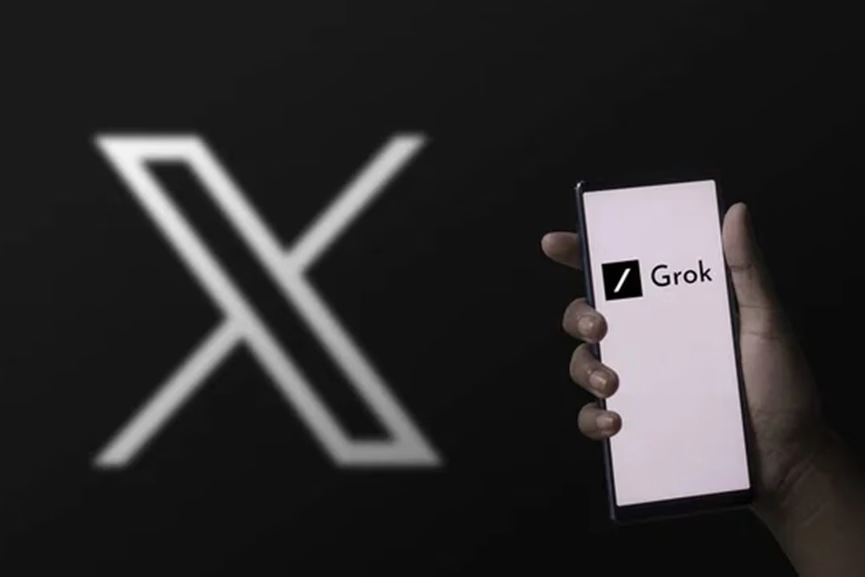
Malaysia’s regulator said it had already issued formal notices to X and xAI demanding stronger technical controls and moderation systems. It said the responses received relied heavily on users reporting abuse and did not address the broader risks created by the technology.
Grok is also available through a standalone website and mobile app, and it remains unclear whether the restrictions in Malaysia and Indonesia apply across all platforms. Users in Indonesia have reported continued access to Grok, though some said performance had slowed.
Indonesia’s communications and digital ministry said the temporary block was necessary, describing non-consensual sexual deepfakes as a serious violation of human rights and digital safety.
Governments elsewhere are also weighing action. The United Kingdom has warned a ban remains possible if safeguards are not strengthened, while Australia’s prime minister has condemned the use of generative AI to exploit or sexualise people without consent.
Across Europe, regulators have issued increasingly sharp warnings. Germany has called for European Commission intervention, Italy has warned that such practices may breach privacy laws and constitute criminal offences, and France has referred explicit Grok-generated content to prosecutors.
India has also stepped in, with its IT ministry issuing a formal notice to X earlier this month demanding the removal of explicit content linked to Grok and a report on corrective measures taken.