
EL SEGUNDO, California: With an animated Barbie film in development following the success of Greta Gerwig’s 2023 blockbuster, Mattel Studios continues to broaden the world of Barbie, both on screen and on toy shelves.
On Monday, Mattel unveiled its first Barbie representing autism, marking another step in the company’s push for greater inclusion. The doll joins the Fashionistas line, following the release of Barbie with type 1 diabetes just six months ago, reinforcing Mattel’s aim to reflect a wider range of real-life experiences.
Autism is a form of neurodivergence that affects how people perceive, process, and interact with the world. While autism presents differently in each individual, the World Health Organization estimates that more than one in 100 children worldwide is autistic.
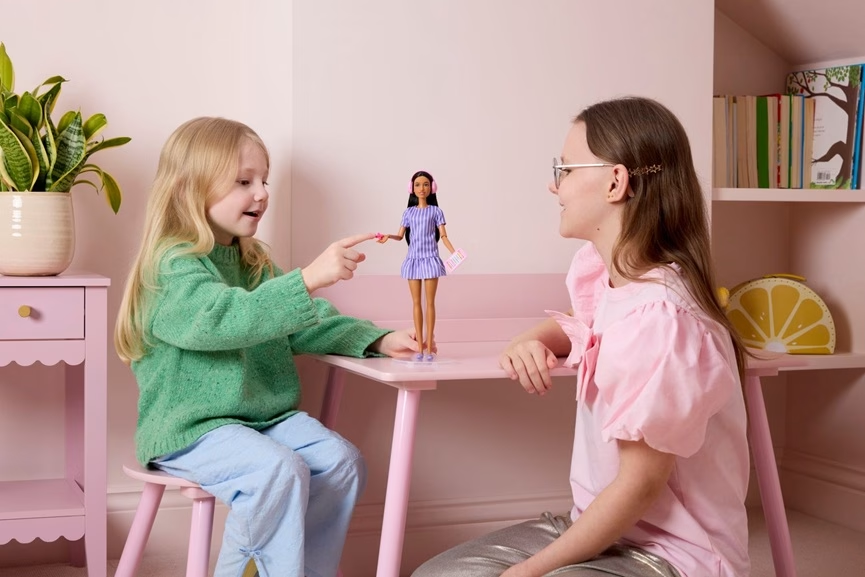
Developed in collaboration with the Autistic Self Advocacy Network, the new Barbie is designed to reflect some of the ways autistic children may experience everyday life. Her eyes are angled slightly to one side, acknowledging that some autistic people avoid direct eye contact.
Fully bendable elbows and wrists allow for repetitive movements such as hand-flapping, commonly known as stimming, which can help regulate sensory input or express excitement.
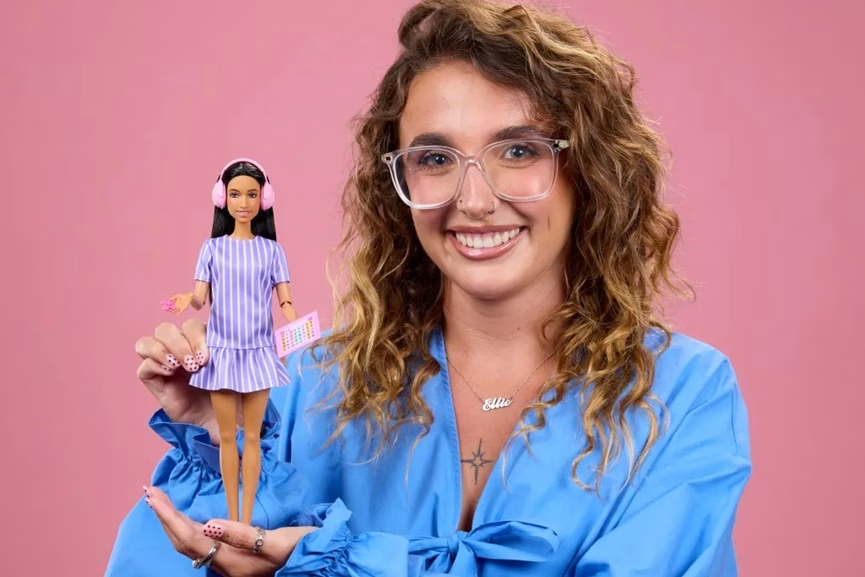
The doll wears noise-cancelling headphones to reduce sensory overload and includes a fidget spinner to help manage stress. She also carries a tablet featuring symbol-based communication icons, reflecting the use of augmentative and alternative communication tools. Her outfit includes a loose-fitting purple dress designed to minimise sensory discomfort, paired with flat shoes to support ease of movement.
Since Barbie’s debut in 1959, representation in the range remained limited for decades. That began to change in 2019, when Mattel introduced its first dolls with disabilities. Today, the lineup includes Barbies who are blind, use wheelchairs, have Down syndrome, prosthetic limbs, vitiligo and hearing aids. The Ken range has also expanded to include dolls with mobility aids and prosthetics.
Mattel says the autistic Barbie reflects its ongoing commitment to representation, developed through consultation with autistic voices to ensure thoughtful and respectful design. The company emphasised that autism does not have a single appearance and that the doll represents some, but not all, experiences on the spectrum.
Advocacy groups welcomed the move, noting that visibility in toys can help normalise supports such as headphones and sensory tools, particularly in school settings. They also highlighted the importance of representation for autistic girls, who are significantly less likely to be diagnosed than boys.