
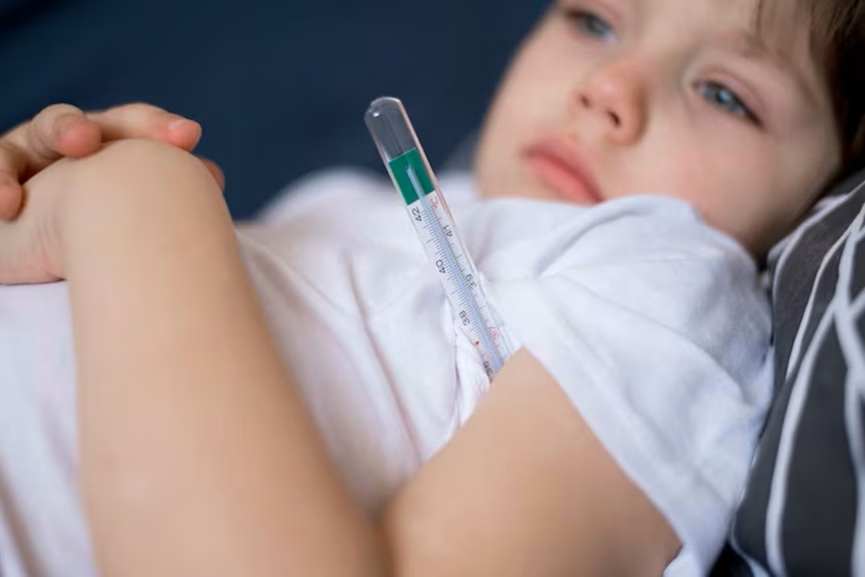
Australia: Health authorities across Australia are stepping up surveillance as measles cases surge nationwide, driven by a sharp rise in international travel over summer and a worrying drop in the childhood vaccination rate.
New data from the National Centre for Immunisation Research and Surveillance shows that, for the first time in a decade, Australia’s early childhood vaccination coverage has fallen below the 95 per cent level needed to maintain herd immunity.
Coverage among two-year-olds now stands at 89.7 per cent, while the timely administration of the first measles, mumps, and rubella dose has declined by more than 11 percentage points compared with pre-pandemic levels. The impact is already being felt. Australia recorded 168 measles cases in 2025, nearly three times the 57 cases reported the previous year.
The decline in immunity has coincided with a wave of infections linked to overseas travel. On Sunday, health authorities in New South Wales and South Australia issued fresh alerts after a so-called Boxing Day cluster grew to seven cases. Officials believe the cluster originated with a single infectious traveller who passed through several busy public locations.
NSW Health is advising people to be alert for signs and symptoms of measles after being notified of a confirmed case who was infectious while visiting locations across Sydney. pic.twitter.com/Ar6x0ERoKN
— NSW Health (@NSWHealth) January 4, 2026
In South Australia, an adult who contracted measles overseas visited Westfield Marion and Event Cinemas on Boxing Day, before travelling to Cockles Cafe in Port Elliot two days later. The following day, the person flew from Adelaide to Sydney on Qantas flight QF748, prompting authorities in both states to trace passengers and airport contacts.
New South Wales has since confirmed three recent cases, all involving travellers returning from Southeast Asia. Exposure alerts have been issued for multiple locations across northern Sydney, including shopping centres, medical clinics, and hospital emergency departments in late December and early January.
The Boxing Day cluster has also reached Western Australia, where two cases, including one child, have been confirmed. Victoria has reported a separate case involving an adult who returned from Bali.
Health officials say the spike did not begin with the holiday period alone. Western Australia recorded a steady rise in cases throughout December, reaching 60 for the year by late last month. Queensland also issued warnings in mid-December after an infectious traveller arrived on the Gold Coast from Bali.
Experts say there is no immediate risk of a nationwide epidemic, but the trends are concerning. While Australia’s vaccination rates remain higher than those in many other countries, including several OECD nations, lower immunity means the virus can spread more easily than it did a decade ago. The drop in vaccination coverage among young children is seen as particularly alarming.
International travel remains the main driver of the current outbreaks, with Australians increasingly visiting countries where measles vaccination rates are lower. Once introduced, the virus can spread rapidly, especially in pockets of the community with low immunisation.
Before vaccines were introduced in the 1960s, measles was a near-universal childhood illness in Australia, and despite its reputation as routine, it was deadly in a small but significant number of cases.
The virus remains highly infectious today, with one person capable of infecting many others in an unvaccinated setting. Because it is airborne and can linger in enclosed spaces for up to 30 minutes after an infected person leaves, health authorities say even brief exposure can pose a risk.
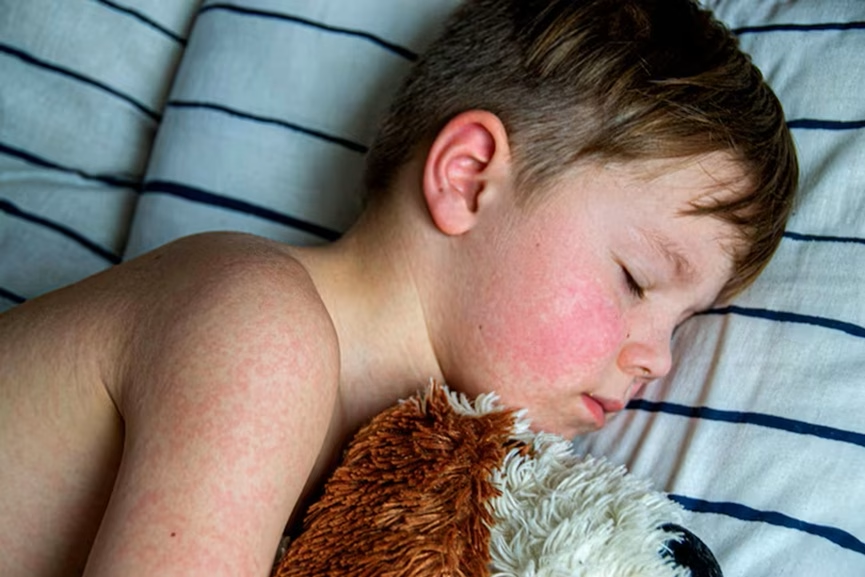
Australians are being urged to check their vaccination status. Anyone born in or after 1966 who has not received two doses of the MMR vaccine is eligible for a free booster. Early symptoms include fever, cough, and a runny nose, followed days later by a distinctive red rash.