

Sydney: Meta has started taking under-16 users in Australia off Instagram, Threads, and Facebook as the country prepares to enforce a world-first age ban on major social media platforms from December 10.
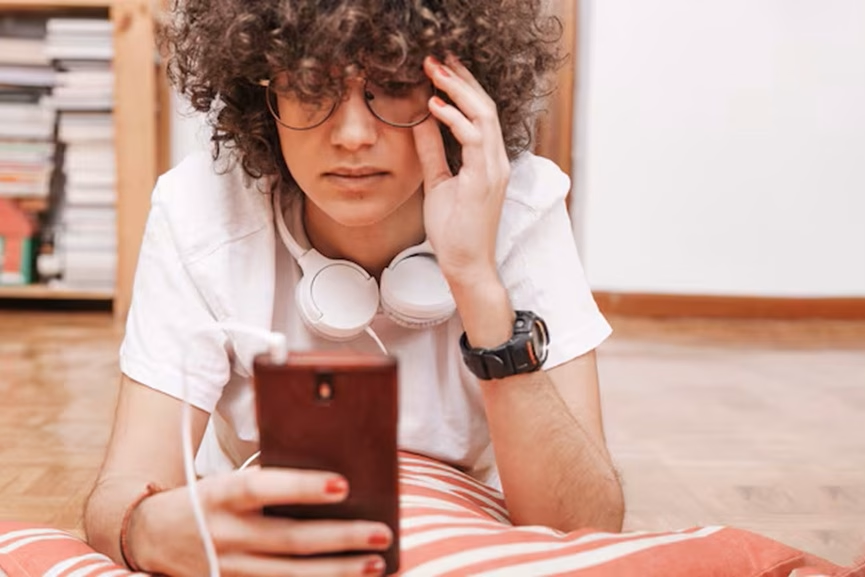
Under the new law, platforms including TikTok and YouTube must block access for anyone under 16 or face penalties of up to Aus$49.5 million (US$32 million) for failing to take reasonable steps to comply. The move is expected to affect hundreds of thousands of teenagers, with Instagram alone estimating around 350,000 Australian users aged 13 to 15.
A Meta spokesperson said the company was working to remove all accounts believed to be underage before the deadline, adding that compliance would require ongoing, layered measures. Young users will be able to download their data, and once they turn 16, they will be allowed to return to the platforms with their content restored as it was. Some apps, such as Roblox, Pinterest, and WhatsApp, are exempt for now, though the list remains under review.
Meta said it supports the law but urged the government to place responsibility on app stores to verify ages and obtain parental approval whenever anyone under 16 downloads an application. The company argued that this would avoid repeated age checks across different platforms and give social media services reliable information to create age-appropriate experiences.

YouTube has also criticised the legislation, warning it may make young Australians less safe. The platform noted that under-16s would still be able to browse videos without accounts but would lose safety filters normally applied to logged-in users.
Communications Minister Anika Wells dismissed this argument as strange, saying the platform should fix its own content issues rather than blame the law. She said Australian families had experienced devastating harm when algorithms pushed damaging material at vulnerable teenagers struggling with their self-esteem. Wells said the ban was not a solution to every online risk but would give young people a better chance to grow in healthier digital spaces.
The Digital Freedom Project has launched a High Court challenge, calling the new rules an unfair blow to free speech. Officials expect some teens to attempt to bypass the restrictions by using fake IDs or AI-generated images to appear older, but the online safety regulator has warned that no system will be entirely foolproof.
Australia’s approach is drawing global attention as governments debate how to protect young people online. Malaysia has signalled plans to introduce its own under-16 ban next year, while New Zealand is preparing similar restrictions.