
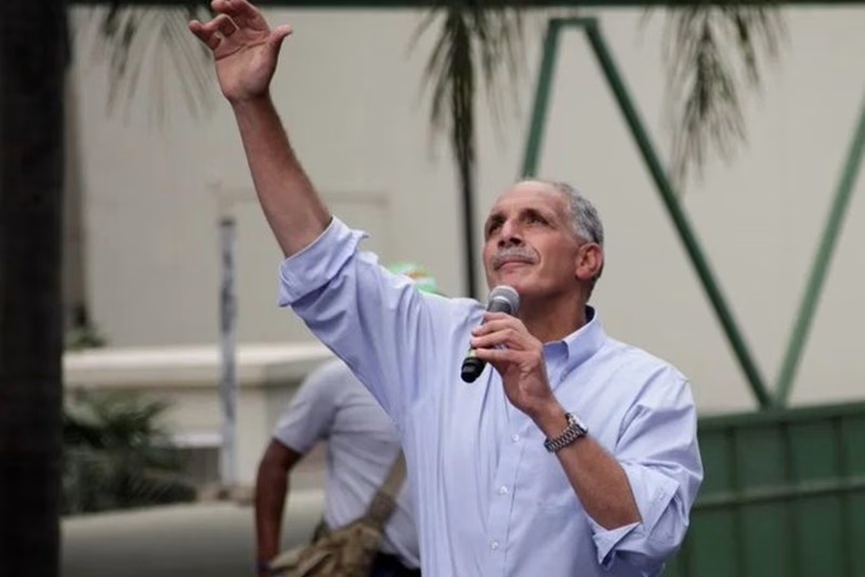
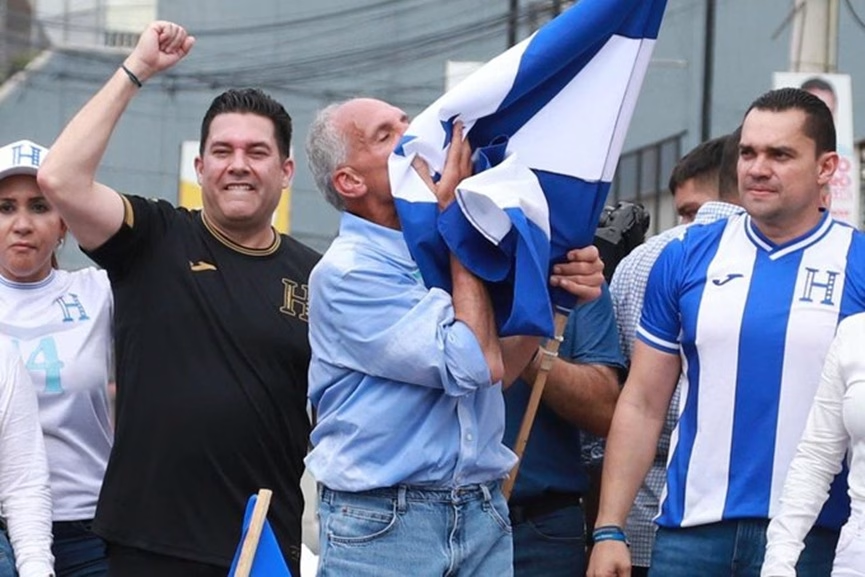
Tegucigalpa: Conservative businessman Nasry Asfura was declared the winner of Honduras’s presidential election, weeks after a tightly contested vote that was dogged by delays, disputes, and allegations of fraud.
The National Electoral Council announced that Asfura, 67, narrowly defeated fellow conservative and television personality Salvador Nasralla by less than one percentage point. Official results showed Asfura securing 40.1 percent of the vote, compared with Nasralla’s 39.5 percent. Rixi Moncada of the ruling leftist Libre Party finished third with 19.2 percent.
Asfura’s victory marks the return of the right wing to power in one of Latin America’s poorest countries after four years under President Xiomara Castro. His win also reflects a broader regional shift, as conservative governments gain ground following political changes in countries including Argentina, Chile, and Peru.
The people of Honduras have spoken: Nasry Asfura is Honduras’ next president. The United States congratulates President-Elect @titoasfura @papialaordenh and looks forward to working with his administration to advance prosperity and security in our hemisphere.
— Secretary Marco Rubio (@SecRubio) December 24, 2025
Asfura, the son of Palestinian immigrants and a former mayor of Tegucigalpa, is set to take office on January 27. Shortly after the results were confirmed, the United States welcomed the outcome, saying it looked forward to working with the incoming administration on security, migration, and economic cooperation.
The result was announced more than three weeks after Hondurans went to the polls on November 30, a delay that heightened tensions across the country. The slow count was accompanied by claims of irregularities and voter fraud, with Nasralla refusing to recognise the outcome and calling for a full recount.
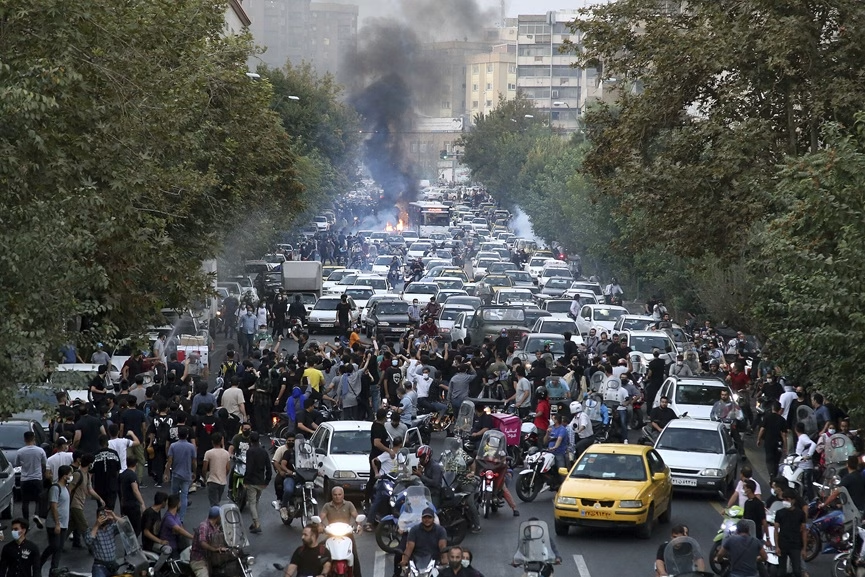
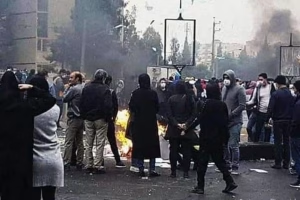
Election officials reviewed nearly 2,800 tally sheets flagged for inconsistencies, a process that involved hundreds of staff and party representatives. While the electoral council had until December 30 to certify the result, protests erupted in the capital last week as supporters of the governing Libre Party alleged fraud.
The election unfolded against a charged political backdrop. On the eve of the vote, US President Donald Trump pardoned former Honduran president Juan Orlando Hernández, a member of Asfura’s party who had been serving a lengthy prison sentence in the United States for drug trafficking. The decision drew criticism and renewed debate over Washington’s role in the region.
Asfura now faces daunting challenges. He has promised to revive the economy, attract foreign investment, and restore diplomatic ties with Taiwan after Honduras shifted its allegiance to China in 2023. He will also inherit a deeply polarised nation, with lingering doubts over the credibility of the election.
Crime and insecurity remain pressing concerns. Despite a recent decline in murders, Honduras continues to rank among the most violent countries in the region, plagued by drug trafficking and powerful gangs. How the new president tackles these issues may define his presidency as much as the contested election that brought him to power.