
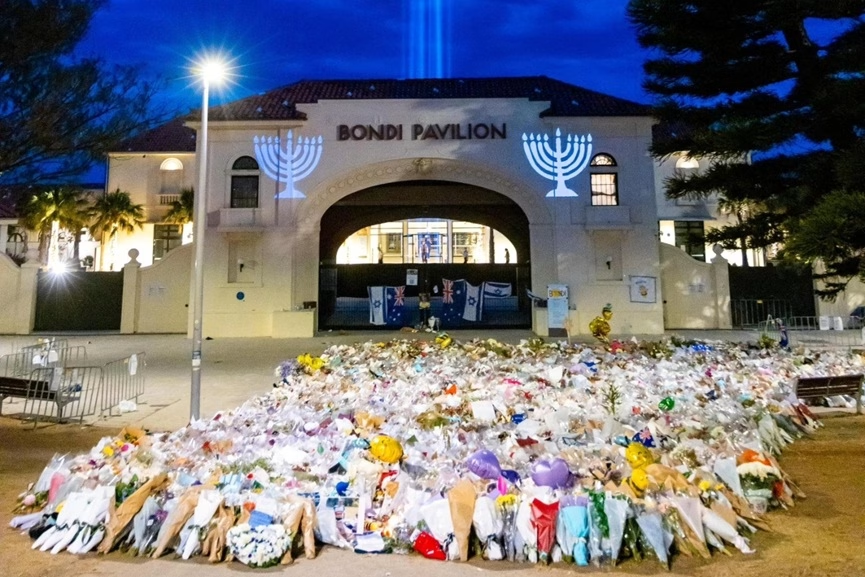
Sydney: Australia’s most populous state, New South Wales (NSW), has moved to dramatically reshape its gun and public order laws, pushing through some of the toughest measures Australia has seen in decades after the deadly Bondi Beach shooting that shocked the nation.
In a rare emergency sitting, the state parliament approved wide-ranging legislation early Wednesday, tightening firearm ownership, outlawing extremist symbols, and giving police expanded powers to rein in protests after terror-related incidents. The bill passed with bipartisan support, reflecting the political urgency created by the December 14 attack on a Hanukkah gathering that left 15 people dead.
Premier Chris Minns said a changed security reality drove the reforms. While conceding the measures would divide opinion, he argued the government had a responsibility to act decisively to prevent further violence and reassure a shaken public.
At the heart of the new laws is a major overhaul of gun control. Individual firearm licences will now be limited, with stricter caps placed on private owners and higher thresholds set for farmers. Gun club membership will become compulsory for all licence holders, a step the government says will strengthen monitoring and compliance.
Police powers have also been significantly widened. Following a declared terror attack, officers will be able to impose restrictions on public gatherings for extended periods and intervene more quickly if demonstrations are deemed to pose a safety risk. The public display of symbols linked to banned militant groups has been criminalised, carrying the threat of jail time or heavy fines.
The Bondi Beach shooting, the worst mass gun attack in Australia in almost 30 years, has been cited by authorities as a turning point. Investigators believe the attackers were motivated by extremist ideology, intensifying calls for stronger action against radicalisation and antisemitism.
Not everyone is convinced the new approach strikes the right balance. Civil rights advocates and activist groups have condemned the laws as excessive and politically motivated, warning they could be used to suppress lawful protest. Several organisations have already flagged a constitutional challenge, arguing the legislation erodes long-standing democratic protections.
The changes in New South Wales are unfolding alongside a broader national debate. Prime Minister Anthony Albanese has signalled tougher federal laws on hate speech and is considering additional gun control measures, as his government faces mounting pressure to respond to community fears and rising social tensions.
As NSW becomes the testing ground for this tougher stance, the state finds itself at the centre of a wider reckoning over security, civil liberties, and how far governments should go in the aftermath of national trauma.